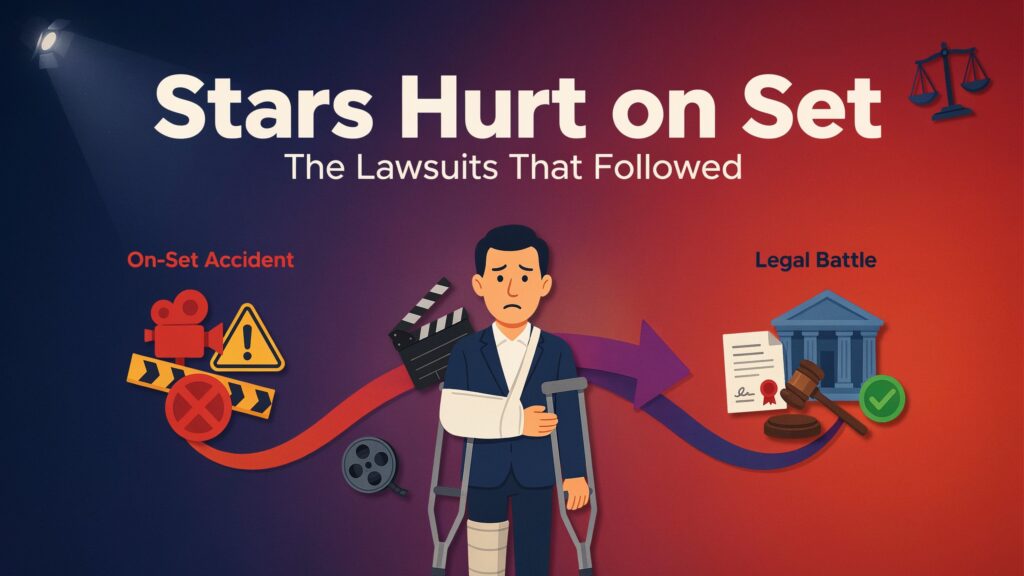
When actress Kate Beckinsale filed a lawsuit in 2025 alleging she suffered a serious knee injury during production, it thrust workplace safety in the entertainment industry back into the spotlight. The glamorous world of film and television production hides a stark reality: on-set accidents happen with alarming frequency, and when they do, the legal consequences can be just as dramatic as anything captured on camera. From broken bones to career-ending injuries, these incidents expose the complex intersection of workplace safety regulations, premises liability, and personal injury law.
The Reality of On-Set Accidents
Film and television productions are high-pressure environments where tight schedules, complex stunts, and demanding physical requirements create significant safety risks. According to data compiled by the Associated Press, at least 194 serious accidents occurred on American television and film sets between 1990 and 2014, resulting in at least 43 deaths. These numbers only reflect reported incidents, suggesting the actual toll may be considerably higher.
The entertainment industry faces unique challenges that contribute to these statistics. Productions often involve hazardous conditions, from working at heights and operating heavy equipment to coordinating complex stunt sequences and managing special effects. Each element introduces potential dangers that require rigorous safety protocols and constant vigilance from production companies and their safety teams.
Notable Celebrity Injury Cases and Legal Battles
High-profile accidents involving celebrities have brought increased attention to on-set safety failures. Kate Beckinsale’s lawsuit alleges she was pressured to perform dangerous stunts despite suffering a meniscus tear that required surgery. The case highlights how even established actors can face pressure to work through injuries, potentially exacerbating harm and leading to long-term consequences.
The 2014 “Midnight Rider” tragedy stands as one of the most devastating examples of safety failures in modern film production. Camera assistant Sarah Jones was killed, and eight crew members were injured when an unscheduled train struck the crew on active railroad tracks. The Occupational Safety and Health Administration (OSHA) issued willful and serious safety violations against Film Allman LLC, and the production company faced significant legal consequences. The case prompted industry-wide discussions about the need for stronger safety oversight and accountability.
More recently, the 2021 fatal shooting of cinematographer Halyna Hutchins on the set of “Rust” led to extensive investigations by New Mexico’s Occupational Health and Safety Bureau. The investigation revealed what regulators described as “plain indifference to the recognized hazards associated with the use of firearms on set,” resulting in willful citations against the production company.
Legal Framework and OSHA Regulations
Under the Occupational Safety and Health Act of 1970, employers in the entertainment industry must provide safe and healthful workplaces for their employees. OSHA maintains specific guidelines for motion picture and videotape production, though enforcement has historically been challenging given the temporary and varied nature of filming locations.
When accidents occur on production sets, several legal theories may apply. Production companies can face claims based on negligence, inadequate safety measures, or failure to maintain safe working conditions. The Texas Department of Insurance emphasizes that safety must begin in pre-production, with thorough location scouting to identify potential hazards before filming commences. California has implemented additional requirements through its Safety on Productions Pilot Program, mandating that certain productions hire dedicated safety supervisors.
When Legal Action Becomes Necessary
The decision to pursue legal action after an on-set injury often depends on multiple factors, including the severity of the injury, the circumstances surrounding the accident, and whether proper safety protocols were followed. Injured workers may have claims under workers’ compensation laws, but in cases involving third-party negligence or egregious safety violations, additional personal injury claims may be warranted.
Premises liability plays a crucial role in many on-set injury cases. When production companies fail to maintain safe conditions at filming locations, whether through inadequate lighting, hazardous floor conditions, or failure to secure dangerous areas, they may be held responsible for resulting injuries. This legal principle extends beyond entertainment industry accidents to any situation where property owners or managers fail to address known hazards. Those injured in similar circumstances, such as slip and fall accidents at any business or location, should understand their rights and consider consulting with Bronx premises liability attorneys or their local area to evaluate their case.
Celebrity cases have demonstrated that even high-profile productions with substantial budgets can fail to prioritize safety adequately. These lawsuits serve an important function beyond compensating individual victims; they create accountability and incentivize industry-wide improvements in safety standards.
Changing the Industry Through Legal Accountability
The entertainment industry’s approach to on-set safety continues to evolve, driven in part by high-profile accidents and subsequent legal battles. California enacted legislation following the Rust tragedy, establishing clear, mandatory guidelines around firearm use on sets. Other states have implemented their own requirements, including mandatory health and safety training for entertainment workers.
Legal cases stemming from on-set injuries highlight that workplace safety extends beyond having policies on paper. Effective safety requires proper implementation, adequate training, appropriate equipment, and a culture where workers feel empowered to speak up about dangerous conditions without fear of retaliation or career consequences.
For the technology and business professionals who read about these cases, the lessons extend beyond Hollywood. Any workplace involving physical risks, whether a film set, construction site, or retail location, requires robust safety protocols and genuine organizational commitment to protecting workers and visitors. When accidents occur despite these measures, understanding the legal framework helps ensure accountability and promotes the systemic changes necessary to prevent future tragedies.
The ongoing legal battles following high-profile on-set accidents demonstrate that safety cannot be compromised for artistic vision or production schedules. As the entertainment industry continues to reckon with its safety record, these cases serve as powerful reminders that protecting workers must remain the paramount concern.