From a sci-fi dream to an integral part of reality, Generative AI has made tremendous progress in a matter of years and become one of the most sought-after technologies in business. Companies employ generative AI to automate operations, generate content, perform analysis, enhance their services and products, and innovate. Consequently, there is a high demand for professionals skilled at Generative AI in such industries as IT, medicine, finance, marketing, and education.
What’s more, you do not have to know how to program or even possess any tech skills to build your career in this field. Students, graduates, and experienced professionals can learn how to work with generative AI by acquiring relevant knowledge and skills required in today’s job market. In this article, you will find out what are the most promising Generative AI career options in 2026 and what skills are in high demand.
Key Takeaways
- Generative AI careers are expanding across technology, healthcare, finance, marketing, and moreover education.
- AI skills are becoming valuable for both technical and non-technical professionals.
- Prompt engineering and AI content development are among the fastest-growing job categories in 2026.
- Data science knowledge remains a strong foundation for many AI careers.
- Students and career changers can enter the AI industry through structured learning programs and practical projects realtime work experience.
- AI tools enhance human productivity rather than completely replacing professionals.
- Continuous learning is essential for staying competitive in the AI-driven job market.
What Are Generative AI Career Opportunities?
Generative AI career opportunities are positions that focus on developing, managing, enhancing, or utilizing AI systems to generate text, pictures, video, code and other digital content.
Generative AI is the type of AI that can generate new content from existing data patterns. This could be done using ChatGPT, Claude, Gemini, MidJourney, and other high-performing AI tools.
One such example is the ability for AI to generate marketing campaigns, automate customer service, write software code, and help with data analysis in the business world. This means that companies must hire professionals well versed in both AI technologies and business needs.
A simple truth stands out: Generative AI is creating new job roles faster than many traditional technologies did.
According to the World Economic Forum, AI and automation could create millions of new jobs globally by the end of the decade – Source: World Economic Forum, 2025.
Why Do Generative AI Career Opportunities Matter in 2026?
Generative AI career opportunities matter because organizations across industries are investing heavily in AI-powered transformation.
First, companies are no longer experimenting with AI. They are integrating AI into daily business operations. This shift has increased demand for professionals who can develop, manage, and optimize AI solutions.
Moreover, AI adoption is accelerating worldwide. According to a McKinsey survey, over 70% of organizations report using AI in at least one business function — Source: McKinsey, 2025.
For example, healthcare providers use AI to assist diagnosis, financial institutions use AI for fraud detection, and e-commerce companies use AI-powered recommendation systems.
AI literacy is becoming a career advantage across nearly every industry.
How AI Is Creating More Jobs Than It Eliminates
First, AI automates repetitive tasks rather than entire professions. This allows employees to focus on strategic and creative responsibilities.
For example, data analysts can automate data cleaning while spending more time on business insights and decision-making.
At the same time, entirely new positions such as Prompt Engineers, AI Product Managers, and AI Ethics Specialists have emerged.
What Are the Top Generative AI Jobs in 2026?
Generative AI jobs are professional roles focused on developing, implementing, and managing AI-driven solutions.
AI Engineer
First, AI Engineers design and deploy machine learning and generative AI systems.
Their responsibilities include:
- Building AI applications
- Fine-tuning AI models
- Integrating AI APIs
- Monitoring model performance
For example, an AI Engineer may develop a chatbot that handles thousands of customer inquiries daily.
Average salary ranges remain among the highest in technology careers worldwide.
Prompt Engineer
Prompt Engineers create optimized instructions that help AI models produce accurate and useful outputs.
For example, a marketing company may hire Prompt Engineers to improve AI-generated advertising content.
Prompt engineering bridges human creativity and machine intelligence.
Data Scientist
Data Scientists analyze large datasets to identify patterns and build predictive models.
For example, retail companies use Data Scientists to forecast customer demand and optimize inventory management.
AI Product Manager
AI Product Managers coordinate technical teams and business stakeholders to build AI-powered products.
Their responsibilities include:
- Product planning
- Requirement gathering
- AI strategy development
- Performance evaluation
AI Content Strategist
AI Content Strategists combine content marketing expertise with AI tools.
For example, businesses increasingly use AI-assisted content workflows to improve productivity while maintaining quality standards.
AI Ethics Specialist
AI Ethics Specialists ensure responsible and fair AI usage.
As governments introduce AI regulations, organizations increasingly need experts who understand compliance, privacy, and ethical standards.
Which Skills Are Required for Generative AI Careers?
Generative AI careers require a combination of technical knowledge, business understanding, and problem-solving skills.
Technical Skills
First, technical skills provide the foundation for working with AI systems.
Important skills include:
| Skill | Why It Matters |
| Python Programming | Most AI tools use Python |
| Machine Learning | Core AI concepts |
| Data Analysis | Understanding business data |
| SQL | Managing databases |
| Deep Learning | Advanced AI development |
| Prompt Engineering | Optimizing AI outputs |
Soft Skills
Second, employers increasingly value human skills that AI cannot easily replicate.
Important soft skills include:
- Critical thinking
- Communication
- Creativity
- Problem solving
- Team collaboration
- Business understanding
For example, an AI model can generate information, but professionals must evaluate whether that information supports business goals.
Human judgment remains one of the most valuable AI-era skills.
How Can Students Start a Career in Generative AI?
Students can start a Generative AI career by building foundational skills, creating projects, and gaining practical experience.
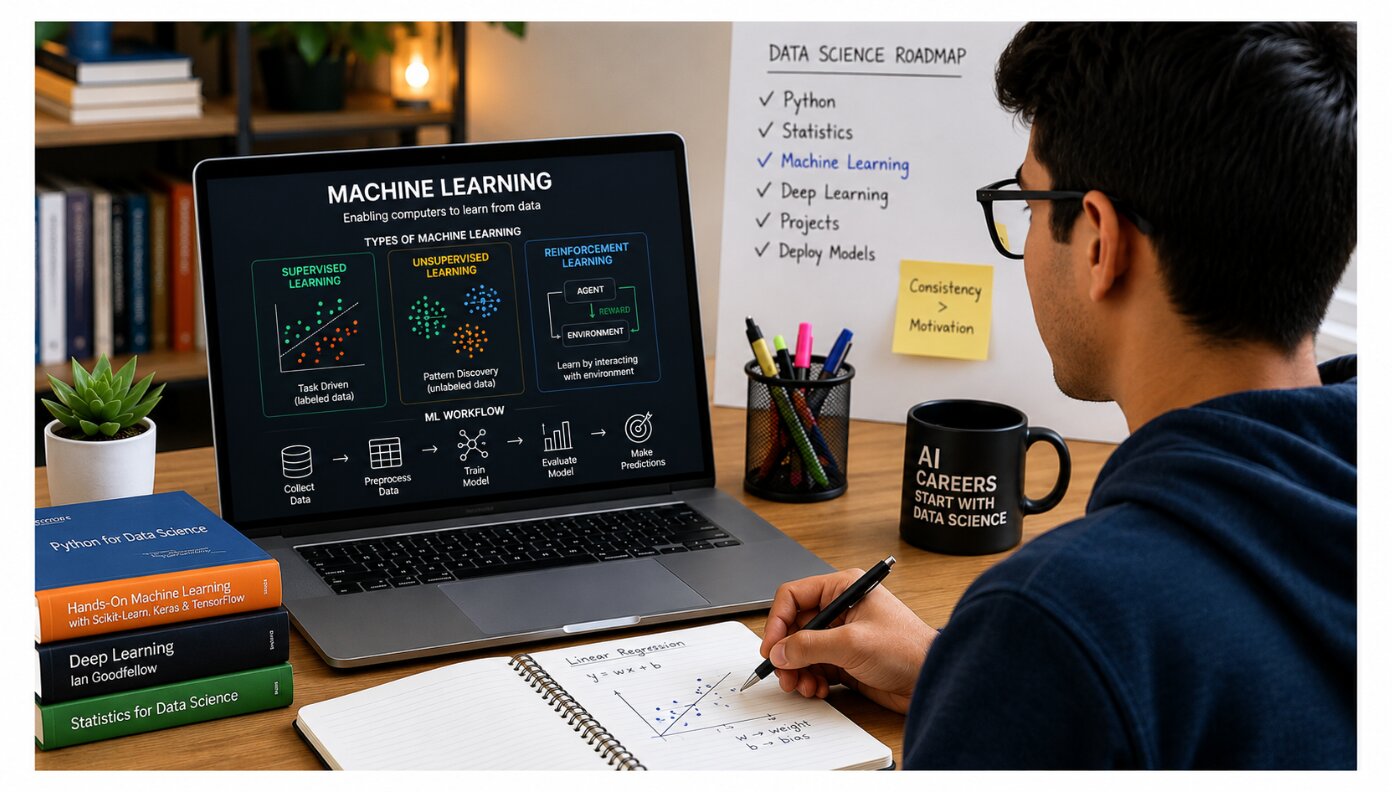
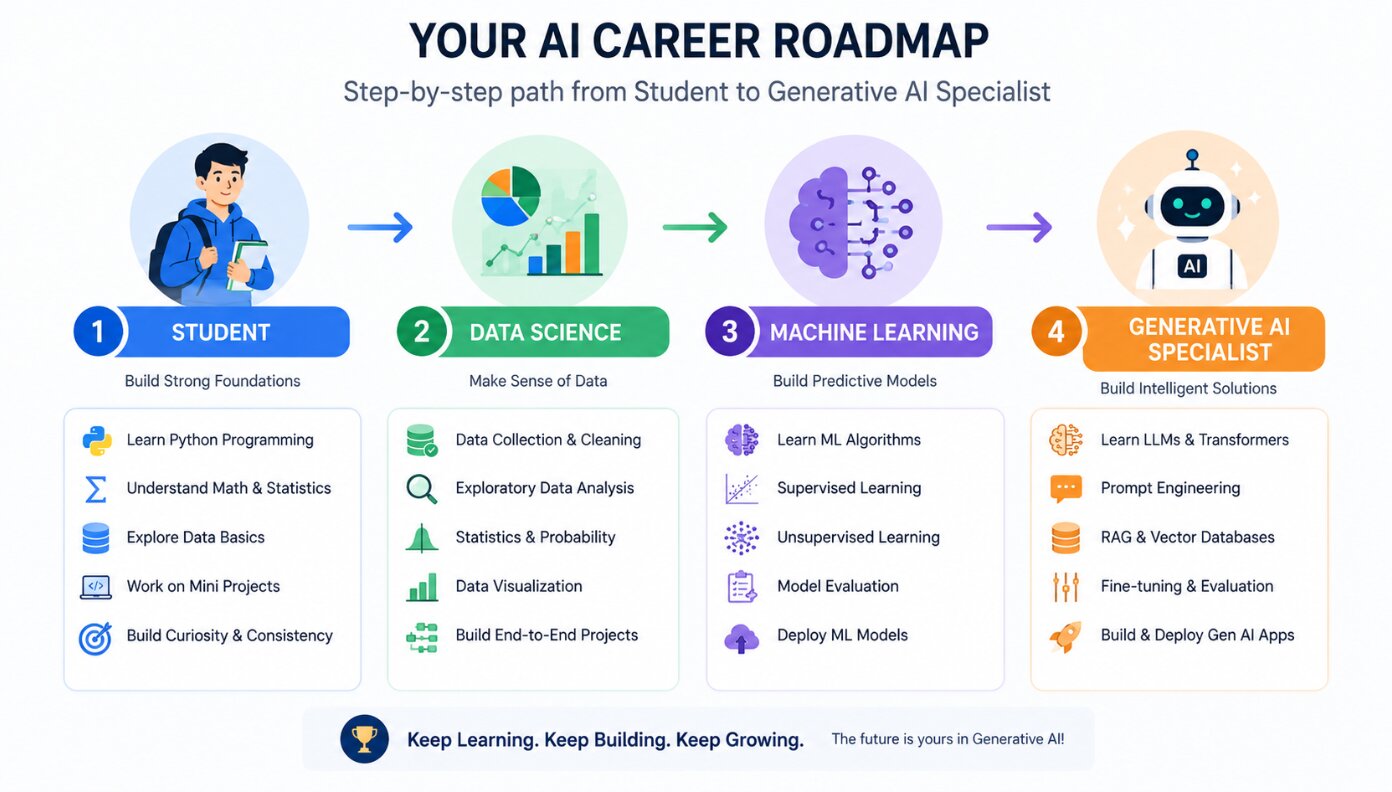
Learn Data Science Fundamentals
First, data science provides the foundation for many AI careers.
Topics include:
- Statistics
- Python programming
- Machine learning
- Data visualization
- Database management
For example, many successful AI professionals began their careers as Data Analysts or Data Scientists.
If you’re looking for structured training, Data Scientist Course can help you build practical skills through real-world projects and industry mentorship.
Build Real Projects
Second, projects help employers see your skills.
Project ideas include:
- AI chatbot development
- Resume screening systems
- Content generation tools
- Sentiment analysis dashboards
- AI-powered recommendation engines
For example, a portfolio containing three to five AI projects often attracts more recruiter attention than certificates alone.
Participate in AI Communities
Moreover, networking helps students discover opportunities and industry trends.
Popular platforms include:
- GitHub
- Kaggle
- Hugging Face
- AI developer communities
Why Data Science and Data Analytics Remain Strong Career Choices
Generative AI is transforming industries, but Data Science and Data Analytics remain foundational skills for AI careers.
For example:
- Data Analysts help organizations understand business performance.
- Data Scientists build predictive models and AI solutions.
- AI Engineers use data science concepts to train and improve AI systems.
This is why many successful AI professionals begin their careers by learning Data Analytics or Data Science before specializing in Generative AI.
Data Science is the foundation. Generative AI is the next layer of specialization.
Can Working Professionals Transition Into Generative AI?
Working professionals can successfully transition into Generative AI careers by leveraging existing expertise and learning AI fundamentals.
Career Transition Paths
First, professionals from many backgrounds already possess transferable skills.
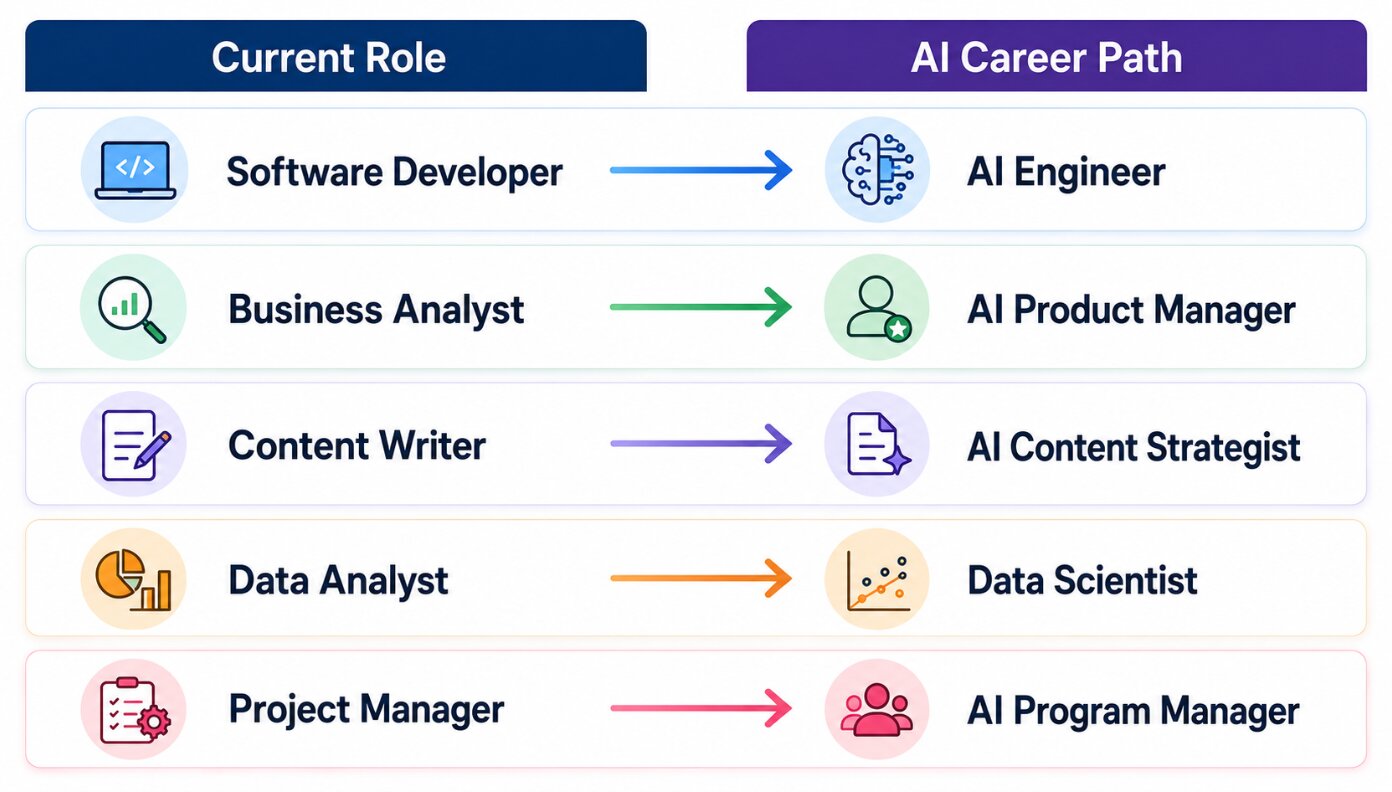
Examples include:
For example, a marketing professional already understands customer behavior, making it easier to apply AI tools within marketing workflows.
Create an AI Learning Roadmap
Second, structured learning accelerates career transitions.
A roadmap has these steps:
- Learn Python basics
- Study machine learning concepts
- Understand Generative AI tools
- Build practical projects
- Create a professional portfolio
- Apply for internships or entry-level positions
Consistency often matters more than prior technical experience.
Which Tools Are Used in Generative AI Careers?
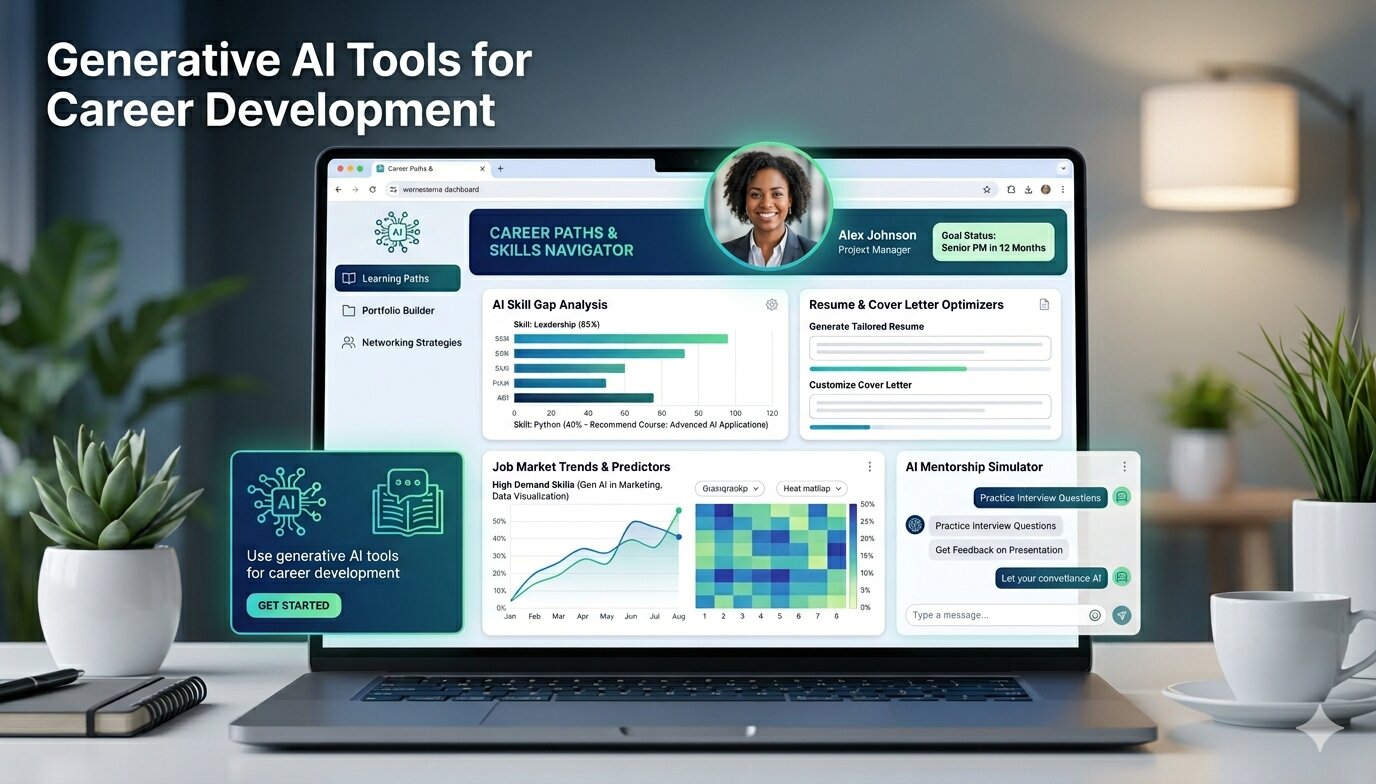
Generative AI professionals use specialized tools to build your career, deploy, and manage AI solutions.
Popular tools include:
- ChatGPT
- Claude
- Gemini
- Hugging Face
- TensorFlow
- PyTorch
- LangChain
- OpenAI API
Free Tools for Beginners
First, beginners can start with free platforms.
Examples include:
- Google Colab
- Kaggle
- Hugging Face Spaces
- GitHub
These platforms allow students to practice AI development without significant financial investment.
What Should You Do Next to Build an AI Career?
Building an AI career requires consistent learning, practical application, and strategic networking.
First, assess your current skills and identify gaps. For example, a business graduate may focus on data analytics, while a software developer may move directly into machine learning projects.
Second, create a portfolio that demonstrates real-world problem-solving. Employers increasingly prioritize demonstrated skills over theoretical knowledge.
Third, pursue industry-relevant education and certifications. A comprehensive Data Scientist Course can provide hands-on experience with machine learning, analytics, and AI technologies.
Finally, stay updated with industry developments because Generative AI evolves rapidly.
The professionals who continuously learn will benefit most from the AI revolution.
Conclusion
Generative AI career opportunities in 2026 are expanding faster than ever before. From AI Engineers and Data Scientists to Prompt Engineers and AI Product Managers, organizations are actively seeking professionals who can combine technical knowledge with practical problem-solving skills.
Whether you’re a student planning your future or a professional considering a career change, now is an excellent time to invest in AI and data science skills. By building strong fundamentals, creating real-world projects, and staying committed to continuous learning, you can position yourself for long-term success in the AI-powered economy.