I’ve worked with dozens of product and engineering teams where the difference between success and failure often came down to one thing: the quality of business analysis. Many teams jump straight into building features without deeply understanding the problem, the user, or the business context. The result? Beautiful products that nobody uses, or systems that solve the wrong problem.
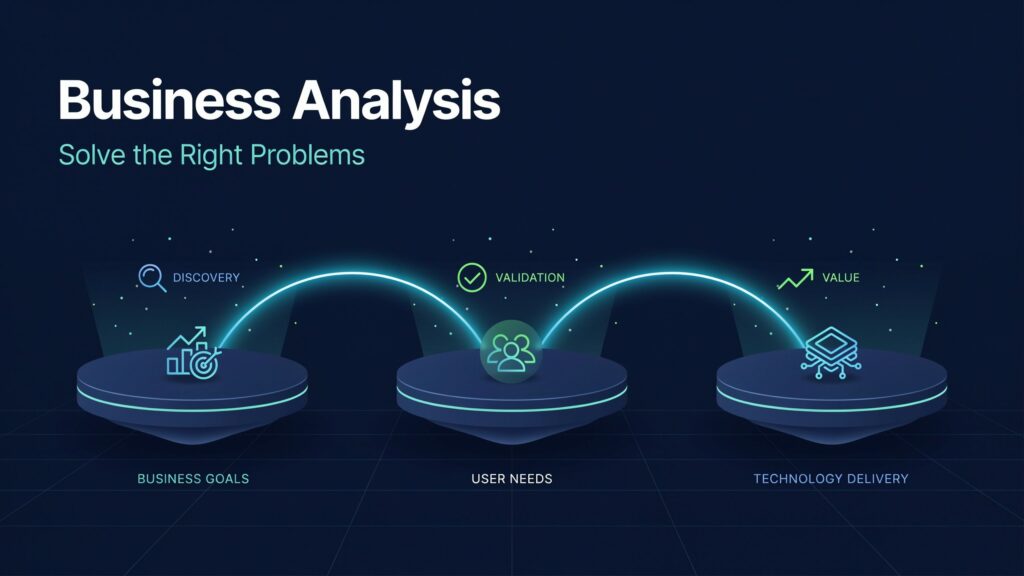
In 2026, with AI tools accelerating development and market expectations higher than ever, strong business analysis is more critical than ever. It’s no longer just about writing requirements — it’s about bridging business strategy, user needs, and technology to deliver real value.
This in-depth guide covers what modern business analysis looks like in 2026, why it matters, key skills and practices, and how to build effective analysis capability in your team or with external support.
Why Business Analysis Matters More in 2026
Organizations face intense pressure to:
- Deliver value faster
- Make data-driven decisions
- Align technology investments with business outcomes
- Reduce waste from building the wrong features
- Navigate complex stakeholder environments
Poor business analysis leads to:
- Features nobody uses
- Misaligned priorities
- Scope creep and constant rework
- Frustrated stakeholders
- Wasted development time and budget
Strong business analysis turns vague ideas into clear, prioritized, and validated solutions.
The Evolving Role of Business Analysis
In 2026, business analysis has expanded beyond traditional requirements gathering. Modern business analysts act as:
- Problem explorers — Deeply understand the “why” before jumping to solutions
- Facilitators — Bridge communication between business, users, and technical teams
- Value maximizers — Focus on outcomes over outputs
- Risk mitigators — Identify assumptions, dependencies, and edge cases early
- Change agents — Support adoption and continuous improvement
Core Practices of Effective Business Analysis
1. Problem Framing & Discovery
- Conduct stakeholder interviews and workshops
- Use techniques like Jobs-to-be-Done, empathy mapping, and value stream mapping
- Challenge assumptions and validate problems with real data
2. User Research & Persona Development
- Combine qualitative insights with quantitative data
- Create actionable personas and journey maps
- Identify pain points, motivations, and unmet needs
3. Requirements & Solution Design
- Move beyond traditional BRDs to lightweight, collaborative artifacts (user stories, acceptance criteria, prototypes)
- Use behavior-driven development (BDD) and example mapping
- Prioritize using frameworks like MoSCoW, RICE, or Value vs. Effort
4. Data & Analytics Integration
- Leverage data to support decisions
- Define clear success metrics and KPIs early
- Work with data teams to ensure solutions are measurable
5. Collaboration with Agile Teams
- Act as the voice of the customer within sprints
- Refine backlogs continuously
- Facilitate grooming, planning, and retrospectives effectively
6. Change Management & Adoption
- Plan for training, communication, and rollout
- Measure adoption and gather feedback post-launch
- Support continuous improvement
Essential Skills for Business Analysts in 2026
- Strong facilitation and communication
- Critical thinking and problem-solving
- Data literacy and basic analytics
- Understanding of Agile, product, and engineering practices
- Business acumen and domain knowledge
- Ability to work with AI tools for analysis and documentation
- Stakeholder management across technical and non-technical audiences
Business Analysis vs. Product Management vs. Requirements Engineering
These roles often overlap. In many organizations:
- Business Analysts focus more on process, requirements, and bridging business-tech gaps
- Product Managers own the vision, roadmap, and business outcomes
- Requirements Engineers focus on technical specifications and traceability
The best teams clarify roles while encouraging close collaboration.
How to Build Strong Business Analysis Capability
For teams:
- Invest in training and certification (e.g., IIBA, Agile analysis courses)
- Create templates and lightweight processes
- Pair analysts with product and engineering leads
- Use tools like Miro, Jira, Confluence, or Notion effectively
For organizations hiring external support:
- Look for analysts with domain experience and strong facilitation skills
- Start with discovery or pilot projects
- Ensure knowledge transfer to internal teams
Common Mistakes in Business Analysis
- Jumping to solutions before understanding the problem
- Writing long, unused requirement documents
- Ignoring stakeholders or users
- Failing to define clear success metrics
- Not challenging assumptions or scope creep
- Poor communication between business and technical teams
Real-World Impact
Organizations with strong business analysis practices typically see:
- Higher feature adoption rates
- Reduced rework and faster delivery
- Better alignment between IT investments and business goals
- Improved stakeholder satisfaction
- More innovative yet practical solutions
Final Thoughts
Business analysis in 2026 is a strategic capability, not just a tactical role. It sits at the intersection of business needs, user experience, and technology delivery. When done well, it dramatically increases the chances that you build the right things — and build them right.
Whether you have dedicated business analysts, product managers wearing multiple hats, or external consultants, the principles remain the same: understand the problem deeply, involve the right people, focus on outcomes, and continuously validate assumptions.
In a world where AI can generate code and features faster than ever, the real competitive advantage comes from knowing what to build and why. That’s the power of strong business analysis.
If your team is struggling with misaligned priorities, low feature adoption, or constant rework, improving your business analysis practices is one of the highest-leverage moves you can make.
Start by asking better questions. Listen more than you speak. Focus relentlessly on value.
That’s how great solutions are built in 2026.