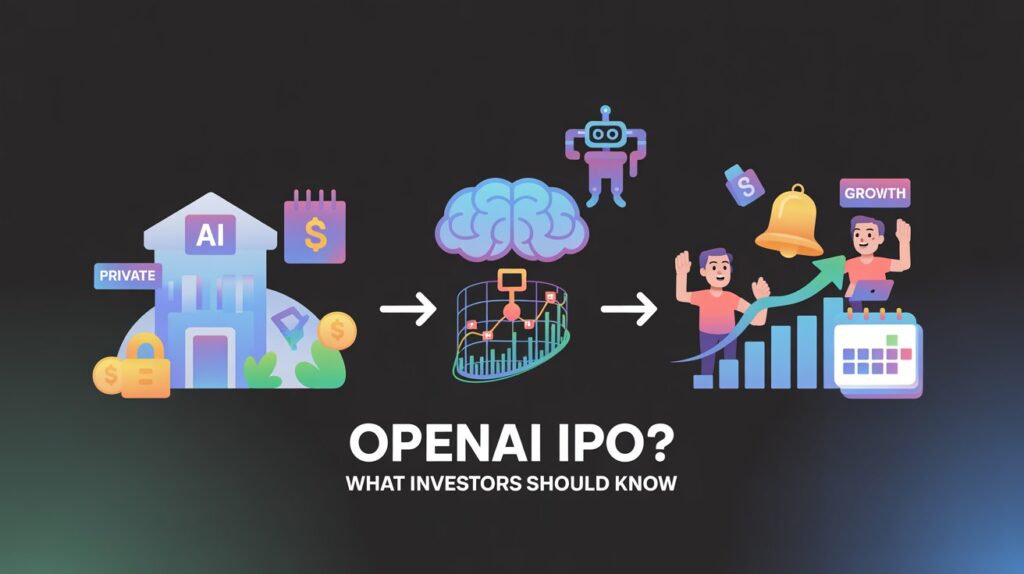
Artificial intelligence has moved from being a niche technological field into a global economic force, influencing everything from software development to healthcare, education, finance, and creative industries. At the center of this transformation is OpenAI, a company that has become widely recognized for its breakthroughs in generative AI systems and large language models that power modern digital tools. Because of this rapid rise, discussions around a possible OpenAI IPO have gained massive attention from investors, analysts, and tech enthusiasts who are trying to understand when and how the company might eventually enter public markets. The curiosity is not just about financial opportunity but also about how one of the most influential AI organizations could reshape stock market dynamics if it becomes publicly traded in the future.
Current Structure and Why It Matters
To understand the speculation around a future OpenAI, it is important to first understand how the company is structured today. Unlike traditional technology firms that operate as standard for-profit corporations, OpenAI has a hybrid structure that includes a nonprofit parent organization alongside a capped-profit subsidiary designed to attract investment while still prioritizing long-term safety and ethical AI development. This model was created to ensure that the mission of developing safe artificial intelligence remains central, even as the company scales commercially in a highly competitive global market.
This structure is one of the main reasons why OpenAI has not yet gone public, because transitioning into a standard IPO requires simplifying ownership structures, financial reporting, and governance models in ways that align with public market expectations.
Why Investors Are So Interested in a Potential IPO
The excitement surrounding a possible listing is largely driven by OpenAI’s rapid influence on the global technology ecosystem. The company’s AI models have already been integrated into countless applications, from productivity tools to enterprise software and creative platforms, making it one of the most impactful tech innovators of the decade. Investors see this as a rare opportunity similar to early-stage tech giants that eventually became market leaders after going public.
Another factor driving interest is the broader AI investment boom, where companies involved in artificial intelligence are experiencing significant attention from both institutional and retail investors. This environment naturally leads people to speculate about what an OpenAI IPO might look like in terms of valuation, market impact, and long-term growth potential. However, it is important to note that these expectations are based on projections and industry comparisons rather than official announcements or confirmed timelines.
What Could Influence an OpenAI IPO Decision
Several important elements will likely determine whether and when OpenAI decides to move toward a public listing. One of the most critical factors is financial stability and predictable revenue generation, as public markets typically expect companies to demonstrate consistent earnings performance and scalable business models. While OpenAI has multiple revenue streams through API usage, enterprise solutions, and partnerships, the company is still in a phase of rapid growth and heavy reinvestment, which may delay IPO readiness.
Another major factor is regulatory clarity around artificial intelligence. Governments worldwide are actively developing frameworks for AI safety, data privacy, and ethical deployment, and these regulations could significantly impact how AI companies operate at scale.
Potential Market Impact of an IPO Launch
If OpenAI eventually goes public, it could become one of the most significant technology IPOs in modern financial history, potentially rivaling major tech listings from previous decades. The impact would likely extend far beyond the company itself, influencing investor sentiment toward the entire artificial intelligence sector. A successful listing could trigger increased investment in AI infrastructure, chip manufacturing, cloud computing, and software platforms that support machine learning systems.
At the same time, a highly anticipated OpenAI IPO would also bring increased scrutiny from analysts and regulators, as public companies are required to disclose financial performance, operational risks, and strategic plans in detail. This transparency could reshape how the market values AI companies overall, shifting attention from speculative growth narratives to measurable performance indicators such as revenue per user, enterprise adoption rates, and infrastructure efficiency.
How Investors Can Prepare for the AI Market Without Direct Access
Even though OpenAI is not currently publicly traded, investors can still gain exposure to the broader artificial intelligence ecosystem through related public companies. Many technology firms involved in cloud computing, semiconductor manufacturing, and enterprise software are heavily invested in AI development and benefit directly from its growth. This allows investors to participate in the AI trend indirectly while waiting for potential future IPO opportunities.
Diversification across AI-related sectors is often considered a more stable strategy than focusing on a single speculative event. While interest in an OpenAI IPO continues to grow, the broader AI market already offers multiple entry points for investors who want exposure to technological innovation without relying on a single company’s public listing timeline.
Long-Term Outlook for OpenAI and Public Markets
Looking ahead, OpenAI’s future in public markets will depend on a combination of technological leadership, financial maturity, regulatory readiness, and strategic decision-making by its leadership team. If the company continues to expand its AI capabilities and maintain strong commercial adoption, it could eventually transition into one of the most influential public companies in the world.
However, the timeline for such a move remains uncertain, and there is no official confirmation of when or if an OpenAI will take place. What is clear, however, is that the company will continue to play a central role in shaping the future of artificial intelligence, regardless of its public or private status.
Conclusion
The growing discussion around OpenAI’s potential public listing reflects a larger shift in how global investors perceive artificial intelligence as a transformative economic force. While the idea of an OpenAI IPO generates significant excitement, it is still rooted in future possibilities rather than present reality. The company remains focused on advancing AI research, scaling its technologies, and navigating the complex intersection of innovation, safety, and commercial growth. As the AI landscape continues to evolve, OpenAI’s journey will likely remain one of the most closely watched stories in both technology and financial markets, shaping expectations for how the next generation of companies may eventually enter the global stock exchange ecosystem.