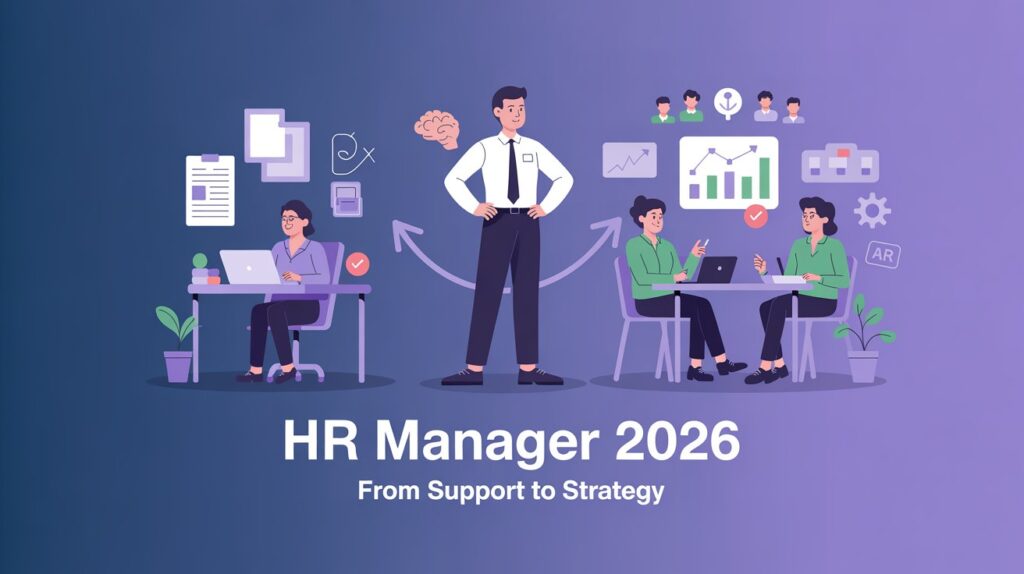
A decade ago, walking into an HR Manager’s office usually meant one thing: you were in trouble, needed a policy explained, or were sorting out paperwork. Today, the best HR Managers are as likely to be found in the boardroom as in their own office — debating talent strategy, advising on organisational restructures, or helping the CEO navigate a major cultural shift.
The role has fundamentally changed. In 2026, an HR Manager is no longer just the person who “handles people stuff.” They are a strategic partner who directly influences whether the company can attract, develop, and retain the talent it needs to grow. They sit at the intersection of business goals and human realities, translating leadership vision into practical people strategies — and vice versa.
This evolution didn’t happen overnight. AI has automated many routine HR tasks, hybrid work has rewritten the rules of engagement, and employees now demand more than fair pay — they want purpose, growth, flexibility, and genuine inclusion. Organisations that still treat HR as a pure support function are falling behind. The ones pulling ahead have elevated their HR Managers to true strategic roles.
In this article, we’ll explore what the HR Manager role really looks like in 2026, the core responsibilities that matter most, the skills that separate good from exceptional, the toughest challenges, and how you can excel in this evolving position.
How the HR Manager Role Has Evolved
Not long ago, success in HR was measured by keeping things compliant, processing paperwork efficiently, and staying out of legal trouble. That was HR 1.0.
Then came HR 2.0 — more operational, focused on recruitment, training, and employee relations. HR Managers became coordinators and problem-solvers.
In 2026, we’re firmly in HR 3.0. The HR Manager is expected to act as a strategic business partner. They don’t just execute strategy — they help shape it. They bring insights about workforce capabilities, risks, and opportunities that directly impact business outcomes.
This shift looks slightly different around the world. In the US and UK, there’s often heavy emphasis on compliance, litigation risk, and performance metrics. In many European countries, strong works councils and employee rights frameworks require deeper consultation skills. In fast-growing Asian markets, the focus tends to lean toward aggressive talent acquisition, rapid scaling, and skills development in high-growth sectors like technology and renewables.
Regardless of geography, one thing is consistent: today’s HR Manager must speak the language of business as fluently as the language of people.
Core Responsibilities of an HR Manager in 2026
The day-to-day work of an HR Manager is now far more varied and impactful than most outsiders realise.
Talent Strategy & Workforce Planning
Great HR Managers don’t wait for hiring requisitions to appear. They work with leadership to forecast future talent needs, identify critical skills gaps, and build succession plans for key roles. They analyse internal mobility opportunities and create talent pipelines that reduce dependency on expensive external hiring.
Strategic Recruitment & Employer Branding
While HR Administrators and recruiters handle the execution, the HR Manager owns the strategy. This includes defining what “great talent” looks like for the organisation, shaping the employer brand, and ensuring the candidate experience reflects company values. In a competitive global market, they treat employer branding as seriously as product marketing.
Performance Management & Employee Development
Modern HR Managers are moving away from outdated annual reviews toward continuous performance conversations, OKRs, and coaching cultures. They design development programs that actually build capabilities the business needs — whether that’s leadership training, AI literacy, or cross-cultural collaboration skills.
Compensation, Benefits & Total Rewards Strategy
This goes well beyond approving salary increases. HR Managers design competitive total rewards packages that balance business affordability with employee expectations. In 2026, this often includes creative elements like flexible benefits, wellbeing support, and equity or bonus structures that drive long-term retention.
Culture, Engagement & Employee Experience
HR Managers are chief culture architects. They measure engagement across diverse, often hybrid or global teams, identify pain points, and implement initiatives that improve the day-to-day employee experience. They understand that culture is not just about fun events — it’s about how decisions get made, how feedback is given, and how people feel safe to speak up.
Change Management & Organisational Development
Whether it’s implementing new AI tools, merging teams, or shifting to a new operating model, HR Managers lead the people side of change. They help leaders communicate clearly, support employees through uncertainty, and minimise disruption to productivity and morale.
Compliance, Risk Management & Ethics
Even as the role becomes more strategic, compliance remains non-negotiable. HR Managers must navigate increasingly complex global employment laws, data privacy regulations (like GDPR and its equivalents), and ethical questions around AI use in hiring and performance management.
Essential Skills Every HR Manager Needs in 2026
To succeed at this level, certain skills have become non-negotiable:
- Advanced Business Acumen: You need to understand financial statements, business models, and how your industry makes money. Only then can you propose people solutions that make commercial sense.
- Leadership & Influence: HR Managers rarely have direct authority over department heads, yet they must influence them. Executive presence and the ability to build trust are critical.
- People Analytics & Data-Driven Decision Making: Gut feel is no longer enough. You must interpret workforce data and present clear, actionable insights to senior leaders.
- Strategic Thinking: The ability to see the big picture, anticipate future challenges, and connect HR initiatives to broader business objectives.
- Cross-Cultural Intelligence: In global organisations, you need to navigate different cultural norms, communication styles, and expectations with sensitivity and effectiveness.
- Stakeholder Management: Balancing the needs of employees, managers, and executives requires high emotional intelligence and political savvy.
Major Challenges HR Managers Face Today
Let’s be honest — the role is rewarding but demanding.
One of the biggest tensions is balancing employee advocacy with business priorities. When leadership wants to cut costs and employees want better benefits, you’re often caught in the middle.
Other common challenges include managing constant change fatigue, proving the ROI of HR initiatives to skeptical executives, retaining top talent in highly competitive markets, and staying current with fast-moving technology and regulations.
Many HR Managers also struggle with burnout. Because they’re the “people experts,” everyone expects them to be available for crises while still delivering strategic work.
How to Excel as an HR Manager in 2026
If you want to move from being seen as support to being recognised as a true strategic partner, focus on these practical steps:
First, become deeply familiar with your company’s business strategy and metrics. Sit in on finance and operations meetings. Learn what success looks like for the organisation.
Second, build strong, trust-based relationships with line managers and executives. Become their go-to advisor on people matters, not just the person who processes requests.
Third, focus relentlessly on outcomes rather than activities. Instead of reporting “we ran 12 training sessions,” show “leadership development programs contributed to a 18% improvement in team performance scores.”
Finally, invest in your own growth. Join professional networks, attend industry conferences, and continuously learn about emerging HR technologies and global workforce trends.
The Future Outlook
Looking ahead, the most successful HR Managers will take on even broader responsibilities — advising on the ethical use of AI in the workplace, building talent strategies for sustainable business practices, and designing organisations where humans and technology work effectively together.
The path from HR Manager to CHRO or Chief People Officer is clearer than ever for those who consistently demonstrate strategic impact.
Final Thoughts
In 2026, the organisations that thrive will be those that treat their HR Managers as genuine strategic partners rather than administrative support.
If you’re currently in an HR Manager role, ask yourself this: Are you spending most of your time reacting to requests, or are you proactively shaping how your organisation finds, develops, and keeps its people?
The difference between the two approaches is the difference between being busy and being truly valuable.
The HR Manager role has never been more challenging — or more important. Those who embrace the strategic partner mindset will not only advance their own careers but will play a central role in building stronger, more resilient, and more human organisations.
What part of the HR Manager role feels most strategic in your organisation right now? I’d be interested to hear how the reality looks from where you sit.