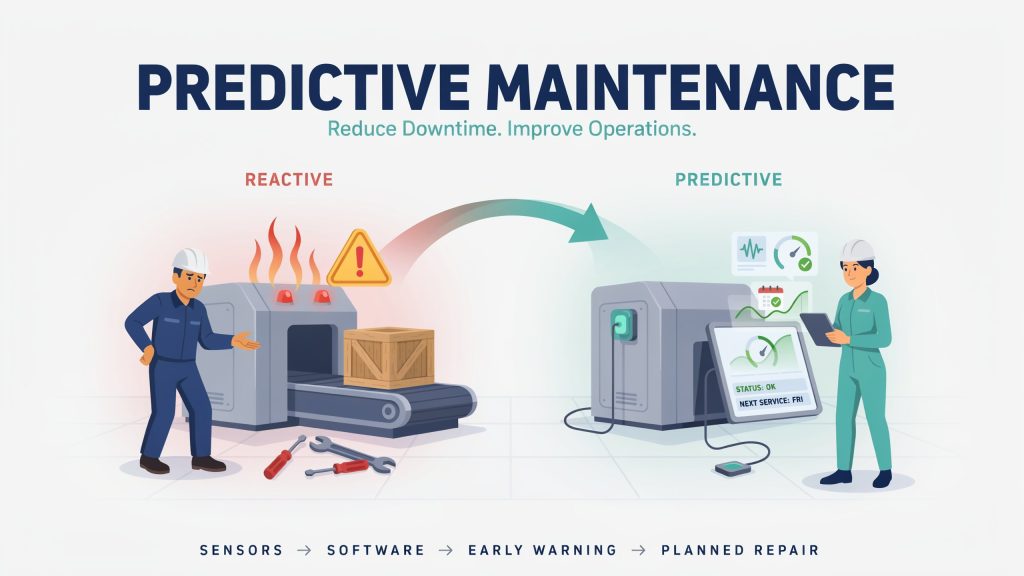
Predictive maintenance software connects equipment data with the work required to keep operations running. Rather than replacing parts on fixed schedules or waiting for failures, teams use asset conditions to choose the right time for intervention. This approach reduces wasted labor, limits avoidable downtime, and gives supervisors better information for planning. Its value depends on reliable data, controlled workflows, and practical adoption, so software selection requires an operations-focused assessment.
Why the Software Matters
Maintenance teams need a complete view of asset history, current readings, open work, and parts availability. Those records connect a potential issue with a specific task, assigned technician, required procedure, and completion date. A careful comparison of the best predictive maintenance software helps operations leaders determine whether a product connects condition data with daily maintenance work. The decision should focus on useful evidence rather than an extensive feature list.
Predictive maintenance creates value when software turns equipment signals into defined maintenance actions. A rise in vibration, temperature, pressure, or operating hours should trigger a review, inspection, or work order with clear ownership.
That connection prevents a common problem in data programs: collecting measurements without changing maintenance practices. A dashboard has limited value if technicians cannot see the issue, follow the procedure, record findings, and close the task within one workflow.
Where Operations Gain Value
The biggest gains come from fewer disruptions, better maintenance timing, and longer-lasting assets.
Fewer Unplanned Interruptions
Condition monitoring helps teams identify abnormal equipment behavior before a breakdown stops production. Maintenance planners gain time to schedule labor, isolate equipment, and arrange replacement parts during a planned maintenance window.
The financial benefit comes from avoiding the full cost of disruption. That cost includes lost output, emergency labor, expedited shipping, secondary damage, and delayed customer orders. Software makes these events easier to analyze by linking asset conditions with work history.
Better Maintenance Timing
Calendar-based maintenance treats every asset alike, even when operating conditions vary. Predictive software uses equipment behavior and usage data to determine when an inspection or repair deserves attention.
This timing reduces unnecessary part replacements and prevents teams from delaying work until a failure becomes urgent. It also gives supervisors a defensible basis for changing task frequency, given that the software preserves the readings and maintenance history behind each decision.
Longer Asset Service
Maintenance records reveal recurring failure patterns across equipment, locations, and operating conditions. A team can determine whether a component fails after a certain number of cycles, under a particular load, or after a repeated process error.
That evidence supports better repairs and more accurate replacement planning. It also helps engineers address root causes instead of repeatedly correcting the same symptom.
Capabilities That Affect Results
A useful system must collect data from the sources an operation already uses. Those sources can include sensors, machine controls, historical records, inspections, and meter readings.
Integration quality matters because incomplete data leads to incomplete decisions. The software should preserve asset identity, timestamps, readings, and related work orders as information moves between systems.
Work order automation also affects results. When a sensor event creates an inspection or corrective task, the notification should reach the right person with enough detail to act. The completed record should include the finding, action taken, parts used, labor time, and any follow-up requirement.
Mobile access supports this process on the plant floor. Technicians need to review asset history, receive assignments, attach readings or images, and update work without returning to a fixed computer.
How To Judge the Business Case
Operations leaders should compare software costs with measurable maintenance results. Useful measures include emergency work orders, downtime hours, overtime, repeat failures, parts consumption, and planned maintenance completion.
The baseline must come before implementation. Without a starting point, teams cannot determine whether predictive maintenance changed performance or simply added another reporting layer.
A pilot involving a small group of failure-prone assets creates a practical test. The team can confirm data reliability, alert accuracy, technician response, and workflow fit before expanding across the facility.
The pilot should also define action thresholds. Too many false alarms waste attention, while thresholds that miss real degradation delay intervention. Teams should adjust thresholds using documented findings and completed work.
Adoption Determines the Return
Predictive maintenance requires cooperation between maintenance, operations, engineering, and information technology staff. Each group contributes different information, and the process fails when ownership remains unclear.
Technicians also need concise procedures for responding to alerts. Training should explain what each signal means, which checks confirm the issue, and when the finding requires a work order or escalation.
Supervisors should review alert responses during routine meetings. This review exposes missed notifications, incomplete records, recurring failures, and assets that generate little useful data. The software then supports a managed process instead of becoming another unused system.
Conclusion
Predictive maintenance software earns its place by connecting reliable equipment data with timely, documented work. Its value is shown through fewer emergency repairs, better maintenance timing, clearer planning, and better asset decisions. Operations leaders should establish a measurable baseline, select a limited group of assets, and test the workflow from alert through completed task. That process shows whether the software improves daily execution before the organization expands its use.