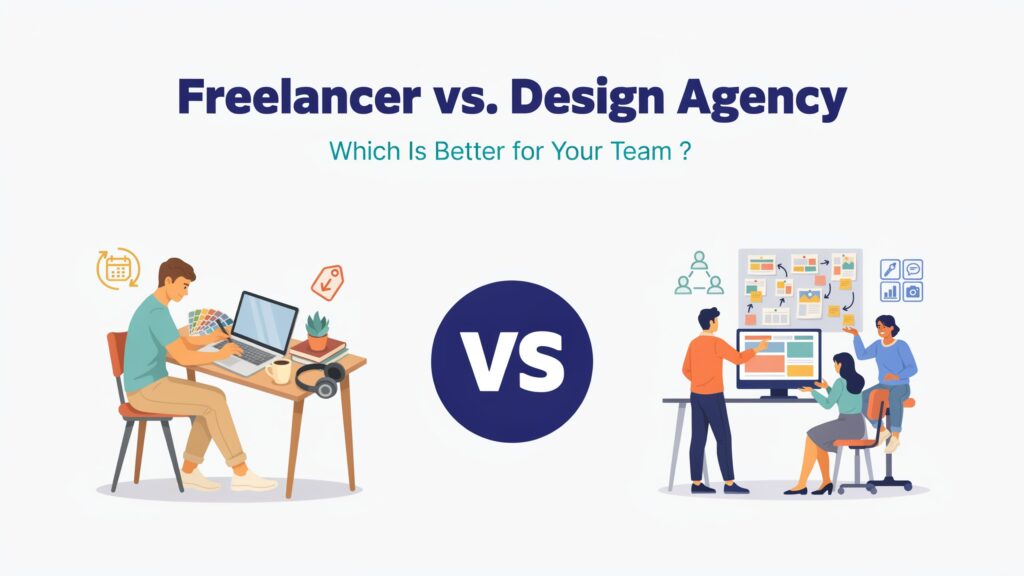
Modern teams ship visual content fast across social feeds, pitch decks, and product launches. Picking between a solo freelancer and a creative agency shapes your budget, speed, and brand look. Comparing how both models handle cost, daily work, and scope helps leaders choose well in 2026.
Continue reading to discover everything you need to know!
How Design Needs Have Changed in 2026
Marketing and product teams face daily demand for fresh graphics across web, mobile, and print. Smart tools speed up basic resizing. That shift makes human taste and clean layout skills worth even more.
Remote work has broken down location walls for creative hiring. Companies keep lean core squads and plug in outside help when big campaigns heat up.
Deciding between 1 solo creator and a full agency starts with seeing how each setup runs. Clear goals make this choice much easier for busy leaders.
What a Freelance Designer Brings to Your Team
Solo contractors offer direct chat and quick scheduling that fit fast teams. When you hire a graphic designer on a freelance basis, you talk straight to the person building your files. That direct loop cuts out middle layers and keeps feedback rounds short.
Many freelancers focus on clear niches like logos, slide decks, social kits, or box art. You can book a pro for 1 urgent launch or set up light weekly hours.
Teams with a clear brand direction often find that solo talent moves fast and adapts well. Your staff gets full attention without agency red tape.
Where a Creative Agency Shines
Creative agencies group many pros under 1 roof, from art leads to writers and motion experts. Working with an agency provides a full team, a dedicated project manager, and clear accountability for multi-deliverable projects with high strategic stakes. Instead of chasing 4 separate contractors, your lead deals with 1 main contact who keeps every piece on track.
Agencies excel during big rebrands, major product launches, and wide campaigns. Their built-in review steps catch visual slips and copy errors before files go live.
When 1 campaign spans web pages, event booths, and paid ads, an agency keeps the look tight. Strong quality checks protect your brand at every step.
Breaking Down Budgets and Pricing Models
Money often marks the first big fork in the road between solo talent and an agency. Across the United States, the average hourly rate for a freelance graphic designer sits between $50 and $100. In the US, freelance graphic designers typically charge $25 to $150 per hour based on their seniority, and ongoing monthly retainers start at several hundred dollars.
- Hourly billing: Freelancers log exact hours spent on new layouts and edits, which fits small tasks.
- Flat project fees: Both freelancers and agencies quote fixed prices when deliverables and dates are clear upfront.
- Monthly retainers: Ongoing plans save set hours each month so your design queue moves without new contracts.
- Agency overhead tiers: Full-service shops charge more to cover account leads, planning calls, and team review.
Paying agency rates makes sense when 1 big launch carries high sales goals. Smaller teams with steady, simple graphic needs stretch their cash further with solo talent. Smart budget planning keeps your creative spend tied to real returns.
Speed, Flexibility, and Daily Workflow
Turnaround speed looks very different based on who runs the work calendar. A solo designer can update a pitch deck or web banner in 24 hours with zero internal handoffs.
Quick chat notes and short screen clips replace long status calls. Fast feedback loops help small teams hit tight weekly deadlines.
Balancing Bandwidth and Edits
Agencies run on set sprint plans with formal briefs and fixed review windows. That structure stops chaos on huge launches. Rush edits late in the game can still trigger extra fees, though clear rules keep large rollouts safe.
Managing Brand Consistency and Capacity
Every growing firm wants its fonts, colors, and layouts to match across all channels. A solo freelancer keeps a tight look when they handle all your core files for months.
They learn your taste well and need very few reminders about brand rules. Deep familiarity saves hours of review time each week.
Handling Sick Days and Sudden Spikes
Solo shops hit real limits when that designer gets booked up or takes time off. Agencies absorb sudden rush weeks, and staff leaves smoothly since backup designers already know your style guide. Your launch dates stay safe even when surprise roadblocks pop up.
Key Questions to Ask Before You Choose
Before signing any deal, check your team bandwidth and project list for the next 2 quarters. Answering 4 plain questions will point your team toward the right creative setup:
- How much management time do we have? Freelancers need clear creative briefs from your staff, and agencies supply their own project leads.
- Are our tasks single-channel or multi-skill? Simple social posts and 1-page flyers fit a solo pro, and video, web, and print bundles favor an agency.
- How steady is our monthly design load? Shifting workloads fit flexible freelance hours better than locked-in agency retainers.
- What happens if our main contact is out? High-stakes launch dates call for backup staff that solo creators rarely have on hand.
Clear answers here stop scope creep and stalled launches before they start. Your team lead should own creative direction when you bring in solo talent. An agency fits best when you want strategy and oversight built in.
Blending Both Models for Hybrid Agility
Smart 2026 teams rarely treat this choice as a strict either-or path. Many marketing leads hire an agency to build their core brand look, style rules, and main templates. That upfront spend locks in a sharp base across every customer touchpoint.
Once those master files are ready, a trusted freelance designer steps in for daily graphics, email headers, and sales sheets. This split setup protects brand quality at the top without draining monthly cash on routine work. Teams get big-agency polish paired with fast daily output.
Choosing the Right Design Partner for Your Team
Both freelance designers and creative agencies bring real value to modern teams in 2026. Solo creators offer speed, direct chats, and leaner costs, and agencies bring deep multi-skill teams and built-in oversight.
Look closely at your upcoming projects, check your budget, and start talking with design partners who fit your goals. A clear plan today sets your brand up for smooth growth all year long.
Check out the rest of our site for more!