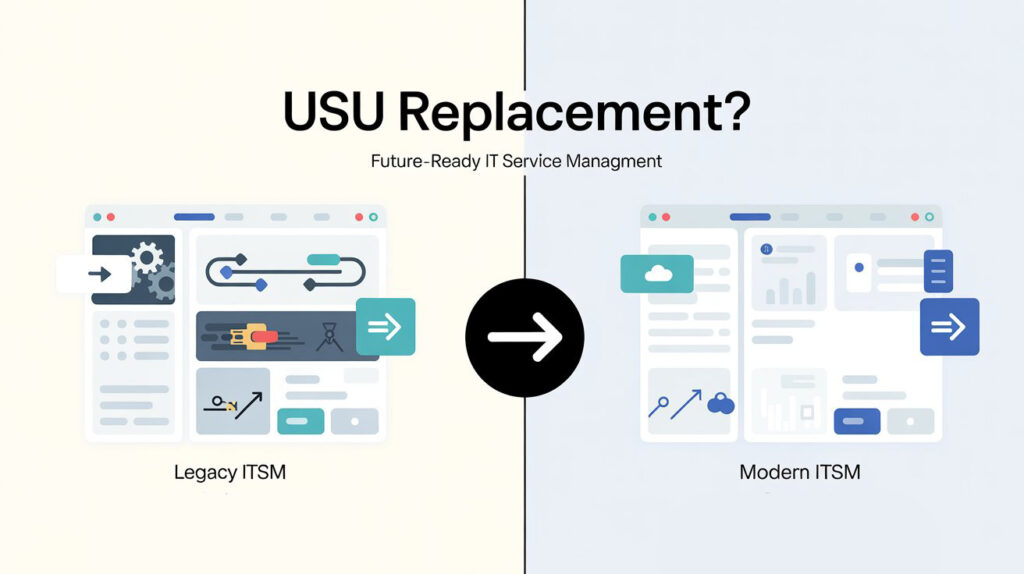
IT service management (ITSM) platforms play a vital role in how organisations deliver reliable services, manage change, and support employees. USU has long been recognised for its strong roots in ITSM, IT asset management, and knowledge management, particularly in structured and process-driven environments. However, as organisations modernise their IT landscapes, expectations around usability, agility, and scalability continue to rise.
This has led many organisations to explore a USU replacement—not because USU lacks capability, but because business priorities, user expectations, and service management models have evolved. Choosing the right alternative requires a careful evaluation of current challenges, future goals, and how well a platform supports modern service delivery.
Why Organisations Look for a USU Replacement
Evolving User Expectations
Today’s employees expect intuitive, consumer-like experiences when interacting with IT services. Platforms that feel complex or overly process-heavy can reduce adoption, increase manual work, and place additional strain on service teams.
Need for Greater Agility
Modern IT environments demand speed and flexibility. Organisations increasingly favour platforms that can be deployed quickly, adapted easily, and improved continuously—without lengthy configuration cycles or heavy reliance on specialist skills.
Balancing Structure with Simplicity
USU is often valued for its structured approach to ITSM. However, some organisations find that this structure becomes restrictive as they seek simpler workflows, faster changes, or broader service management use cases beyond IT.
What to Look for in a Modern ITSM Alternative
Strong ITSM Fundamentals
Any alternative should deliver mature, reliable support for core ITSM processes, including:
- Incident, problem, and change management
- Request fulfilment and self-service portals
- SLA tracking, reporting, and dashboards
These capabilities should work effectively out of the box, without requiring extensive customisation.
Intuitive User Experience
Adoption is critical to success. Platforms with clean interfaces, straightforward request forms, and clear navigation tend to perform better with both end users and service agents.
Built-In Governance and Visibility
A modern ITSM platform should provide clear insight into services, performance, and compliance. Built-in reporting, dashboards, and audit support reduce reliance on custom development and spreadsheets.
Scalability Without Complexity
As organisations grow, their ITSM platform should scale smoothly. Adding users, services, or departments shouldn’t significantly increase administrative overhead or management effort.
When Replacing USU Makes Strategic Sense
Expanding Service Management Beyond IT
Many organisations now use service management principles across HR, facilities, and finance. Platforms designed for enterprise-wide service management often provide greater flexibility than tools primarily focused on IT.
Prioritising Faster Time to Value
If stakeholders expect quick improvements in service quality, visibility, or automation, platforms that emphasise rapid deployment and predefined best practices may be a better fit.
Supporting Digital Transformation
Cloud-first strategies, automation, and data-driven decision-making are now standard expectations. Organisations may look for platforms that better support these goals with modern architectures and user-centric design.
In these scenarios, teams often evaluate solutions positioned as a USU replacement, comparing how different platforms balance usability, governance, and long-term value.
How to Approach the Evaluation Process
Define Clear Requirements Early
Start by documenting current pain points, must-have features, and future goals. This keeps the evaluation focused on real needs rather than vendor feature lists.
Involve Key Stakeholders
IT, finance, procurement, and business service owners all interact with ITSM platforms differently. Including these perspectives leads to more balanced decisions and smoother adoption.
Assess Total Cost of Ownership
Look beyond licence fees. Consider implementation effort, training requirements, administrative overhead, and scalability when comparing platforms.
Test Real-World Scenarios
Demos and trials should reflect everyday workflows—handling incidents, approving changes, onboarding users, and reporting on performance. This reveals practical strengths and limitations early.
Common Benefits of Replacing Legacy ITSM Platforms
Improved User Adoption
Simpler, more intuitive interfaces encourage employees to use self-service options, reducing manual work and support requests.
Increased Operational Efficiency
Modern automation and streamlined workflows help service teams resolve issues faster and more consistently.
Better Cost Control
Greater visibility into usage, services, and performance supports more informed decisions around optimisation and investment.
Future-Ready Service Management
Platforms designed for cloud-first, scalable environments are better equipped to support ongoing digital transformation.
Frequently Asked Questions
Is USU no longer a viable ITSM solution?
USU remains suitable for some organisations, particularly those with strong process-driven requirements. The key question is whether it still aligns with your current priorities and expectations.
What typically drives organisations to seek a replacement?
Common drivers include usability challenges, desire for faster time to value, expanding service management beyond IT, and the need for more flexible platforms.
Are modern alternatives less structured than USU?
Not necessarily. Many alternatives offer strong ITIL alignment while presenting processes in a more intuitive and flexible way.
How long does an ITSM replacement evaluation take?
A thorough evaluation usually takes several weeks, allowing time for requirement gathering, demos, and stakeholder feedback.
Conclusion
Replacing an ITSM platform is a significant decision, but it can also be a powerful opportunity to improve service quality, efficiency, and user satisfaction. For organisations reassessing their current setup, exploring a USU replacement is about more than switching tools—it’s about aligning service management with modern business needs.
By focusing on usability, scalability, governance, and total cost of ownership, organisations can select an ITSM platform that supports effective service delivery today while remaining flexible and sustainable for the future.