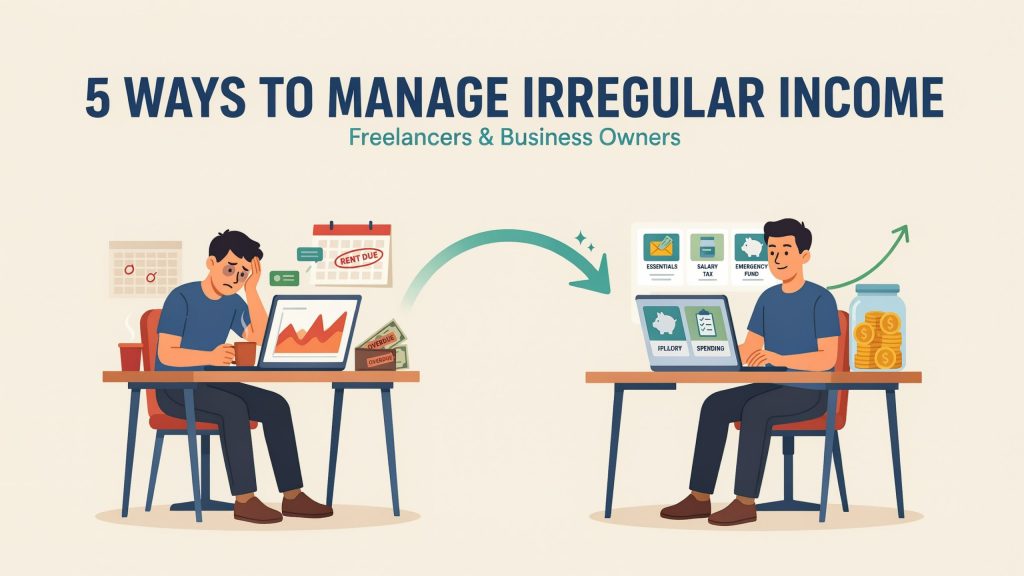
It is the first week of the month. Rent is due on the 1st, and your inbox has been quiet since last Thursday. Last month was brilliant, so why does the bank balance feel so tight? If your income arrives in lumps rather than a fixed monthly salary, this will be familiar. The good news is that uneven earnings can be managed with a few sensible habits.
Why Irregular Income Is So Hard to Plan Around
Bills do not change with your workload. Rent, insurance, energy and phone contracts arrive on the same date whether you had a busy month or not. It is tempting to spend a strong month as if it will last, and then struggle when the work slows down.
Self-employment is also more common than many people realise. In Scotland, 11.1% of people in employment aged 16 and over were self-employed between April 2025 and March 2026.
Work Out Your Essential Monthly Costs
Start by listing what you must pay every month: housing, bills, food, transport, insurance and any debt repayments. Check your bank statements from the last three months, as small subscriptions are easy to forget.
Once you have a total, you know the minimum income you need in a typical month. That number becomes your target, and it makes every other decision easier.
Pay Yourself a Fixed Wage From Your Business Account
Keep business and personal money in separate accounts. Choose a fixed amount to pay yourself each month, and transfer only that sum into your personal account.
Set the figure at a level you can sustain in your weakest month. Anything left in the business account becomes a buffer. It builds up in strong months and covers your wage in quiet ones.
Set Aside Money for Tax as It Comes In
Tax is not your money, even if it sits in your account for months. Each time a client pays, move a fixed share into a separate savings account. Many people set aside 25 to 30 per cent, though the right amount depends on your profits.
If your Self Assessment bill is over £1,000, HMRC may ask for payments on account in January and July. Check your position in your HMRC online account so these dates do not catch you out.
Build a Buffer for Slow Months
An emergency fund is cash you can reach quickly when work dries up. MoneyHelper, the government-backed guidance service, suggests building up a fund and saving regularly, even if the amounts are small. For irregular earnings, aim for more than the minimum.
Keep the money in an easy-access savings account, separate from your day-to-day account. Treat each top-up as a bill you pay first.
Adjust Spending When Work Slows Down
Decide in advance what counts as a slow period. For example, you might pause non-essential spending if income falls below your monthly wage for two months in a row. Cut back on subscriptions, dining out and planned upgrades.
Chase late invoices promptly, and ask for deposits or stage payments on larger projects. These steps protect your cash flow without reducing the work you can take on.
A Practical Example
Consider Sam, a graphic designer whose monthly income ranges from £1,500 to £4,500. Sam’s essential costs are £2,000 a month, so Sam pays a fixed £2,400 into their personal account each month.
In strong months, Sam sets aside 25 per cent of each payment for tax and adds the rest to the business account. In quiet months, that account covers the gap. Over a year, the buffer grows and the slow months feel far less stressful.
Looking Beyond Next Month’s Cash Flow
Managing the next few weeks is essential, but it should not be the whole plan. Savings goals, such as a house deposit or a future holiday, need space in your budget too.
Retirement planning matters just as much. Self-employed people do not have an employer pension, so regular contributions must come from you. Some people find it helpful to speak with a local adviser, such as one offering financial planning Kingston, to see how savings and pensions fit together.
Planning for the Next Quiet Month
Irregular income will always be part of self-employment, but it does not have to mean unpredictable finances. Work out your essential costs, pay yourself a steady wage, set aside tax, build a buffer and adjust spending when needed. Start with one habit this month. Small steps now will make the next quiet period far easier to handle.