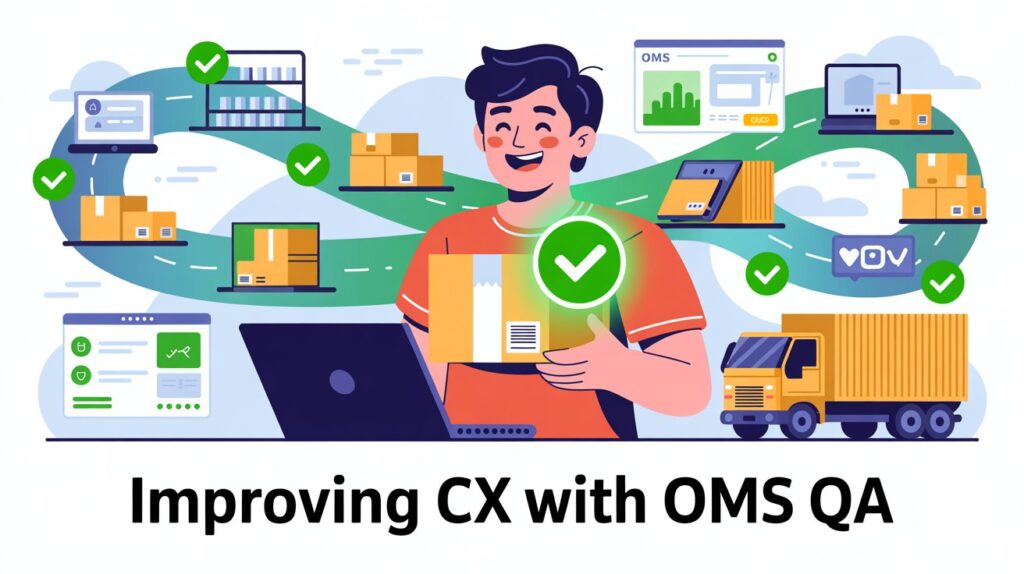
The majority of customer experience dialogues revolve around the storefront – design, speed, checkout flow. However, the actual decision usually occurs once the purchase button is released. That is where Order Management System comes in, orders are routed, inventory updated, fulfillment initiated and status updates that customers depend on are sent.
When the OMS is working well, the experience comes easy. When it falters, customers are aware of it instantly. Orders become stuck in processing. Shipping notices are received late or not at all. Mismatch of inventory results in cancellations that no marketing campaign will be able to iron out.
You might have spent a lot of money on front-end polish, but the post-purchase experience can still destroy customer trust when the OMS is not acting in a predictable manner. Such failures are not very dramatic in system logs. They are manifested in the form of minor inconveniences that add up – late confirmations, incomplete deliveries, vague order statuses.
This is the reason why quality assurance is so important. QA does not simply test the functionality of the system, but it tests the integrity of the whole order path in actual circumstances. It puts to the test the transfers between checkout, inventory, payment, and fulfillment, where customer trust is silently gained or lost.
This is important since the experience of the order has a direct influence on repeat business. Then, you will observe how the structured OMS quality assurance can be used to avoid typical failures and maintain customer experiences steady with the increase in order volume and system complexity.
Ensuring Smooth and Accurate Order Processing
Validating end-to-end order workflows
Order journeys do not often fail at the blatant points. More frequently, the problem is seen in the handoffs – when an order is transferred out of checkout to processing, out of processing to fulfillment, or out of shipment to return handling. This is why the validation of workflow should be the entire path.
You must be able to test actual customer situations, not only clean demo flows. This covers channel placement of orders, status, partial cancellations, split shipments, and returns. Every step presents logic that may act in a different manner under load or edge conditions.
Once such paths are not verified properly, the symptoms manifest themselves very fast: delayed confirmations, frozen orders, multiple refunds, or vague status messages.. An experienced order management software testing company typically builds scenario-based coverage that mirrors real buying behavior, helping surface these issues before customers encounter them.
Reliable workflows keep the post-purchase experience predictable – which is exactly what customers expect after they’ve already paid.
Maintaining inventory and fulfillment accuracy
The silent hero of OMS performance is inventory accuracy. When there is even the slightest drift in stock data, the decisions on fulfilment start to shake. Products can be shown as available when out of stock, or routing logic can route orders to the incorrect warehouse.
You should ensure that inventory changes are reflected in all connected channels in near real time. This includes marketplaces and in-house warehouse systems. You should also test whether the reservation logic can function properly in a high-concurrency environment, such as when two or more orders are placed on the same stock pool.
The same applies to fulfillment routing. The OMS should always choose the right warehouse, shipping mode, and priority policies depending on the location, availability, and business logic.
Once the inventory synchronization and routing decisions are correct, the entire order process runs smoothly. If they fail, the customer experience will be unpredictable in a short period of time.
Building Trust Through Reliable Order Experiences
Accurate pricing, payments, and billing
There is nothing that kills confidence more than a figure that fluctuates after checkout. The logic of pricing within the OMS should be able to deal with discounts, taxes, shipping costs, and currency regulations without any surprises. Even minor errors can cause refunds, customer support, or billing issues.
You must experiment with pricing in the real world: stacked offers, local tax differences, partial refunds, and multi-currency payments. Close attention should also be paid to the flows of payment processing. There should be predictable behavior of authorization, capture, retries, and failure handling across gateways.
Billing accuracy often depends on coordination between OMS logic and backend development services that manage financial data. If these layers fall out of sync, invoices and order totals may no longer match. Thorough validation keeps financial data consistent and prevents customer-facing errors that are difficult to explain after the fact.
Consistent communication and order visibility
Reliability is judged by customers based on what they see. The story they tell after making a purchase consists of order confirmations, status updates, shipping notifications, and tracking links. When such a story has holes, trust is lost soon.
It should be tested to ensure that all status changes are accompanied by the appropriate notification at the appropriate time. This covers edge cases like partial shipments, backorders, cancellations, and returns. The messages should be based on the real state of the order and not a past image.
You should also ensure that the tracking data flows properly out of carriers into customer-facing systems. Even in the case where fulfillment is running smoothly, delayed or conflicting updates confuse.
Customers feel in control of their orders when communication is accurate and timely. This level of visibility is often as important as the speed of delivery itself.
Сonclusion
Order management is an aspect that does not often receive the limelight, but it does influence the way customers will recall the whole purchase. When the workflows are verified, inventory is kept in tune, pricing is correct, and the status updates are received in time, the experience is effortless. OMS quality assurance introduces discipline to these moving parts, and the little failures that are likely to be revealed only when orders begin to flow at scale are caught.
This effect is evident throughout the entire journey. There are fewer fulfillment surprises. There are fewer billing disputes. There is effective communication that keeps customers informed instead of making them guess. These details may seem operational, but they significantly impact re-purchasing and the initiation of alternative comparisons among buyers.
Good OMS QA does more than just help with system stability. It fosters trust in all post-purchase interactions, where customer loyalty is typically established. With predictable and transparent order journeys, satisfaction automatically increases, as does the probability of repeat purchases.