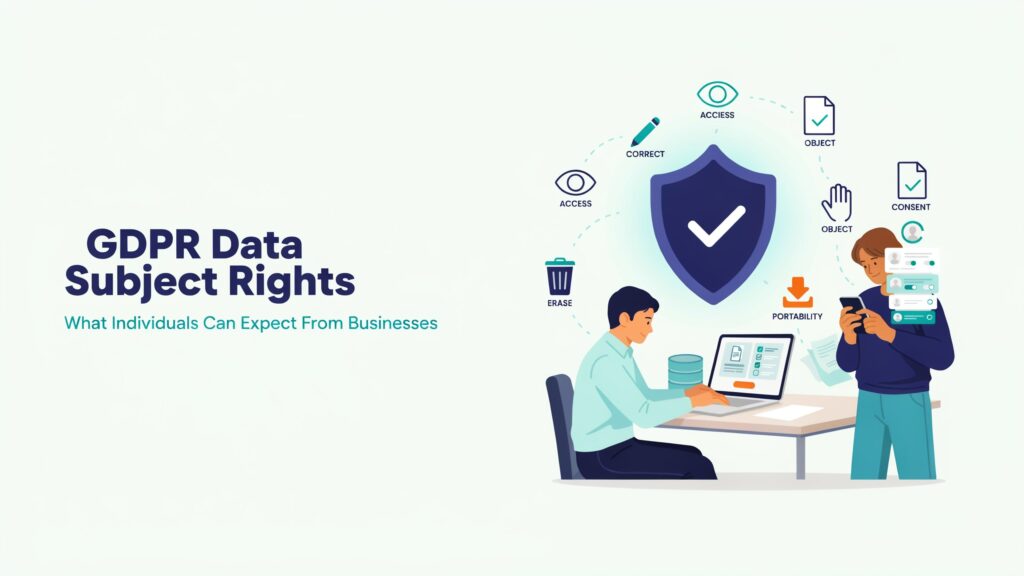
Ever thought about what goes on with your personal data when you provide it to a business? Well, you would be surprised to see how much of your personal information is collected and processed, whether you are doing your online shopping or your banking. But individuals have legal rights to help restrict the use of their information. GDPR Training teaches professionals these rights and the obligations companies have to meet.
But what about when someone asks to see their information or wants their information erased? What should businesses do to respond correctly and meet the legal obligations? In this blog, we will cover the main GDPR data subject rights and what individuals should expect from organisations.
What are GDPR Data Subject Rights?
GDPR data subject rights are essentially rights that offer individuals more control over how companies (their data controllers) gather, store, utilise, and disclose personal information about that individual.
They are a vital part of Data Protection Compliance. They give individuals access to their information, the right to correct mistakes, the right to be forgotten, and the right to object to certain types of processing.
Companies need to be aware of these obligations and have adequate processes in place to deal with these requests. GDPR Training enables these compliance officers to understand these responsibilities and use the principles of data protection when dealing with personal information.
Key GDPR Data Subject Rights Every Individual Should Know
Key GDPR rights: protect yourself & get back your personal data:
Right of Access
The Right of Access is where individuals can ask businesses for copies of their information. This is typically called a Data Subject Access Request (DSAR).
Businesses have a month to respond in general, although there are rules and extensions. Requests are usually free; however, in some rare cases, costs may apply.
Right to Rectification
Incorrect or inadequate details on personal records can cause unnecessary trouble. The Right to Rectification permits an individual to request revisions to incorrect records.
Organisations must review such requests and make modifications as needed. This will ensure that correct information is in place and mistakes do not affect crucial decisions.
Right to Restrict Processing
In some cases, individuals may request firms to temporarily restrict the use of their personal information.
For instance, an individual may dispute the correctness of his or her records while the organisation investigates. If such a restriction applies, the processing should be restricted by companies as per the requirements of law.
Right to Data Portability
Right to Data Portability permits an individual to receive some part of their personal data in a structured, commonly used, and machine-readable format.
Where legal requirements exist, it also gives the right to move such information between service providers. This provides greater flexibility and control over one’s personal information.
Right to Object
People can object to direct marketing and other uses of their personal data.
If an individual objects, the business can no longer process the personal information for direct marketing. For other processing operations, the right is conditional and dependent on a legal basis.
Rights Related to Automated Decision Making
Some organisations, including some governmental organisations, employ automated systems to make certain decisions regarding individuals. GDPR places additional safeguards on the use of decisions based solely on automated processing in respect of some decisions.
Depending on the circumstances, persons may have the right to contest choices, to express their opinions and to request human intervention.
What Individuals Can Expect From Businesses Under GDPR
Below are the important responsibilities businesses must fulfil when individuals exercise their GDPR data subject rights:
Clear and Transparent Communication
Businesses should disclose how they are collecting and safeguarding personal information. Privacy information should be easy to find and easy to understand.
Professional Training in GDPR helps professionals understand how important transparency is and what their duties are toward data protection.
Timely Responses to Requests
Businesses must react to valid rights demands in a timely manner. Most requests should receive a response within one month, although there are certain extensions and exceptions.
Organisations should make appropriate arrangements to deal with requests within time frames available.
Secure Handling of Personal Information
Businesses should safeguard personal information where reasonable security measures are in place.
Personal data protection approach protects against unwanted access and unauthorised disclosure. Businesses should also ensure that team are aware of their duties while dealing with sensitive information.
Conclusion
Understanding GDPR data subject rights enables individuals to exercise greater control over their personal data. These rights provide accountability and openness, from access to records to requesting corrections and contesting some processing actions. A proper response boosts confidence with customers and mitigates regulatory issues for businesses. Professionals can develop essential data protection knowledge through GDPR Courses, helping them understand regulatory requirements and implement effective compliance practices across organisations.