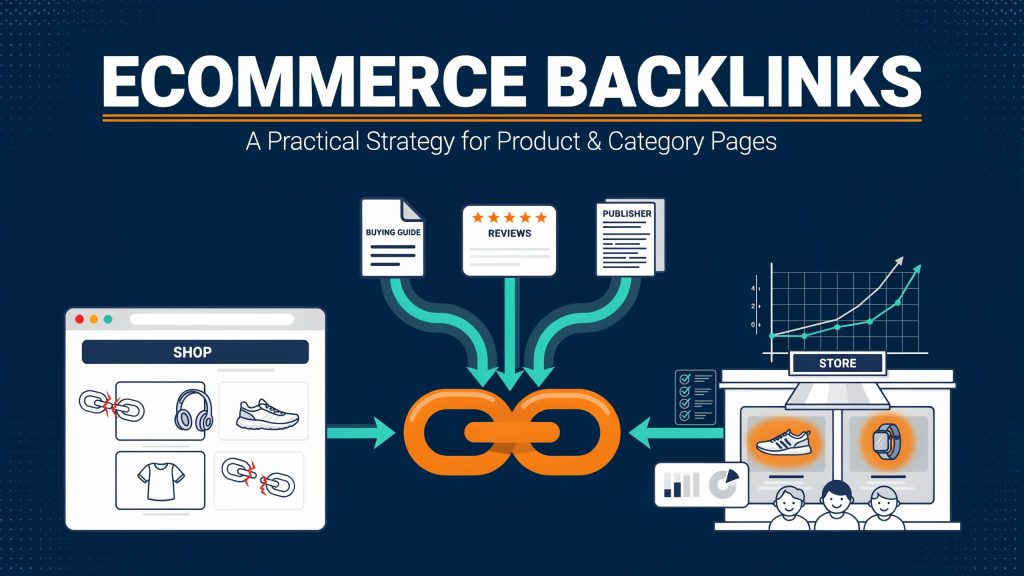
For an online store, search visibility is not just about getting the homepage noticed. Shoppers often land on a product or category page after searching for a specific item, comparison, or solution. Ecommerce backlinks can help those pages earn authority, but links are most valuable when they are relevant, editorially earned, and point to a page that genuinely serves the reader. That takes more than sending a batch of generic outreach emails.
The challenge is that product pages can look repetitive from the outside, while category pages may offer little beyond a grid of items. A workable plan starts by deciding which pages deserve attention, then giving publishers a concrete reason to cite them. For a closer look at tactics for both page types, see this guide to ecommerce link building.
Start with pages that can earn and convert
Not every URL needs a backlink campaign. Begin with pages that have a clear business role and a realistic chance of attracting relevant references. A category page may target a broad, high-intent search, while a product page may be a strong destination when the item is distinctive, well reviewed, or difficult to find elsewhere.
Before outreach, check that the page is indexable, loads quickly, works on mobile, and explains what a shopper needs to know. Product pages should have accurate specifications, availability, delivery details, and useful imagery. Category pages benefit from concise guidance that helps visitors compare options rather than simply repeating product names. Links can bring qualified visitors, but a confusing destination wastes that opportunity.
Give publishers something worth citing
A retailer asking for a link to a sales page has a harder pitch than one offering a useful resource. Build supporting material that answers questions customers and publishers already have. Depending on the store, that might include:
- Buying guides: Explain how to choose between product types, sizes, materials, or technical specifications.
- Original data: Share a survey, price analysis, or anonymized trend report, with a clear description of how the data was collected.
- Care and setup instructions: Offer detailed advice that is more useful than a short manual or a generic product description.
- Comparison tools: Help shoppers understand trade-offs between features without making unsupported claims about competitors.
These resources can earn links directly. They can also create a natural route to the commercial page: a publisher links to a guide, and the guide points readers to a relevant category or product. That is generally more credible than trying to place a sales URL in every article.
Build outreach around relevance
Make a short list of publishers whose audience overlaps with your customers: specialist publications, independent reviewers, trade associations, useful blogs, or local organizations where there is a genuine connection. Review their existing coverage before contacting them. A note that refers to a specific article or information gap is more useful than a mass email praising a site and asking for a backlink.
Offer a resource, expert comment, data point, or product sample where appropriate, and be transparent about any commercial relationship. Do not imply that a review must be positive or that coverage is guaranteed. If a publisher chooses to link, the page and link treatment should reflect its editorial judgment. Avoid paid link schemes, automated placements, and networks built mainly to manipulate rankings; a large number of weak links can create risk without bringing customers.
Use internal links to connect the work
External links are only part of the picture. Link from relevant guides, buying advice, and related category pages to the products that best answer the reader’s next question. Use descriptive anchor text that makes sense in context, not a repeated string of exact-match keywords. This helps visitors navigate and makes the relationship between informational and commercial pages clearer.
Check that important pages are not buried several clicks deep and that discontinued products do not leave broken paths. When an item is unavailable, decide whether to redirect, retain a useful page with alternatives, or remove it based on demand and relevance. A link-building campaign should not send visitors to pages that the store no longer maintains.
Measure more than the link count
Track referring domains, the relevance of linking sites, and the specific pages receiving links. Then look at organic impressions, rankings, referral visits, assisted conversions, and revenue over time. Rankings can move for reasons unrelated to a campaign, so compare trends against a baseline and avoid attributing every change to one new placement.
Also inspect the visitor journey. If links increase traffic but shoppers leave quickly, the page may not match the promise of the referring article. If visitors engage but do not buy, review product information, shipping costs, trust signals, and checkout friction. Link acquisition and on-page improvements work best as parts of the same process.
When outside help makes sense
Smaller teams may need support with research, content, outreach, or analytics, but the brief should be specific: define target pages, acceptable publisher types, review standards, and how results will be reported. Freelance digital marketing can cover different parts of that work; Osdire’s overview explains common roles and services, including conversion and landing page support. Whether hiring internally or externally, keep editorial decisions and quality checks with someone who understands the business.
Conclusion
A durable ecommerce backlink strategy connects useful information with pages that meet real customer needs. Prioritize a small set of strong destinations, create material publishers can cite, and pursue relevant relationships rather than link volume. Then measure whether the links bring qualified visitors and whether the landing pages help them take the next step. That combination is more valuable than a backlink tally on its own.