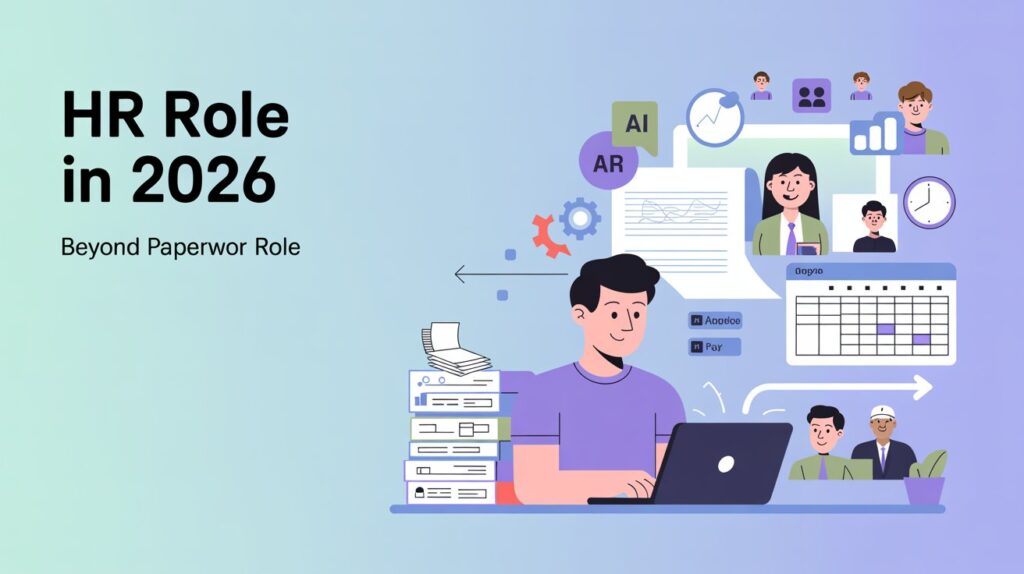
Most people still picture an HR Administrator or HR Assistant buried behind a desk, stamping forms and chasing paperwork. In 2026, that image is completely outdated. Sure, the role still involves plenty of documents and data entry — but the best ones are quietly keeping the entire people side of the business running smoothly while everyone else focuses on strategy, sales, or product launches.
If you’ve ever joined a company where onboarding felt seamless, payroll ran without drama, or a simple employee query got answered in minutes instead of days, chances are an HR Administrator or Assistant was working behind the scenes. They’re the glue. And in today’s hybrid, AI-augmented, people-first workplaces, their role has quietly become one of the most important — and most underestimated — jobs in any organisation.
This article dives deep into what the role actually looks like right now, how it’s evolving, what skills separate the average from the exceptional, and where it’s headed next.
HR Administrator vs HR Assistant: Understanding the Nuances
Let’s clear something up right away. In many companies — especially in India — the titles “HR Administrator” and “HR Assistant” get used interchangeably. But there’s a subtle difference in practice.
An HR Assistant is usually the more entry-level version. Think task-oriented support: scheduling interviews, updating employee records, helping with offer letters, and handling basic queries. It’s hands-on and operational from day one.
An HR Administrator tends to sit one notch higher. They own processes end-to-end — coordinating the full onboarding flow, maintaining compliance trackers, running reports for the HR manager, and making sure nothing slips through the cracks. They’re still not making big strategic decisions, but they’re the ones who keep the department organised and audit-ready.
The truth? In smaller companies or startups (very common in India), one person often wears both hats. In larger organisations, you’ll see clearer separation. Both roles almost always report to an HR Manager, HR Business Partner, or Head of HR.
The days when these were seen as pure “admin” jobs are fading fast. Today they’re operational enablers — and in many places, they’re the first real exposure employees have to the HR function.
Core Responsibilities: What the Job Actually Looks Like Day-to-Day
If you shadow a strong HR Administrator or Assistant for a week, you’ll see a surprising mix of work. Here’s how it breaks down in 2026.
Employee Lifecycle Administration
This is the heartbeat of the role. From the moment someone accepts an offer until (and sometimes after) they leave:
- Preparing and sending offer letters, contracts, and appointment letters
- Coordinating background verification and reference checks
- Running smooth onboarding — welcome kits, system access, buddy assignment, and that crucial first-day orientation
- Handling exit formalities, full-and-final settlements, and exit interviews
Get this part right and new joiners feel valued from day one. Mess it up and the damage to employer branding is instant.
Payroll & Benefits Support
You’re not the payroll manager, but you’re their right hand. Responsibilities usually include:
- Feeding accurate employee data into the payroll system
- Managing leave balances, attendance tracking, and leave encashment
- Handling benefits enrolment — health insurance, group term life, retirement plans
- In India, this also means monthly PF, ESI, and professional tax coordination (more on compliance below)
One small error in data entry can delay salaries for hundreds of people. The pressure is real.
Recruitment & Talent Acquisition Support
HR Admins and Assistants are often the unsung heroes of hiring:
- Posting jobs on Naukri, LinkedIn, Indeed, or the company career page
- Maintaining the ATS (Applicant Tracking System) and candidate pipeline
- Scheduling interviews, sending calendar invites, and coordinating with hiring managers
- Keeping candidates updated so the experience doesn’t feel cold and robotic
In 2026, many are also learning to work alongside AI screening tools — but they’re still the human touch that keeps candidates engaged.
HR Documentation, Compliance & Records
This part is non-negotiable. You own:
- Employee master data in the HRIS (Keka, Darwinbox, GreytHR, or Workday are common in India)
- Maintaining digital and (where required) physical records
- Statutory compliance — especially critical in India with EPF, ESI, Gratuity, Shops & Establishments, and the new Labour Codes that rolled out in late 2025
For PF, the 2026 rule of calculating on at least 50% of CTC (if basic + DA falls short) has made accuracy even more important. Miss a deadline or file the wrong ECR and you’re looking at interest and penalties. Same with ESI contributions and returns.
Employee Relations & Engagement Support
You’re often the first person employees turn to:
- Answering questions about policies, leaves, or benefits
- Helping organise town halls, festivals, or team outings
- Running pulse surveys or feedback sessions
- Supporting performance review cycles
In hybrid setups, you’re also the one making sure remote and office workers feel equally treated.
Essential Skills for a World-Class HR Administrator / Assistant
Technical skills get you in the door. Human skills make you indispensable.
Hard / Technical Skills in 2026:
- Deep proficiency in HRIS/HRMS platforms (Keka and Darwinbox dominate in India)
- Advanced Excel/Google Sheets — pivot tables, VLOOKUPs, and basic dashboards are still daily tools
- Comfort with ATS systems and basic data analytics
- Solid understanding of Indian labour laws — PF, ESI, POSH, Labour Codes, etc.
Soft / Human Skills (these matter more than ever):
- Ruthless organisation and the ability to juggle ten things at once
- High emotional intelligence — you hear complaints, personal issues, and frustrations daily
- Absolute discretion (you see salary data, medical claims, and performance ratings)
- Proactive problem-solving — managers love the person who flags issues before they explode
- Clear written and verbal communication (you’re drafting emails that go to the entire company)
The best ones also have a quiet confidence. They don’t just follow processes — they suggest smarter ways to do things.
The Evolving Role in the Age of AI and Hybrid Work
Here’s where 2026 gets interesting.
AI isn’t replacing HR Administrators — it’s removing the soul-crushing repetitive stuff. Offer letter generation, initial screening, leave balance calculations, and basic reporting are increasingly automated. According to recent data, 46% of organisations are now using AI in HR processes, especially in recruiting and employee experience.
What’s left for the human? The parts AI still can’t do well — building trust, reading between the lines in an exit interview, calming an anxious new joiner, or spotting when a team’s morale is quietly dropping.
Hybrid work has added another layer. With roughly half of knowledge workers now in hybrid arrangements, HR Admins coordinate everything from seating plans and office access to ensuring remote employees don’t feel invisible during policy changes.
The forward-thinking ones are also dipping their toes into people analytics — pulling simple reports that show turnover trends, engagement scores, or diversity metrics. They’re no longer just executing strategy. In many companies, they’re helping shape it at the operational level.
Career Path and Growth Opportunities
This role is an excellent launchpad.
Typical progression in India: HR Assistant → HR Administrator → HR Executive / HR Generalist → HR Manager / HRBP or specialist roles (Recruitment, L&D, Compensation & Benefits)
Many people move into specialist areas within 4–6 years if they build the right skills.
Salary ranges in India (2026):
- HR Assistant: ₹3.5 – 5.5 lakhs per annum (entry to mid-level)
- HR Administrator: Usually ₹4.5 – 7+ lakhs depending on company size, location, and experience
Certifications help a lot — SHRM, CIPD, or even short courses on labour law and HR analytics. Data literacy and stakeholder management are the real accelerators.
Challenges You’ll Face (and How to Handle Them)
Let’s be honest — the job isn’t always glamorous.
You deal with high volume and tight deadlines. One manager delaying feedback can throw your entire recruitment tracker off. Sensitive information comes across your desk constantly. Labour laws keep changing. And because you’re often the “face” of HR, you absorb frustration from both employees and leadership.
Burnout is real if you don’t set boundaries and document everything.
Practical Tips to Excel as an HR Administrator / Assistant
- Build relationships across departments — the finance team, IT, and hiring managers are your best friends.
- Master your company’s HR systems inside out. Become the go-to person for data and reports.
- Develop a solution-first mindset. Don’t just report problems — come with two options.
- Document relentlessly. It protects you and makes audits painless.
- Keep learning labour laws and compliance. In India, this knowledge is pure gold.
- Focus on employee experience in everything you touch. Even a small improvement in onboarding can boost retention.
Looking Ahead: The Role Is Becoming More Impactful, Not Less
The paperwork isn’t going away completely, but the job is evolving from reactive administration to proactive operational excellence. Companies that treat HR Administrators and Assistants as mere support staff are falling behind. The smartest organisations see them as critical enablers of culture, compliance, and talent strategy.
Behind every engaged workforce, smooth hiring season, and drama-free payroll run, there’s usually an exceptional HR Administrator or Assistant who made it happen — often without anyone noticing.
If you’re in the role right now, or thinking about moving into it, know this: done well, it’s not “just paperwork.” It’s the quiet work that makes everything else possible.
And in 2026 and beyond, that work matters more than ever.