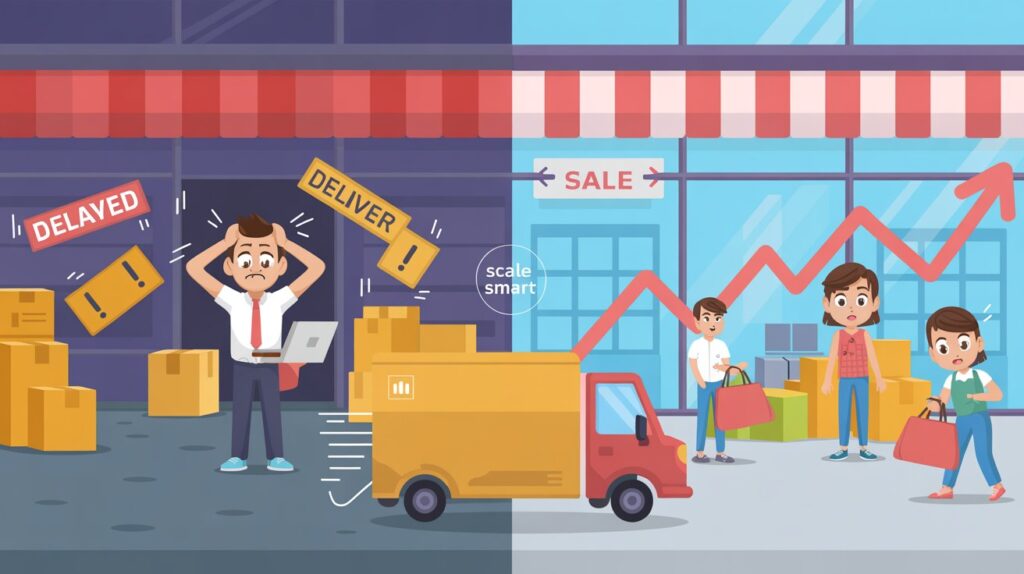
Running a retail business in Australia right now is not for the faint-hearted. Supply chains have been stretched. Resources, rising costs, and high consumer expectations create chaos. Retailers that focus on resilient supply chains, smarter inventory decisions, and strategic partnerships are the ones most likely to scale confidently, even when the market feels uncertain, and conditions keep changing around them.
This guide highlights key steps for Australian retail owners, from selecting logistics and suppliers to scaling without breakdowns.
Choose Partners Who Bring Clarity, Not Chaos
One of the biggest mistakes retailers make is choosing suppliers or logistics partners based purely on price. Cheap freight or low supplier quotes can look attractive at first. But when shipments run late, communication breaks down, or inventory arrives damaged, the hidden costs quickly appear.
Lost sales, frustrated customers, and emergency restocking can wipe out any savings. Reliable partners provide something far more valuable than a low price. They offer transparency.
Retailers should always prioritise logistics partners that provide clear shipment tracking, accurate delivery timelines, and responsive communication.
End-to-end visibility allows retailers to plan promotions, manage inventory, and avoid the dreaded out-of-stock moment that drives customers elsewhere. It also reduces stress across the entire business.
Having an import and export company like JTC Import Export, which provides complete visibility from start to finish, is really helpful in avoiding the common logistics delays we see these days, especially amid unpredictable global changes.
Why Unified Commerce Is the New Retail Engine
Retail growth today is driven by connection. Customers no longer shop through a single channel. They browse online, visit stores, compare prices on their phones, and expect products to be available wherever they choose to buy.
This behaviour has forced retailers to rethink how they manage inventory across physical and digital environments. A unified commerce system links point-of-sale systems, online stores, and warehouse inventory so that every channel sees the same real-time stock levels.
That simple shift can prevent a long list of costly problems. Overselling disappears. Click-and-collect becomes smoother. Staff can confidently check stock availability for customers standing in the store.
The result is a far better customer experience and fewer operational headaches.
Unified commerce also improves forecasting. Retailers gain a clearer picture of what products are selling fastest and where demand is coming from. This makes reordering easier and reduces excess stock that sits unsold.
Many growing Australian retailers now treat inventory data as one of their most valuable business tools. When sales channels and stock systems finally speak the same language, retailers can scale operations with far more confidence and far less chaos.
The Rise of Hyper-Local Retail Strategy
Retail success in Australia often comes down to understanding local communities. What sells well in Brisbane might not move as quickly in Hobart. Shopping habits vary widely across regions, and retailers that recognise these differences gain a powerful advantage.
Hyper-localisation focuses on aligning product ranges, promotions, and delivery options with local demand patterns. Retailers are increasingly using sales data to spot these trends. For instance, coastal regions may show stronger demand for outdoor and lifestyle products, while inner-city locations often prioritise convenience and premium goods.
Adjusting stock levels to match these patterns improves turnover and reduces wasted inventory. Sustainability is also shaping purchasing decisions across Australia. Customers are paying closer attention to packaging, shipping methods, and environmental impact. Retailers who choose sustainable delivery methods or cut down on excess packaging often find that their customers feel more loyal and connected to their brand.
Even small changes can matter.
Highlighting eco-friendly packaging and shipping or locally sourced products builds trust with modern consumers. Hyper-local retailing is not about stocking stores completely differently. It is about making small, informed adjustments that reflect local preferences.
When retailers combine local insight with smart inventory management, they position themselves for stronger growth and deeper customer connection.
–
Retail growth rarely comes from a single breakthrough idea. It usually comes from many small improvements working together. Reliable suppliers, transparent logistics partners, accurate inventory systems, and strong local insight all play a role.
Retailers who invest time in building resilient supply chains often discover that growth becomes far easier to manage. Problems are spotted earlier. Stock moves faster. Customers receive a more reliable shopping experience.
In uncertain times, being prepared gives a competitive edge. Australian retailers that improve their sourcing strategies, update their inventory systems, and partner with reliable logistics providers will be better placed to grow steadily and confidently in the coming years.