Yes, in 2026 most standard homeowners insurance policies do cover water damage from a burst pipe when the problem is sudden and accidental and you’ve taken reasonable care of your home. But they usually do not pay to fix the actual pipe, and they often deny claims tied to slow leaks, neglect, or homes left unheated or vacant.
You wake up to a strange dripping sound.
You step into the hallway and feel it right away: cold water soaking your socks.
By the time you reach the basement, there are 2 inches of water on the floor and your storage boxes, treadmill, and kids’ old toys are already floating.
This is what a burst pipe looks like in real life—and it happens far more often than you might think. Recent insurance data shows that water damage and freezing are now one of the top causes of homeowners insurance claims in the U.S., making up around 24–28% of all property damage claims in some recent years. That means roughly 1 in 50–60 insured homes files a water or freezing damage claim each year.
The payouts are big too. Analyses of Insurance Information Institute data show that the average paid claim for water damage and freezing has been in the range of about 11,098 to 13,954 dollars in recent years, with several studies clustering around 11,098–12,514 dollars. For many families, that is more than one month of income—and that’s just the average.
In 2026, this matters even more because:
-
Repair costs keep rising. From 2018–2022, the average water/freezing claim climbed to nearly 13,954 dollars, reflecting higher labor and material costs.
-
Extreme weather is more common. More deep freezes and sudden thaws mean more frozen pipes, especially in regions not used to harsh cold.
-
Insurers are stricter. Many companies now look closely at maintenance, vacancy, and heating when deciding whether to pay a burst pipe claim.
So the real question for you is simple: If a pipe bursts in your home this year, will your homeowners policy actually pay—and how much?
Quick answer
Yes, usually covered:
If the burst pipe and resulting water damage are sudden and accidental and you kept reasonable heat on, maintained the home, and reported the problem quickly.No, usually not covered:
Long-term or gradual leaks and corrosion (wear and tear).
Damage linked to clear neglect or leaving the home unheated or vacant without precautions.
The cost to repair or replace the pipe itself (only the resulting water damage is usually covered).
In this guide, you’ll learn:
-
What burst pipe water damage actually is (and how it differs from floods).
-
When homeowners insurance covers it in 2026—and when it does not.
-
What each part of your policy typically pays for (walls, belongings, hotel stays, mold cleanup, and more).
-
Real-world style claim examples with rough payout ranges.
-
A step‑by‑step claim game plan you can follow the moment you see water.
-
What it’s likely to cost and how much you may pay out of pocket.
-
Smart 2026 add‑ons and prevention tips to protect yourself before the next cold snap.
What Is Burst Pipe Water Damage?
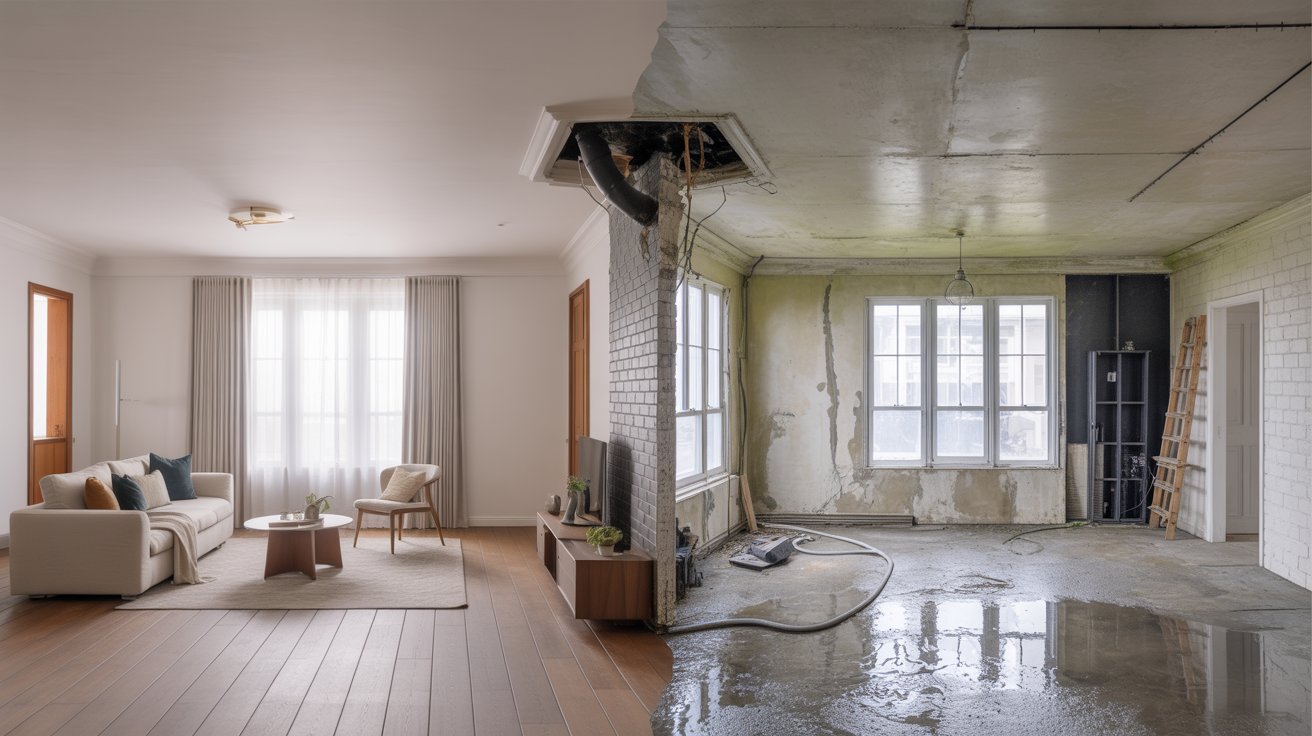
A “burst pipe” is more than just a crack in a line: it’s a break that lets water pour into your home fast, often flooding rooms in minutes. When that water soaks into walls, floors, ceilings, and your belongings, that’s burst pipe water damage.
Common causes in 2026
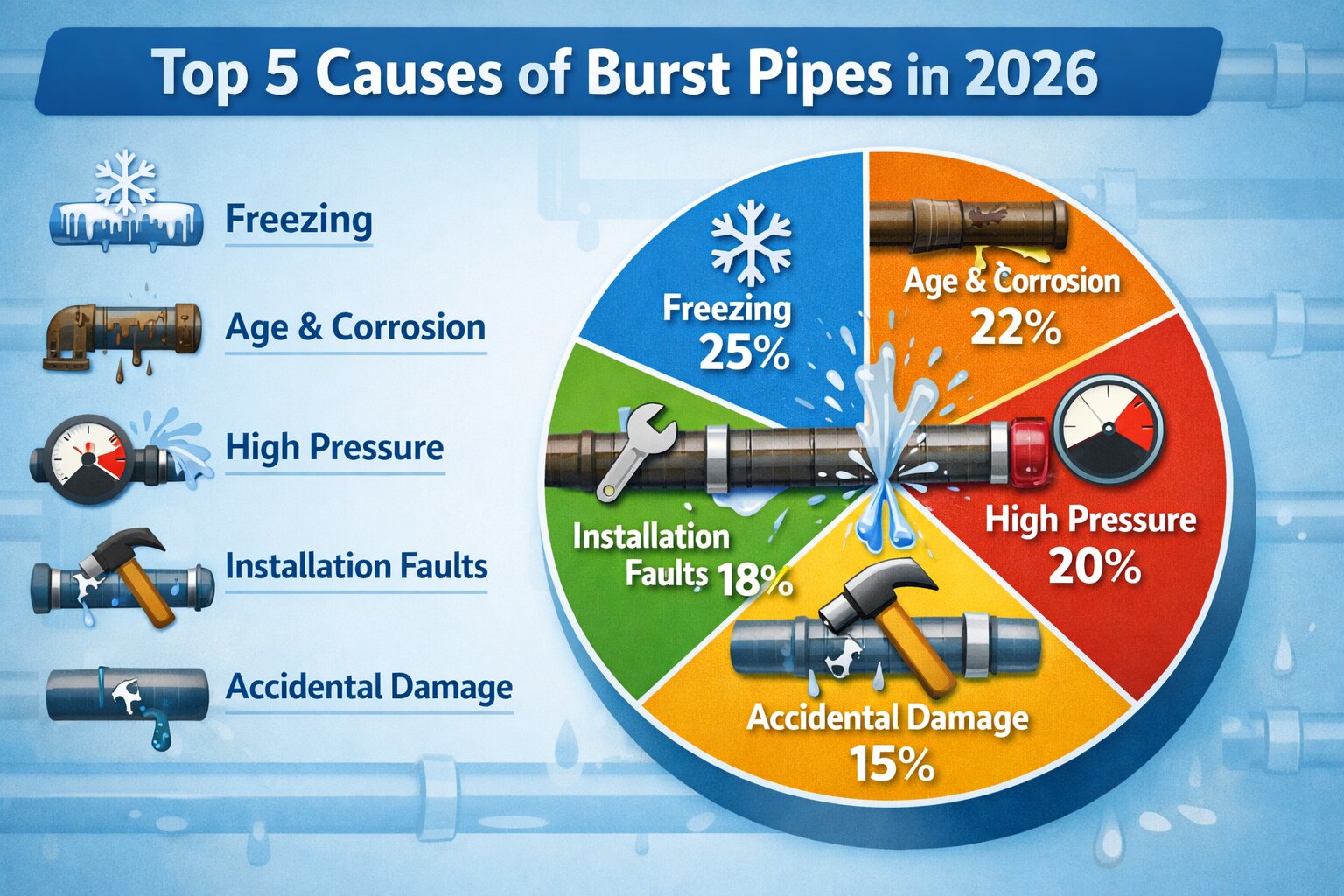
Most burst pipes fall into a few main buckets:
-
Freezing: When water in a pipe freezes, it expands and can split the pipe open. This is the classic winter burst in basements, crawl spaces, attics, and exterior walls.
-
Age and corrosion: Old metal pipes can rust, thin out, and eventually crack or break under normal pressure.
-
High water pressure: Constantly high pressure can stress joints and fittings until something fails.
-
Poor installation or cheap materials: Shoddy plumbing work or low‑quality piping can fail years earlier than it should.
-
Tree roots and ground movement (for underground lines): Roots or shifting soil can damage outside or under‑slab pipes, which can then burst and send water into your foundation or basement.
-
Accidental damage: A nail through a pipe during a renovation or a contractor drilling in the wrong spot.
What happens right after a burst
Burst pipe water damage usually shows up in layers:
-
Immediate structural damage: Saturated drywall, warped flooring, damaged baseboards, stained ceilings, and in serious cases, damage to framing and subfloors.
-
Damage to your stuff: Furniture, rugs, electronics, clothes, and stored items can all be ruined within hours of soaking.
-
Secondary issues (mold and odors): If you don’t dry everything quickly, mold can start to grow within 24–48 hours, which is both a health and a cost problem.
How burst pipe damage differs from other water damage
Insurers treat different water sources very differently:
-
Burst pipe water: Comes from inside your plumbing; usually covered when sudden and accidental.
-
Flood water: Rising water from outside (storm surge, heavy rain, river overflow). This almost always requires separate flood insurance.
-
Sewer or drain backup: Dirty water backing into your home; usually excluded unless you buy a special water backup endorsement.
-
Slow leaks: Long‑term drips from old, corroded, or badly installed pipes; often denied as maintenance or wear and tear.
The Short Answer: Does Homeowners Insurance Cover Burst Pipe Water Damage in 2026?
If your policy is fairly standard, the short answer is “Yes, but with big ‘ifs’.”
Most U.S. homes today are insured under one of two common policy forms:
-
HO‑3 (open‑perils): Covers your home’s structure for all sudden and accidental causes except those specifically excluded, and typically includes sudden burst pipe water damage.
-
HO‑2 (named‑perils): Covers only causes that are specifically listed; it may still cover burst pipes, but the wording is narrower and depends on how “freezing” or “accidental water discharge” are listed.
Recent 2025–2026 guidance from insurers and consumer sites all repeat the same core rule: sudden and accidental = usually covered; slow or neglect‑related = usually not.
-
Openly, a home insurance company, puts it this way in a February 2026 article:
-
Bankrate, summarizing homeowners coverage in 2025, notes:
-
Travelers explains that:
Burst pipe scenarios – covered or not?
| Scenario | Typically covered? | Notes |
|---|---|---|
| Sudden burst during a cold snap (heat on, precautions taken) | Yes | Structural damage, many contents, and often temporary living costs are usually covered under dwelling, personal property, and loss‑of‑use coverage. |
| Gradual leak over months from corroded pipe | No | Seen as wear and tear or neglect; often excluded as “repeated seepage or leakage.” |
| Cost to repair or replace the broken pipe itself | Usually no | Most policies cover the resulting water damage, not the pipe, though they may pay to open walls to reach it. |
| Mold that grows after a covered burst | Limited | Often covered only up to a set mold sub‑limit (e.g., 1,000–10,000 dollars) unless you bought extra coverage. |
| Damage from outside flood water or sewer backup | No (without endorsement) | Needs separate flood insurance or a water/sewer backup endorsement. |
| Burst pipe in a vacant, unheated home | Often denied | Many policies exclude damage if heat was turned off or if the home was vacant beyond a set number of days. |
What Exactly Does Coverage Include?
When a burst pipe is covered, several parts of your homeowners policy usually come into play. Knowing which bucket pays for what helps you push for a fair claim.
Dwelling coverage (Coverage A)
This is the part that pays to repair your home’s structure:
-
Walls, ceilings, and floors: Replacing soaked drywall, insulation, paint, trim, and damaged flooring.
-
Built‑in items: Built‑in cabinets, fixed shelving, and sometimes damaged subfloor and framing if the water reached that far.
-
Foundation and under‑slab areas: If the burst caused damage to the slab or foundation and the cause is covered, dwelling coverage can pay to repair the concrete and related structural issues.
Personal property coverage (Coverage C)
This protects your stuff—what would fall out if you tipped your home upside down.
-
Furniture, rugs, and clothing destroyed by clean water from a covered burst.
-
Electronics and appliances like TVs, computers, or portable devices that were soaked.
-
Payout is often actual cash value (ACV) by default (value after depreciation), unless you added replacement cost coverage for personal property.
Loss of use / Additional Living Expenses (Coverage D)
If the home is not safe or livable during repairs, your policy may pay for you to live elsewhere.
-
Hotel or short‑term rental bills while your home is being dried and repaired.
-
Extra food and laundry costs beyond your normal living expenses.
-
Limits often run around 20–30% of your dwelling limit on standard policies.
Other items often included
Depending on your insurer and endorsements, a covered burst pipe claim may also include:
-
Water extraction, drying, and cleanup: Industrial fans, dehumidifiers, and removal of damaged materials to prevent mold.
-
Debris removal: Hauling away ruined carpet, furniture, and construction debris.
-
Mold remediation: Limited, often subject to a specific mold limit (such as 1,000–10,000 dollars) unless you bought a higher mold endorsement.
-
Tear‑out and access: Paying to open walls, ceilings, or floors so a plumber can reach the broken pipe and then closing those areas back up. Many insurers confirm they cover this “access” work even though they do not cover the pipe itself.
Read your declarations page and endorsements carefully. The details of these sections decide whether you get 5,000 dollars or 35,000 dollars when a pipe lets go.
Common Exclusions & Why Claims Get Denied in 2026
In 2026, more water damage claims are being questioned or denied because insurers are under pressure from rising costs and severe weather losses. Knowing the common denial reasons helps you avoid them.
Gradual damage and poor maintenance
Most policies exclude:
-
“Repeated seepage or leakage” over weeks or months.
-
Corrosion, rust, and normal wear and tear.
-
Ignored warning signs: Like stains, musty smells, or known drips that weren’t fixed.
If an adjuster finds long‑term corrosion or old patch repairs, they may argue the damage didn’t happen all at once—and deny all or part of the claim.
Vacancy and lack of heat
Many policies have strict rules about homes that are left empty:
-
If you turn off the heat or leave the home unheated in winter, damage from frozen pipes may not be covered.
-
Some policies reduce or remove coverage if the home is “vacant” after 30–60 days, especially for freeze‑related damage.
Travelers notes that a claim might not be covered if “you turned off your heat when leaving your house for a few days, causing the pipes to freeze when outdoor temperatures dropped.”
External water sources and backups
Standard homeowners policies almost always exclude:
-
Flooding from outside—rising water, storm surge, swollen rivers, or heavy rain pooling against the house.
-
Sewer or drain backup unless you added a specific water backup endorsement.
How insurers investigate burst pipe claims
When you file, expect the insurer to:
-
Inspect the broken pipe and nearby areas for signs of age, corrosion, or prior repairs.
-
Look at your heating and occupancy pattern (Was the thermostat on? Is this a vacation house that sat empty?).
-
Ask for maintenance records or contractor invoices if the damage appears long‑term.
-
Review photos and videos you provide to decide how sudden the loss appears.
Real denial examples often come down to things like: ignoring an obvious drip for months, shutting off heat in winter, or failing to fix very old plumbing that has been flagged before.
Factors That Affect Your Coverage in 2026
Even with a “yes, it’s covered” answer, what you actually receive can vary a lot from one policy to another.
Deductibles (including water‑specific ones)
-
Many homeowners still carry deductibles around 500–2,500 dollars, but water‑related or “all‑perils” deductibles can run to 5,000 dollars or more in higher‑risk areas.
-
Some policies now have separate, higher deductibles for water damage or certain risks, so you may pay more out of pocket for a burst pipe claim than for, say, a theft claim.
Endorsements that change the picture
In 2026, several optional add‑ons can be very important for burst‑pipe‑style losses:
-
Water backup / sewer backup endorsement: Covers damage if a drain, sewer, or sump pump backs up into your home, which standard policies usually exclude.
-
Service line coverage: Helps pay to repair or replace buried pipes (water, sewer) from the street to your home, often with limits like 10,000–25,000 dollars.
-
Enhanced water damage endorsements: Some insurers offer higher mold limits or broader coverage for accidental water discharge.
State and climate differences
-
In colder states (MN, WI, upstate regions), insurers often stress freeze precautions: maintaining heat, insulating pipes, and checking second homes regularly.
-
In coastal and southern states (FL, TX), the big concern is overlap between plumbing leaks and flooding or hurricane damage, so policies may contain tighter wording on exclusions.
2026 trends
Recent stats and industry commentary show that:
-
Water damage claims cost U.S. insurers around 13 billion dollars per year, and represent almost a quarter of all homeowners claims in some years.
-
Average water damage claim payouts in recent years hover around 11,098–13,954 dollars, with several sources confirming this band.
-
As a result, many insurers are tightening rules around aging plumbing, requiring better maintenance, and in some cases adding exclusions or higher deductibles for water damage.
Claim Examples (2025–2026)
These are anonymized, realistic scenarios based on how claims usually work, current cost ranges, and what insurers say they cover. They’re meant to help you picture what might happen to you.
Example 1 – Successful cold‑snap claim (documentation wins)
The situation
In December 2025, you live in a midwestern city that got hit with an unexpected deep freeze. You kept your thermostat set at 56–60°F, opened cabinet doors under sinks, and wrapped exposed pipes—but a pipe in a chilly basement wall still froze and burst overnight.
By morning, there’s standing water across a finished basement: laminate flooring is buckled, lower drywall is soaked, and a TV stand and small sofa are ruined.
What you did right
-
Shut off the main water within minutes.
-
Took timestamped videos and photos showing active spraying and the thermostat reading.
-
Called a plumber, who wrote that the failure was “sudden and accidental due to freezing despite maintained heat.”
-
Filed the claim the same day using the insurer’s app.
Typical payout range (2025–2026 prices)
-
Water extraction and drying: around 1,500–3,000 dollars for a moderate basement.
-
Removing and replacing lower drywall, trim, and paint: several thousand more.
-
Replacing damaged laminate flooring and basic furniture: another few thousand.
-
A week in a hotel for your family while repairs start: covered under loss of use.
Overall, this kind of claim often lands in the 12,000–18,000 dollar range, which lines up with national averages.
What you can learn
-
Document that your heat was on and that you took steps to prevent freezing.
-
Get a clear plumber’s report using words like “sudden” and “accidental.”
-
File quickly and send plenty of photos and item lists; this helps the adjuster approve more without a fight.
Example 2 – High‑value burst with mold and ALE
The situation
In a higher‑end home with a sprinkler system, a sprinkler line in the ceiling of the main level bursts while the owners are away for the weekend. Thousands of gallons of water soak hardwood floors, custom wool carpet, built‑ins, and high‑end furnishings. Moisture reaches the basement before anyone notices.
By the time you return, there’s warped flooring, stained ceilings, and a musty smell. Within a few days, mold appears behind some baseboards.
Claim handling
-
Because the cause is a sudden accidental pipe failure inside the home, dwelling and personal property coverage apply.
-
The insurer approves replacement of custom carpet and a large section of hardwood floors, plus repair of ceilings and built‑ins.
-
Mold remediation is covered but limited to the mold sub‑limit, so you end up paying something out of pocket for extra mold work.
-
Your family has to move out for several weeks; the policy’s loss‑of‑use section pays for a furnished rental and extra living costs.
Likely payout range
With higher‑end finishes and extended ALE, a claim like this can easily go 25,000 dollars and up, sometimes far more in luxury homes.
What you can learn
-
If your home has custom finishes, make sure your dwelling limit and coverage type reflect true replacement costs.
-
Consider higher mold coverage if you have finished basements or complex HVAC systems.
-
Keep an updated home inventory (photos of rooms, serial numbers) to help document high‑value items.
Example 3 – Partial coverage with underground service line
The situation
A water line running from the street to your home cracks underground. Over time, the soil erodes under your slab, and eventually the pipe fails suddenly, forcing water under and into the basement. You wake up to a wet carpet and hairline slab cracks.
Coverage puzzle
-
Standard homeowners coverage often pays for resulting water damage inside the home (walls, floors, belongings) if the event is sudden and accidental.
-
But the pipe under the yard or slab is usually not covered by default—unless you bought a service line endorsement.
Possible cost breakdown
-
Interior damage and restoration (drying, new basement flooring, wall repairs): roughly 20,000 dollars in a severe case.
-
Repairing the underground line and dealing with slab work in the worst case: another 10,000–20,000 dollars.
If you have a 10,000–15,000 dollar service line endorsement, it might cover most or all of the underground pipe work, on top of what the base policy pays for interior damage.
What you can learn
-
If you have older buried pipes, consider service line coverage with at least 10,000–25,000 dollars in limits.
-
Ask your agent what’s covered when a pipe fails outside the home versus inside it.
Example 4 – Denied claim in a vacant vacation home
The situation
You own a vacation cabin you visit only a few times a year. In November you turned the heat off completely and left the water on. A polar front hits, a pipe in the crawlspace freezes and bursts, and water runs for days. A neighbor discovers damage months later: collapsed drywall, mold, and ruined flooring.
You file a claim hoping to recoup about 15,000 dollars in repair costs.
Why the claim is denied
-
The policy requires that reasonable heat is maintained and that the home is not left vacant without precautions.
-
Because the heat was off and the home sat unattended for an extended time, the insurer cites neglect and vacancy language to deny the claim.
What you can learn
-
For second homes, either:
-
Keep heat at least around 55°F and have someone check the place, or
-
Shut off and drain the plumbing and document it.
-
-
Ask your agent about special rules or endorsements for seasonal or vacant homes.
Step‑by‑Step: How to File a Successful Burst Pipe Claim
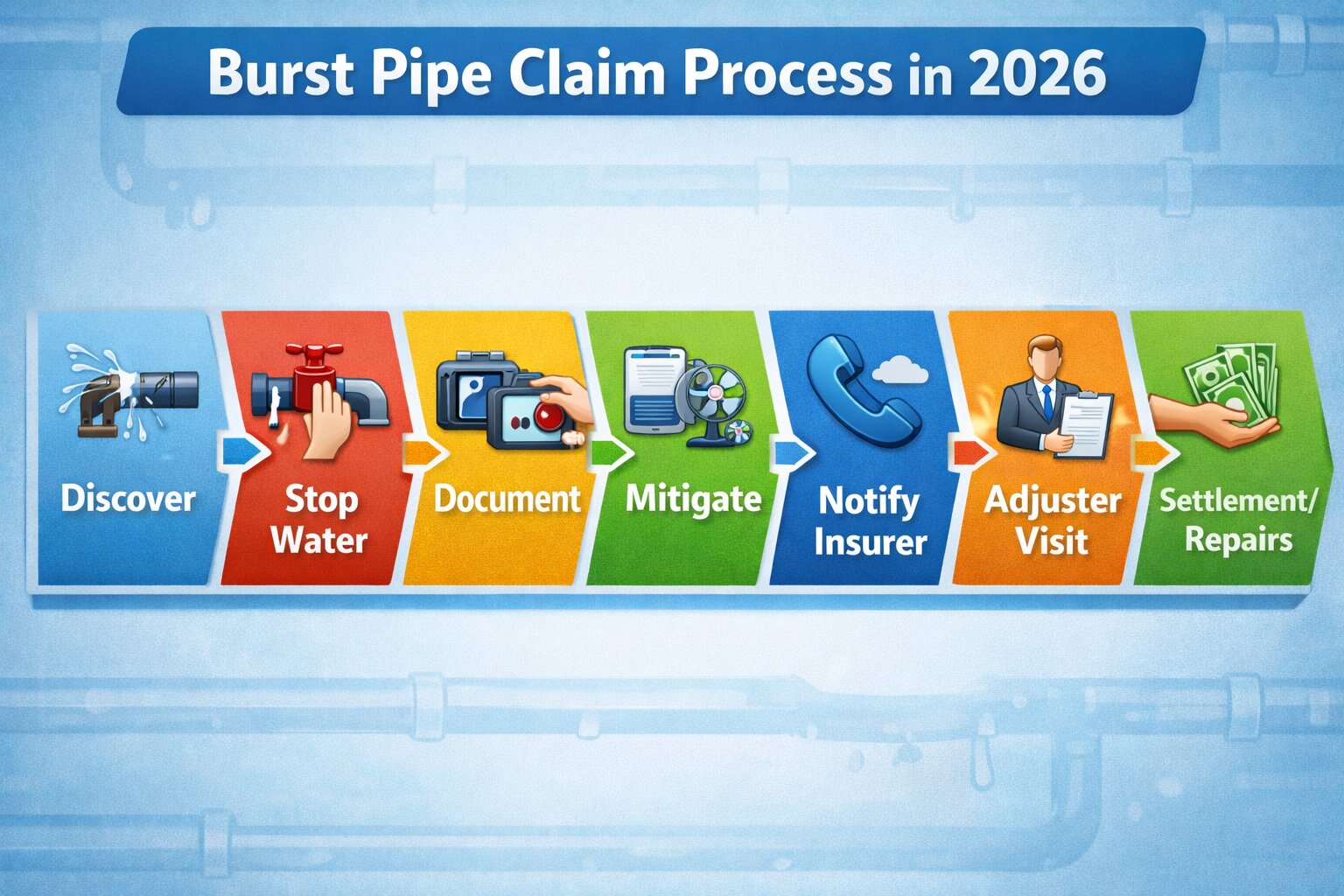
If a pipe bursts in your home, your actions in the first hours can make or break your claim. Here’s a clear game plan you can follow.
Step 1 – Stop the water and make things safe
-
Shut off the main water valve as soon as you can safely reach it.
-
If water is near electrical outlets or your panel, cut power to the affected area if you can do so safely.
-
Move undamaged items out of harm’s way.
Insurers expect you to mitigate damage, but not to make permanent repairs before the adjuster sees things.
Step 2 – Document everything (before big cleanup)
Use your phone like a crime‑scene camera:
-
Record videos and photos of water spraying, pooled water, damaged walls, floors, and belongings.
-
Capture thermostat readings and any signs that heat was on if the loss is freeze‑related.
-
Keep receipts and serial numbers for affected items if you have them, or note approximate purchase dates and prices.
If you call a plumber, ask them to write “sudden and accidental burst” or “freeze damage” on the invoice if that’s accurate.
Step 3 – Start basic mitigation (but not rebuilding)
Before an adjuster arrives, most insurers want you to:
-
Mop or wet‑vac standing water.
-
Start fans and dehumidifiers to reduce moisture.
-
Remove soaked rugs or items that will clearly be thrown away, but keep samples and photos.
Keep all receipts for equipment rental, emergency plumbers, and temporary lodging; they can often be reimbursed under dwelling or loss‑of‑use coverage.
Step 4 – Notify your insurer quickly
Most policies require that you give prompt notice of a loss.
-
Call your insurer or use their mobile app within 24–48 hours when possible.
-
Get your claim number and write down the date, time, and person you spoke with.
Share the basics: when you discovered the loss, what you did to stop further damage, and whether the home is livable.
Step 5 – Work with the adjuster (what to say and avoid)
When the adjuster comes (in person or virtually):
-
Stick to facts and timelines: when you last saw everything fine, when you noticed water, the steps you took.
-
Avoid guessing about long‑term issues (“Maybe it leaked for weeks”) unless you know that’s true.
-
Share your photos, contractor estimates, and plumber report, and walk through the damage logically, room by room.
If you’re worried about underpayment on a larger loss, some homeowners hire a public adjuster, who typically charges around 10–15% of the settlement but may help push for a higher, fair amount.
Step 6 – Supplement the claim if needed
Sometimes the first estimate is low or misses hidden damage. You can:
-
Get additional contractor bids and send them to the adjuster.
-
Ask the insurer to reconsider if you find more damage (for example, mold inside walls once they’re opened up).
Smaller burst pipe claims commonly resolve in 1–4 weeks, while complex or high‑value claims can stretch into months.
How Much Will It Cost? Payouts & Out‑of‑Pocket in 2026
Every claim is different, but recent data gives you a good ballpark.
Typical payout ranges
Consumer and legal sources reviewing recent Insurance Information Institute data show:
-
Average water damage and freezing claims around 11,098–13,954 dollars in recent multi‑year periods.
-
A broader overall range of about 7,000–12,514 dollars is common when looking at many different water damage scenarios.
That lines up well with what restoration and plumbing companies report for burst pipe events:
-
Water extraction and drying: often around 500–1,500+ dollars for smaller jobs and about 3,500 dollars for more thorough work.
-
Drywall and materials: drying and replacing drywall and flooring can add 4–7 dollars per square foot or more, depending on severity.
-
Full basements or multi‑room events: often fall in the 15,000–50,000+ dollar range in serious cases.
Your deductible and premium impact
-
Your deductible is what you pay first. If it’s 1,000 dollars and the total covered loss is 10,000 dollars, the insurer pays about 9,000.
-
Filing a claim can lead to higher premiums later, especially if you have multiple water damage claims in a short period.
Because of that, many experts advise not filing very small claims that only slightly exceed your deductible, as the long‑term premium increase can outweigh the short‑term payout.
How to Prevent Burst Pipes: 12 Actionable Tips for 2026
Prevention is boring—until you’ve seen a soaked basement. A few cheap steps now can save you thousands later.
Here’s a practical checklist:
-
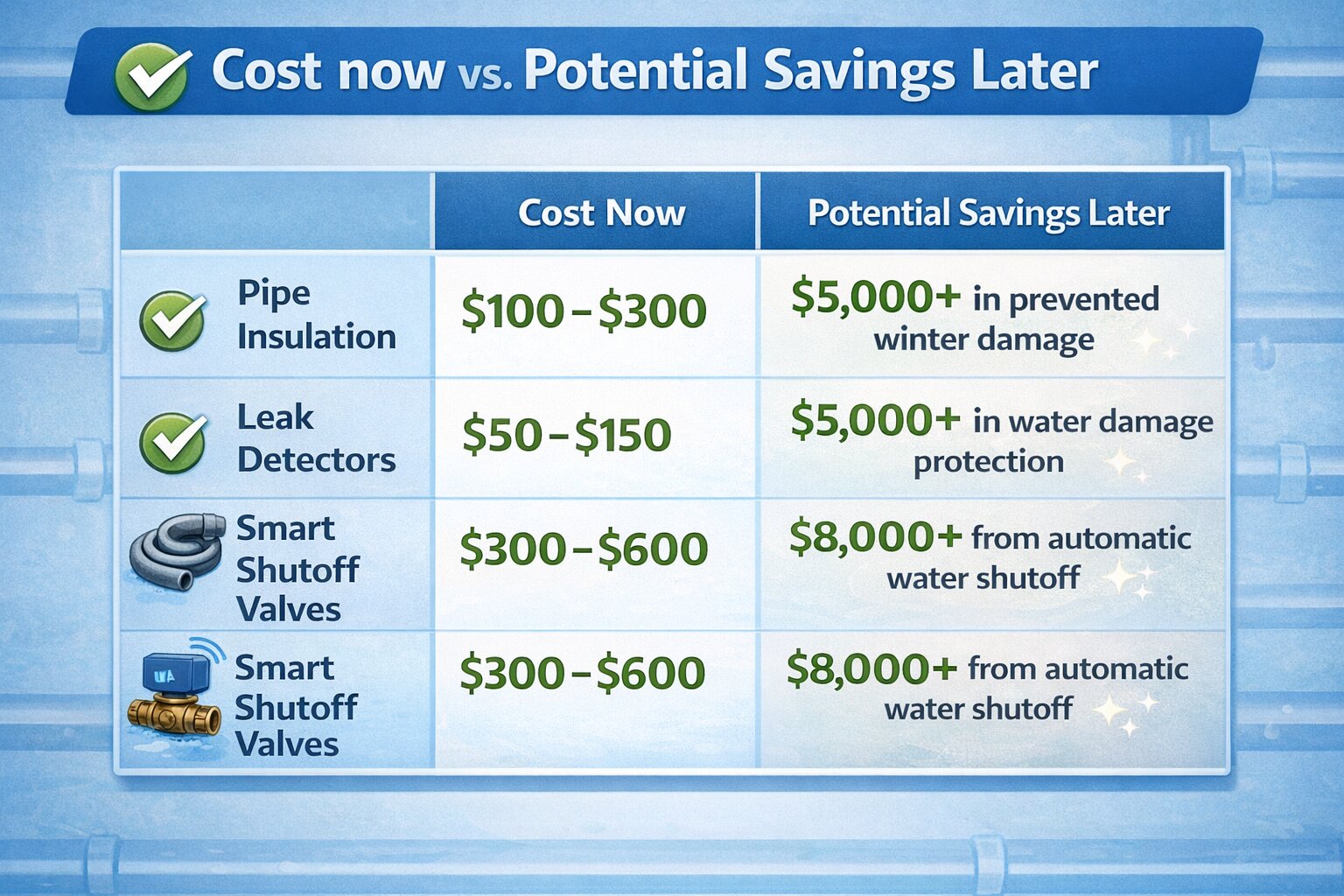
Insulate exposed pipes in basements, crawl spaces, attics, and exterior walls (foam sleeves often run about 1–2 dollars per foot at hardware stores).
-
Keep heat on in winter, even if you’re away. Many insurers suggest maintaining at least about 55°F indoors.
-
Open cabinet doors under sinks during cold snaps to let warm air reach pipes.
-
Let faucets drip slightly on the coldest nights to keep water moving through vulnerable lines.
-
Seal gaps and cracks in exterior walls and around hose bibs to block cold air.
-
Install smart leak detectors (50–200 dollars) near water heaters, washing machines, and under sinks so your phone alerts you the moment water is detected.
-
Consider a smart shutoff valve that can automatically cut water to the home if a major leak is detected.
-
Have a plumber do a yearly inspection of older homes to identify aging or corroded pipes before they fail.
-
Replace very old piping materials (like galvanized steel) on a planned schedule instead of waiting for a surprise break.
-
Shut off and drain plumbing at vacation or seasonal homes if you won’t keep heat on; document the steps you take.
-
Know where your main shutoff is and teach family members how to use it quickly.
-
Check your policy once a year and update coverage limits and endorsements as your home and risk change.
Beyond Standard Homeowners Insurance: Add‑Ons Worth Considering
To really bullet‑proof your setup in 2026, look beyond the base policy.
-
Water backup / sewer backup endorsement: Covers damage when a sewer line, drain, or sump pump backs up—problems that are usually excluded otherwise.
-
Service line coverage: Helps with underground water and sewer pipes between the street and your house, often with 10,000–25,000 dollar limits.
-
Flood insurance (NFIP or private): Covers rising water from outside, which standard homeowners policies rarely cover.
-
Enhanced water damage or ordinance/law coverage: Can raise mold limits and help pay for code upgrades after major water damage repairs.
Ask your agent to walk you through what you don’t have now—especially if your home is older, in a cold climate, or has a finished basement.
Frequently Asked Questions
1. Does homeowners insurance cover frozen pipes?
Usually yes, if the pipes freeze and burst even though you kept reasonable heat on and took basic precautions. Policies often cover the water damage but not the pipe itself.
2. What if the pipe is old or corroded?
If the pipe fails because of long‑term corrosion, rust, or wear and tear, insurers may call it a maintenance issue and deny coverage for the resulting damage. But if an old pipe fails suddenly for another covered reason, some or all of the resulting water damage may still be paid.
3. Does my policy pay to fix the broken pipe?
In most cases, no. Insurers like Travelers and others say they typically pay to repair the damage to floors, walls, and belongings—but not to repair or replace the actual broken pipe. Many will cover the cost to open and close walls or ceilings to access the pipe.
4. Is mold after a burst pipe covered?
Mold that grows because of a covered burst pipe is often covered, but only up to a specific mold limit like 1,000–10,000 dollars unless you added more coverage. If the insurer decides the mold came from a long‑term leak or neglect, they may deny it.
5. What about vacation or second homes?
Coverage is trickier. Many policies require that these homes be properly heated or winterized, and they may limit coverage if the home is vacant for more than 30–60 days. Turning off heat without draining pipes is a common reason for denied frozen pipe claims.
6. Will filing a burst pipe claim raise my rates in 2026?
It can. Water damage claims are costly and common, and insurers often raise premiums after a paid claim, especially if you have more than one. That’s why many experts suggest paying small losses out of pocket and using insurance for bigger events.
7. Does insurance cover burst pipes under the slab or in the yard?
Standard policies usually cover resulting damage inside your home, but not the cost to repair buried pipes under slabs or in your yard unless you have service line coverage. With a service line endorsement, you can often get 10,000–25,000 dollars toward those repairs.
8. Are basement floods from storms treated the same as burst pipes?
No. Water that rises from outside—heavy rain, river overflow, storm surge—is considered flood water and usually requires separate flood insurance. Burst pipe water from your plumbing is treated as internal water damage and is often covered when sudden and accidental.
9. Can I use a public adjuster for a burst pipe claim?
Yes. Public adjusters work for you, not the insurance company, and can help with large or complex claims for a fee, often about 10–15% of the final payout. They can be useful when you feel the insurer’s offer is too low.
10. How long do I have to file a claim?
Policies vary, but most require “prompt” notice and set legal time limits for when you must file suit if there’s a dispute. To be safe, contact your insurer as soon as you discover the burst pipe and keep written records of all communication.
11. Do all states treat burst pipe claims the same?
The basic idea—sudden and accidental water damage is usually covered—holds across most states. But details like freeze precautions, vacancy rules, and available endorsements can vary by state law and local insurer practices, especially in very cold or flood‑prone regions.
12. Are smart leak detectors and shutoff valves worth it?
Many experts think so. A 50–200 dollar leak detector or a smart shutoff valve can catch or stop water fast, potentially avoiding a five‑figure claim. Some insurers may even offer discounts for certain devices—ask your agent.
13. What’s the difference between HO‑3 and HO‑2 for burst pipes?
HO‑3 policies cover your home for all sudden and accidental causes except what’s excluded, so burst pipes are usually included as long as there’s no neglect. HO‑2 policies only cover named perils, so you must check that freezing or accidental water discharge is listed.
Conclusion
Burst pipes are messy, stressful, and expensive—but with the right coverage and a clear plan, they don’t have to wreck your finances. The key idea in 2026 is simple: if the water damage is sudden and accidental, and you’ve done your part to maintain and heat your home, your homeowners insurance will usually help pay to put things right.
Your best next move is to take 15–20 minutes this week to:
-
Pull out your policy declarations and look for your water damage, mold, and loss‑of‑use limits.
-
Ask your agent about water backup and service line endorsements, and whether your plumbing and basement setup suggest you should add them.
-
Install a few prevention measures—pipe insulation, a leak detector, or even a smart shutoff valve—before the next cold snap or vacation.
If you prepare now, the next time you hear water in the night, you’ll know two things: how to stop the damage fast—and that your insurance is set up to help you recover.