You want to grow your business, and the talent you need isn’t sitting in your hometown. Maybe you’ve found an incredible developer in Southeast Asia, a talented marketer in Eastern Europe, or a customer success specialist in Latin America. The world has shrunk, but the traditional hiring process hasn’t caught up.
This is the reality for modern companies. The rise of remote work and borderless teams has fundamentally changed how we build organizations. According to recent data, 87% of professionals now prefer roles that offer remote flexibility, and companies are responding by building truly global workforces. But here’s the challenge: each country has its own employment laws, tax requirements, payroll systems, and compliance rules. Opening a local office in every country you hire from? That’s 6–12 months per location, thousands of dollars in legal fees, and administrative complexity that pulls focus from what you actually do.
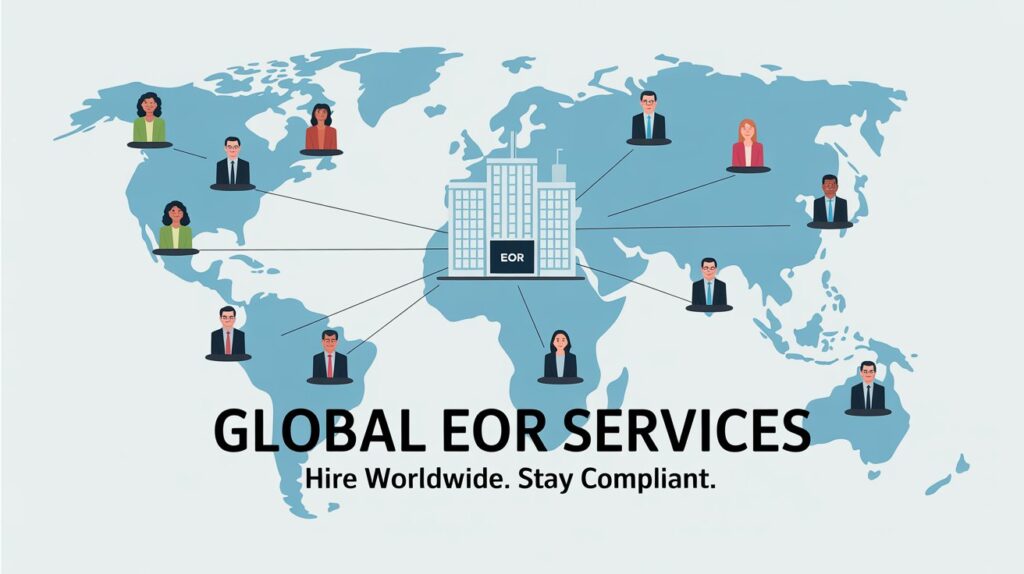
This is where Global Employer of Record (EOR) services step in. Rather than navigating the legal maze yourself, an EOR becomes your legal employer on paper while you maintain day-to-day management of your team. You hire in days instead of months, stay compliant with local laws, and scale your international workforce without the overhead of setting up subsidiaries everywhere.
What this guide will help you understand: By the end, you’ll know exactly how EOR services work, what they cost, which providers best fit your needs, and whether they’re the right choice for your company’s expansion strategy.
What Is a Global Employer of Record (EOR)?
An Employer of Record is a third-party company that becomes the official legal employer for your international hires. You find and manage the employee day-to-day, but the EOR handles all the legal, tax, and HR paperwork.
Think of it this way: the EOR is the company name on the employment contract and paycheck, but you’re the one directing the work, setting goals, and managing performance. The EOR takes care of everything behind the scenes—payroll in local currencies, tax withholding, compliance with local labor laws, and employee benefits.
How It Works: Who’s Responsible for What
This split of responsibilities is what makes EOR different from traditional employment:
The EOR (Legal Employer) handles:
-
Drafting employment contracts that comply with local law
-
Processing monthly payroll and tax deductions
-
Managing statutory benefits (health insurance, pension contributions, paid leave)
-
Ensuring compliance with labor regulations
-
Handling employee terminations and severance
-
Managing employee data securely
You (the Client Company) manage:
-
Hiring decisions and job descriptions
-
Day-to-day work direction and management
-
Performance evaluations and feedback
-
Deciding when/why an employee should be let go
-
Company culture and team integration
-
Project assignments and work priorities
This is the key distinction: you control how the person works, not the EOR. You decide what they do, when they work, and how they contribute to your company. The EOR just makes sure all the legal requirements are met.
How Global EOR Services Differ From Local Hiring
When you hire someone locally in your home country, you know the rules. You understand payroll deadlines, tax brackets, and when employees get paid time off. But hiring internationally without an EOR means you need to:
-
Set up a legal entity in each new country (subsidiary or branch office)
-
Get a tax ID and register with authorities
-
Understand local employment laws that may differ drastically from what you know
-
Handle payroll yourself or hire local accountants
-
Manage benefits according to local requirements
-
Deal with terminations that follow country-specific rules
An EOR collapses all of this into one partner. Here’s the time and cost difference:
Traditional approach (setting up subsidiary): 6–12 months, $15,000–$50,000+ in setup costs, ongoing compliance overhead.
EOR approach: 1–2 weeks, minimal setup fees, EOR manages all compliance.
How Global Employer of Record Services Work (Step-by-Step)
Step 1: Choosing a Country and Candidate
You decide where you want to hire and who you want to hire. You own the talent acquisition process completely. You can recruit through your network, job boards, or internal headhunters. Once you’ve found the candidate you want, you move to the EOR.
At this stage, you should also research the country’s employment landscape with your EOR’s help. Some jurisdictions are straightforward (Singapore, Australia), while others have complex labor regulations (France, Brazil, Germany). The EOR will advise you on what roles are viable, realistic salary ranges, and any industry-specific restrictions.
Step 2: EOR Becomes the Legal Employer
Once you’ve selected a candidate, the EOR takes over the contracting process. Here’s what happens:
The EOR drafts an employment contract that complies with the local labor laws of the country where your employee will work. This isn’t a generic contract—it includes country-specific requirements like:
-
Mandatory probation periods and notice periods
-
Required benefits (statutory vacation days, sick leave, pension contributions)
-
Working hours and overtime regulations
-
Termination conditions and severance rules
-
Local language requirements (many countries require contracts in the local language)
The candidate signs the contract with the EOR as their legal employer. From a legal standpoint, the EOR now “owns” the employment relationship, which protects you from direct employment liabilities.
Step 3: Payroll, Taxes, and Benefits Management
Once your employee starts, the EOR handles everything related to compensation:
Salary processing: You tell the EOR the salary amount (usually in the local currency), and they process it on the local payroll schedule. Some countries require monthly payments, others allow bi-weekly—the EOR knows the rules.
Statutory benefits: Depending on the country, the EOR enrolls your employee in mandatory benefits like:
-
Pension/retirement contributions (Germany requires this, Brazil requires a 13th-month salary)
-
Health and accident insurance
-
Unemployment insurance
-
Other statutory programs
Income tax and social contributions: The EOR calculates and withholds all taxes and social contributions, then files them with local authorities. They handle currency conversions, FX rates, and keep up with tax law changes.
Additional benefits: Want to provide health insurance beyond the minimum? The EOR can add optional benefits and manage the enrollment.
Step 4: Ongoing HR, Compliance, and Employee Support
The relationship doesn’t end after the first paycheck. The EOR continuously monitors compliance:
Leave management: When your employee takes vacation or sick leave, the EOR tracks it against local requirements (France mandates 25 days minimum vacation; Germany mandates 24 days). They ensure you’re complying.
Regulatory updates: Labor laws change. When new regulations hit in a country, the EOR updates contracts, payroll procedures, and benefits automatically. You don’t have to worry about accidental non-compliance.
Terminations and offboarding: If you decide to let someone go, the EOR manages the exit. They ensure you follow local notice periods (in Germany, standard notice is six weeks; in some cases, much longer), calculate severance correctly, and handle final paperwork.
Employee data security: The EOR stores all employee data securely and ensures compliance with data protection laws like GDPR (in Europe), which require specific technical safeguards and breach notification procedures.
What Services Do Global EOR Providers Offer?
Core EOR Services
All reputable EOR providers include these fundamentals:
Employment contracts: Legally compliant contracts generated for each country, including local language versions where required.
Payroll processing: Monthly salary payments in local currency, handling all tax withholding and deductions.
Tax filing and statutory compliance: The EOR files tax returns, quarterly filings, and other regulatory documentation. You never deal with tax authorities directly.
Local benefits administration: Enrollment in mandatory benefits specific to the country, from pensions to health insurance.
Onboarding and compliance documentation: Digital onboarding, e-signature capabilities, and all necessary employee registrations handled within days.
Additional Value-Added Services
Beyond the basics, many EOR providers offer extra services:
Visa and work permit support: If your employee is relocating internationally, the EOR can sponsor their work visa and handle immigration documentation. This is a huge accelerator—instead of being a subsidiary that must establish a visa sponsorship track record, an established EOR already has the infrastructure to sponsor visas in 100+ countries.
Equity compensation handling: Some EOR providers help manage stock options and equity grants, which is particularly valuable for startups giving ownership stakes to international hires.
Expense management: The EOR can manage and reimburse employee expenses, tracking receipts and handling currency conversions.
Local HR advisory: Many providers offer guidance on hiring practices, compensation benchmarks, and compliance best practices specific to each country.
Benefits of Using Global Employer of Record Services
Faster International Expansion
This is the headline benefit: you can hire in days instead of months.
With a traditional subsidiary model, you’re looking at 6–12 months from decision to first day on the job. You need to navigate government registration, open bank accounts, hire local accountants, and establish compliance infrastructure. With an EOR, you can hire a qualified candidate and have them start within 1–2 weeks. For startups and fast-growing companies, this speed is transformational. If you’ve found the right person, why wait six months?
Real example: A UK fintech startup used EOR services to hire remote developers in Bangalore. They completed a critical product release three months ahead of schedule—not because the developers were necessarily faster, but because they started immediately rather than waiting for entity setup.
No Need to Set Up a Local Entity
This saves you thousands of dollars and keeps your corporate structure simple.
Setting up a subsidiary typically costs $15,000–$50,000+ per country, requires hiring local lawyers and accountants, and creates ongoing administrative burden. With an EOR, the EOR has already set up in that country. You leverage their existing legal entity, their tax ID, their compliance infrastructure. You don’t duplicate that effort; you share the cost across many clients.
For a company testing three new markets, that could be $45,000–$150,000 saved. For a company scaling to 10 countries, it’s enormous.
Reduced Legal and Compliance Risk
Labor law violations are expensive and can damage your reputation.
Without expertise in local law, it’s easy to get things wrong. Common mistakes include:
-
Misclassifying employees as contractors
-
Missing statutory benefit requirements
-
Terminating someone in a way that violates local law
-
Not paying required social contributions
-
Violating data protection rules
An average wrongful termination lawsuit costs $50,000+. Repeated violations in a country can result in government fines ranging from thousands to hundreds of thousands of dollars. In Europe, GDPR violations can trigger fines up to €20 million or 4% of global revenue.
An EOR provider specializes in staying on the right side of these rules. They’re trained in local law, they monitor regulatory changes, and they have insurance against liability. That compliance burden shifts from your shoulders to theirs.
Cost Efficiency for Global Teams
EOR services provide predictable, lower costs compared to operating subsidiaries.
Businesses that use full-service EOR solutions report saving 60–70% on international hiring costs compared to entity establishment. Even just on payroll and benefits, an EOR’s scale (they manage hundreds or thousands of employees) means they negotiate better rates with insurance providers and get efficient payroll processing.
Pricing is transparent: Most EOR providers charge a flat fee per employee per month ($300–$1,000 depending on the country and provider) or a percentage of salary (8–20%). You know exactly what you’ll pay each month—no surprise invoices from accountants or surprise tax bills.
Volume discounts: As you hire more people through an EOR, the per-employee cost often drops. Hiring 1–5 employees might cost $599/month per person, but 6–20 employees could drop to $549/person.
Focus on Growth, Not Paperwork
Your HR and finance teams can focus on what they’re good at, not international employment law.
Instead of your team spending weeks learning German tax law or Brazilian benefit requirements, they can focus on hiring the right people, onboarding them, and helping them succeed. The EOR handles the legal and compliance paperwork, freeing your team to do strategic work.
Global Employer of Record Services: Costs Explained
How EOR Pricing Models Work
EOR providers use a few different ways to charge:
Per-employee-per-month (flat fee): You pay the same monthly fee regardless of salary. A $500/month fee applies whether the employee earns $2,000 or $8,000/month. This is predictable, but it may be less advantageous if you’re hiring very high earners.
Percentage-based pricing: The fee is a percentage of gross salary, typically 8–20%. For a $5,000/month employee, an 8% fee would be $400/month; at 15%, it’s $750/month. This aligns costs with salary, making it fairer for enterprises with mixed compensation levels.
Tiered/volume-based: Larger companies often negotiate custom pricing based on total headcount or annual contract values.
Typical Cost Ranges
The EOR industry has become more competitive, with prices varying widely:
| Category | Cost Range | Notes |
|---|---|---|
| Budget providers | $99–$250/month | Emerging competitors, minimal support |
| Mid-market providers | $300–$500/month | Good balance of features and support |
| Premium providers | $500–$1,000+/month | Rippling, Papaya Global; full feature suites |
| High-complexity countries | Up to 20–25% of salary | Western Europe, Canada, US |
| Emerging markets | 8–15% of salary | Southeast Asia, Latin America |
Regional variation: North America and Western Europe command higher fees ($400–$1,000+/month) due to complex labor laws and benefits. Latin America and Southeast Asia are typically cheaper ($300–$600/month).
What’s Included in the Price
A basic EOR package typically includes:
-
Employment contract (locally compliant)
-
Monthly payroll processing
-
Tax withholding and filing
-
Statutory benefits administration
-
Compliance monitoring
-
Onboarding and termination support
Hidden or Extra Costs to Watch Out For
Before signing, ask your EOR about:
Setup fees: $200–$2,000 per employee to get them onboarded.
Termination fees: Some providers charge additional fees to process employee exits.
Benefits upgrades: Adding optional health insurance or retirement benefits beyond mandatory minimums.
Off-cycle pay runs: If you need to process bonuses or additional payments outside the regular schedule, there may be fees.
FX conversion markups: When processing payments in different currencies, some EORs add markups to the exchange rate.
Year-end reporting: Some charge extra for year-end tax reports or certifications.
Always ask your EOR for a full pricing breakdown before you commit. The cheapest quoted price often isn’t the cheapest when hidden fees are included.
Global EOR vs PEO vs Staffing Agency: Which Is Right?
EOR vs Professional Employer Organization (PEO)
This is the confusion that trips up most people. The acronyms are similar, but the models are quite different.
Who’s the legal employer?
-
EOR: The EOR is the sole legal employer. If something goes wrong legally, the responsibility falls on the EOR.
-
PEO: The PEO co-employs your workers. You and the PEO share employment liability. You’re still partially responsible for compliance.
Do you need a local legal entity?
-
EOR: No. The EOR’s entity covers everything. You can hire in any country where the EOR operates without setting up your own company.
-
PEO: Yes, typically. You usually need to already have a legal entity or have the PEO set one up for you.
Geographic reach:
-
EOR: Global. A single EOR provider can employ people in 100+ countries.
-
PEO: Usually one country or region. US PEOs focus on the US; European PEOs focus on Europe.
Best for:
-
EOR: Companies hiring across multiple countries, startups testing new markets, remote-first companies building truly distributed teams.
-
PEO: Companies already established in one country that want better HR administration and benefits.
When each model makes sense:
Choose an EOR if you’re hiring in multiple countries, you want to move fast, and you want to minimize liability. Choose a PEO if you’re already established in one country and want to outsource HR administration while retaining some control.
EOR vs Global Staffing Agencies
Control over employees:
-
EOR: You have full control. The EOR is just a legal intermediary.
-
Staffing Agency: The agency often manages the relationship. You might not directly manage the contractor; the agency does.
Employment type:
-
EOR: Full-time employees. They’re your employees, managed by you.
-
Staffing Agency: Usually contractors or temporary staff. The relationship is often project-based.
Long-term vs short-term:
-
EOR: Designed for long-term hires. You’re building a permanent part of your team.
-
Staffing Agency: Great for short-term needs—filling a gap, handling seasonal workload spikes, or bringing in specialized talent for a specific project.
Which option is right for your business?
Use an EOR if you’re hiring core team members who’ll be with you long-term. Use a staffing agency if you need temporary support or want to test someone before making a permanent commitment.
Compliance and Legal Responsibilities in Global EOR Services
Employment Laws and Regulations
When you use an EOR, the EOR assumes primary responsibility for compliance. But you should understand what “compliance” means in practice, because employment law varies dramatically by country.
Common compliance requirements an EOR manages:
-
Minimum wage and overtime: Each country has rules about how much you must pay and when overtime kicks in.
-
Working hours: France mandates a 35-hour workweek. Germany is typically 40 hours. Some countries have strict limits; others are more flexible.
-
Vacation and leave: Brazil requires 30 days of vacation annually plus a mandatory 13th-month salary. Germany requires 24 vacation days minimum. The US has no federal minimum.
-
Probation periods: Germany allows up to 6 months; many EU countries allow 3 months.
-
Notice periods: In Germany, standard notice is 4 weeks to the 15th or end of a calendar month. In the UK, it’s typically 1 week for junior roles, but can be negotiated. In some countries, notice can be 3 months or longer.
Real example of compliance complexity: A US-based startup hired a team in Germany without understanding German labor law. They terminated an employee during medical leave, which violates German employment protection. The employee sued, won, and the company faced significant back-pay and legal costs. An experienced EOR would have flagged this violation immediately.
Taxes and Social Contributions
The EOR handles all taxation:
What the EOR does:
-
Calculates income tax based on local rates and brackets
-
Withholds taxes from the employee’s salary
-
Pays employer-side social contributions (these vary by country; some countries require employers to contribute 15–40% of salary to social security)
-
Files tax returns with local authorities
-
Handles currency conversions and international tax treaty considerations
What the client company owes:
You pay the EOR the gross salary amount, plus the local employer-side contributions. The EOR deducts employee taxes and remits everything to local authorities.
Data Protection and Privacy
If you’re hiring in Europe (or hiring Europeans working remotely from abroad), GDPR applies.
What GDPR requires:
-
Employee data must be processed lawfully, fairly, and transparently
-
You must have a valid reason to process data (employment, payroll, compliance)
-
You must implement technical and organizational safeguards (encryption, access controls, security)
-
Employees have rights: access to their data, correction of inaccurate data, erasure under certain conditions
-
If there’s a data breach, you must notify authorities within 72 hours
Penalties for violations: Fines up to €20 million or 4% of global revenue, whichever is higher.
Many EOR providers now include GDPR-compliant data handling as a standard feature. Reputable EORs have local data storage, secure portals, and access controls. But verify this before signing up, especially if you’re hiring in Europe.
Termination and Severance Rules
Firing someone through an EOR is more complex than if they were directly employed. Different countries have very different requirements:
-
In Germany: You generally cannot fire someone without cause during probation or for performance without following specific consultation procedures. Notice must be exact (4 weeks to the 15th or end of month). Severance is negotiable but often required if terminating for economic reasons.
-
In France: Termination requires a formal meeting with the employee. Severance is mandatory, typically based on length of service.
-
In Brazil: Employees are highly protected. Wrongful termination can trigger rehiring obligations or large severance payments. A 13th-month salary is owed even upon termination.
-
In the US: Most states follow “at-will” employment, meaning you can fire for almost any reason (except discrimination). But some states have exceptions.
The EOR manages all of this—ensuring you follow the right process, calculating proper severance, and handling final paperwork. This protection is worth a lot. Getting a termination wrong can lead to lawsuits that cost tens or hundreds of thousands of dollars.
Industries That Commonly Use Global Employer of Record Services
Technology and SaaS
This is the primary market for EOR services. Tech companies are distributed by nature, and they compete globally for talent. An estimated 48% of tech companies now use EOR services.
Why? Because tech talent is scarce and distributed. If you’re building a SaaS product, you might find your best developer in Argentina, your best designer in Poland, and your best customer success manager in the Philippines. EOR lets you hire all three without setting up three subsidiaries.
Startups and Scale-ups
Startups have limited resources. The $15,000–$50,000+ it costs to set up a subsidiary in a new country could be three months of runway. EOR lets them test markets and hire key talent in weeks, not months, for a fraction of the cost.
Healthcare and Life Sciences
Healthcare hiring is regulated. Licenses, credentials, and regulatory compliance are critical. EOR providers with healthcare expertise ensure you’re hiring licensed professionals, meeting compliance standards (HIPAA in the US), and maintaining proper continuing education records.
Finance and Consulting
Finance and consulting firms often deploy professionals to work on projects in different jurisdictions. EOR services allow them to manage international project teams without setting up entities everywhere. Large consulting firms like Deloitte and PwC manage 10,000+ international contractors and employees using EOR arrangements.
Manufacturing and Global Operations
Manufacturing companies with distributed facilities use EOR to manage workers in production centers across regions, ensuring OSHA compliance (in the US), safety training, and consistent workplace standards.
Top Global Employer of Record Service Providers
How We Evaluated These Providers
When comparing EOR providers, we looked at:
-
Country coverage: How many countries can they hire in?
-
Compliance expertise: Do they own local entities or rely on partner networks?
-
Pricing transparency: Are fees clear, or do hidden costs accumulate?
-
Customer support: Is support human and responsive, or mostly automated?
-
Technology: Is the platform modern and integrated with common HR/payroll tools?
Leading Global EOR Providers
1. Pebl (formerly Velocity Global)
Coverage: 185+ countries with owned entities (not just partnerships)
Strengths:
-
Unmatched global reach with in-house compliance teams in each region
-
Robust benefits and equity compensation support
-
Built-in safeguards against misclassification
-
24/7 dedicated support
-
Strong focus on fintech and healthcare (high-compliance industries)
Ideal for: Enterprises and companies prioritizing compliance and long-term scalability. Companies expanding to multiple countries simultaneously.
Pricing: Starting at $599/month per employee
2. Deel
Coverage: 100+ countries, but relies on partner networks in ~50% of markets
Strengths:
-
Rapid expansion and contractor-centric model
-
Mass payments and immigration visa sponsorship capabilities
-
Strong integrations (QuickBooks, NetSuite, Slack)
-
Popular among tech startups
-
AI-powered compliance monitoring
Ideal for: Tech startups and scale-ups. Companies comfortable with a more modern, self-service platform.
Challenges: Reliance on partner networks in some regions can create compliance inconsistencies. Pricing transparency diminishes with add-ons (benefits, equity).
Pricing: Starts low but add-ons increase total cost
3. Remote
Coverage: 150+ countries for EOR, 180+ for contractors
Strengths:
-
Advanced contractor classification (using 50+ ML factors)
-
Global payroll platform with clear infrastructure
-
Strong compliance monitoring with automatic regulatory updates
-
Contractor Management Platform 2.0 with AI-driven risk assessment
Ideal for: Companies with mixed employee/contractor workforces. Organizations in emerging markets wanting advanced compliance monitoring.
Pricing: Mid-range pricing, volume discounts available
4. Rippling
Coverage: 185+ countries (payroll), 32 countries (full EOR)
Strengths:
-
Powerful, unified HR + IT + payroll platform
-
600+ integrations (most in the industry)
-
Modular pricing—only pay for what you use
-
Strong IT asset management capabilities
-
Comprehensive compliance automation
Challenges: EOR services only in 32 countries (more limited than claimed global reach). Premium pricing—starts at $599+/month for EOR specifically.
Ideal for: Mid-market to enterprise companies wanting a comprehensive HR/IT platform. Organizations heavily invested in the Rippling ecosystem.
5. Papaya Global
Coverage: 160+ countries
Strengths:
-
Volume-based pricing (pay less as you scale)
-
Enterprise-grade payroll and compliance
-
Sophisticated reporting and analytics
-
Strong for large, dispersed teams
Challenges: High entry cost for small companies. Complex navigation and user interface issues reported by users.
Ideal for: Mid-market and enterprise companies with 100+ international employees.
Pricing: Starting at $25–$600+/month depending on company size
6. Oyster HR
Coverage: 100+ countries
Strengths:
-
User-friendly platform focused on distributed teams
-
Strong onboarding and employee experience
-
Suitable for scaling companies
-
Transparent pricing
Ideal for: Scale-ups and growing companies. Organizations prioritizing user experience and simplicity.
7. Multiplier
Coverage: 150+ countries for EOR, 130+ for contractors
Strengths:
-
Clear pricing structure
-
Localized compliance expertise with in-house legal guidance
-
Regional support teams
-
Strong local depth in key markets
Challenges: Limited reporting and analytics. Basic platform interface. Occasional payroll delays reported at scale.
Ideal for: Companies wanting deep local expertise without enterprise-level complexity.
Pricing Comparison Summary
| Provider | Starting Price | Ideal For | Global Reach |
|---|---|---|---|
| Pebl | $599/month | Enterprises, compliance-focused | 185+ countries |
| Deel | Variable | Startups, tech | 100+ countries |
| Remote | Mid-range | Mixed workforces | 150+ countries |
| Rippling | $599+/month | Mid-market, integrated HR | 185+ payroll, 32 EOR |
| Papaya Global | $25–$600+/month | Enterprise, scale | 160+ countries |
| Oyster HR | Mid-range | Scale-ups | 100+ countries |
| Multiplier | Mid-range | Local expertise needed | 150+ countries |
How to Choose the Right Global Employer of Record Provider
Key Questions to Ask Before Signing
1. Do you own legal entities in our target countries?
This matters because some EOR providers operate through partner networks. When you use a partner, there’s a middleman between you and compliance. Owned entities mean the EOR has direct responsibility and direct expertise. If the provider owns entities, compliance is more direct and consistent.
2. What’s your compliance track record in [specific country]?
Ask for references. Have they hired people in Germany before? Brazil? Singapore? Ask about their experience and their track record avoiding legal issues. If they’ve been operating in that country for years without major compliance incidents, that’s a strong signal.
3. How are you handling our data, and what data protection certifications do you have?
If you’re hiring in Europe, ask about GDPR compliance. What certifications do they have? Do they have local data storage? Do they conduct regular security audits?
4. What’s the full cost breakdown, including hidden fees?
Don’t just ask the base price. Ask about setup fees, termination fees, off-cycle pay charges, benefits upgrades, FX markups, and any other charges. Get it in writing.
5. What’s your typical response time for support?
Will you have a dedicated account manager, or are you self-serve? Can you call someone if there’s an issue, or only email support? For critical issues (a termination dispute, a compliance question), slower support could be costly.
6. What integrations do you offer?
Do they integrate with your existing HR, payroll, or accounting software? Integrations save time and reduce errors by avoiding manual data entry.
Red Flags to Avoid
Limited legal presence in target countries: If they say they “can hire in 100 countries” but don’t have offices or owned entities in many of them, be cautious. They’re relying on partners, which can mean slower support and less direct compliance oversight.
Unclear pricing: If the provider won’t give you a clear price breakdown upfront or has lots of hidden add-ons, walk away. Reputable EORs are transparent about costs.
Weak local support: If your only support option is email to a general helpline, you might face long delays when urgent compliance questions arise. Look for dedicated support or at least phone support.
No compliance expertise: An EOR should be able to answer detailed questions about local labor law, taxes, and benefits in their target countries. If they’re vague or say “our partner handles that,” that’s concerning.
Bad reviews from customers in your target market: Look for reviews from companies hiring in the specific countries you care about. Problems that show up consistently (late payroll, compliance issues, poor support) are red flags.
Checklist for Decision-Makers
Before committing to an EOR, confirm:
-
Hiring volume: How many people are you hiring in the next 12 months? (This affects pricing negotiation)
-
Budget: What’s your monthly budget per employee? (This narrows your options)
-
Expansion roadmap: Which countries are you targeting? (Verify the EOR covers all of them)
-
Compliance requirements: Are you in a highly regulated industry? (Healthcare, finance, etc., may need specialized EOR expertise)
-
Support needs: Do you need a dedicated account manager, or is self-service okay?
-
Technology preferences: Do you use specific HR or payroll software? (Check integrations)
-
Timeline: How quickly do you need to hire? (Some EORs are faster than others)
-
Long-term plans: Are these hires long-term employees or temporary? (This affects which EOR model is best)
Common Challenges and Limitations of Global EOR Services
Using an EOR comes with genuine trade-offs. Here’s what to watch for:
Less Control Compared to Direct Employment
Since the EOR is the legal employer, you have less direct control over certain HR decisions. If you want to change benefits, adjust contracts, or modify HR policies, you need to work through the EOR. This isn’t a problem if the EOR is responsive, but it can create delays if communication is slow.
Mitigation: Choose an EOR with fast communication channels. Establish clear protocols upfront about how quickly they’ll respond to your requests.
Employee Perception Issues
Employees hired through an EOR might feel disconnected from your company, especially if they don’t understand the arrangement. They might see the EOR as their “real” employer, not your company. This can affect engagement and loyalty.
Research has shown that employees who feel a strong connection to their company’s culture are more engaged and productive. If an EOR hire doesn’t feel connected to your company’s mission and culture, they may be less motivated.
Mitigation: Communicate clearly with candidates about the EOR arrangement before they accept the role. Explain that the EOR is just a legal administrative layer—your company is still their real employer and the place where their work matters. Include them in team communications, virtual team-building, and company culture rituals from day one.
Long-Term Scaling Considerations
EOR is great for testing markets and rapid expansion, but if you end up with 50+ employees in a country, you might want to transition to a subsidiary. Operating through an EOR at large scale can be less efficient and more expensive than owning a local entity.
Mitigation: Plan ahead. If you think you’ll eventually have a large team in a country, discuss with your EOR whether they offer a transition path. Some do. Or be prepared to eventually set up a subsidiary if your team grows beyond 15–20 people in a single country.
Limited Customization
You can’t customize every aspect of employment contracts, benefits, or HR policies the way you could if you owned a subsidiary. The EOR has standard processes, and you need to fit within them. If you need highly customized benefits or employment structures, that might be difficult.
Mitigation: Discuss your customization needs upfront. Premium EOR providers offer more flexibility than budget options. You may pay more, but you get what you need.
When Should You Use Global Employer of Record Services?
Best Use Cases
Testing new markets: You’re not sure if you need a permanent team in a country. You want to hire 2–3 key people to assess demand and build relationships. EOR lets you do this without the commitment of setting up a subsidiary. If the market doesn’t work out, you can exit in weeks.
Hiring 1–10 employees internationally: EOR is most cost-effective at small scale. If you’re hiring just one or two people in a new country, setting up a subsidiary is overkill. An EOR is perfect.
Remote-first companies: If your entire company is distributed across countries, you’ll naturally have employees in many jurisdictions. An EOR makes this manageable without duplicate legal entities everywhere.
Rapid growth requiring quick hiring: You’ve just raised funding and need to hire fast across multiple countries. You don’t have time to set up subsidiaries everywhere. An EOR compresses your hiring timeline from months to weeks.
Industries with complex compliance: Healthcare, finance, or other regulated industries where compliance mistakes are costly. A specialized EOR provides expertise you might not have in-house.
When Setting Up a Local Entity Makes More Sense
Large headcount (15+ in a single country): Once you have a substantial team in one location, the cost-per-employee of an EOR rises relative to a subsidiary. You might save money setting up a subsidiary.
Long-term country presence: If you’re building a permanent operation—an office, a support center, or a R&D hub—a subsidiary gives you more control and deeper integration with the local market.
Need for local contracting: If you need to enter contracts with local vendors, lease office space, or operate as a formal business entity in the country, you need a subsidiary.
Regulatory requirements: Some industries (banking, insurance, certain government contracting) may require you to have a local entity to operate.
Cost optimization at scale: If you’re already profitable and have 50+ employees in multiple countries, the cumulative benefits of EOR may diminish relative to owning subsidiaries. At that scale, you can afford local compliance infrastructure.
Future of Global Employer of Record Services
Remote-First Companies Will Drive Growth
By 2026, over 60% of startups are projected to operate in remote or hybrid work models. This trend favors EOR adoption. As the “normal” employment model shifts toward distributed teams, EOR becomes less of a niche solution and more of the standard way to manage global talent.
AI in Payroll and Compliance
EOR platforms are increasingly incorporating artificial intelligence:
-
AI-powered contract generation: Automatically draft compliant contracts based on country-specific rules
-
Compliance monitoring: Machine learning models monitor regulatory changes across jurisdictions and automatically update contracts and payroll procedures
-
Misclassification risk assessment: AI analyzes contractor relationships against 50+ factors to identify classification risk and recommend adjustments
-
Payroll optimization: AI suggests tax-efficient compensation structures
By 2026, many EOR platforms will have native AI features that reduce manual work and improve compliance accuracy.
Growing Demand for Global Talent
The war for talent is global. Companies can’t compete if they’re limited to hiring locally. This structural shift makes EOR adoption inevitable. As more companies build distributed teams, the EOR market will grow from $6.82 billion in 2025 to $15.89 billion by 2035—a compound growth rate of 9.24%.
Frequently Asked Questions
Is an EOR legal in all countries?
EORs are legal in most countries, but with exceptions and variations. In Germany, EOR providers must comply with the AÜG (Temporary Employment Act) and get proper licensing. In France, contractor management through EORs must follow portage salarial regulations. In some countries, restrictions are emerging (the Netherlands is considering restrictions). Always verify legal status in your target country with an EOR provider before hiring.
Can startups use Global EOR services?
Absolutely. Startups are the primary market for EOR services. EOR lets you test markets, hire key talent, and expand internationally without the cash burn of setting up subsidiaries. Many EOR providers offer discounted pricing for early-stage companies.
How fast can I hire through an EOR?
Typically 1–2 weeks from selecting a candidate to their first day. Compare this to 6–12 months for setting up a subsidiary. The speed depends on your hiring process (how long it takes you to find and vet a candidate) and the EOR’s onboarding (usually just a few days).
Are EOR employees full-time?
Yes, EOR employees are full-time. (Some EOR providers also offer contractor management, but the traditional EOR model is for full-time employment.) They have full employment rights, statutory benefits, and all the legal protections of regular employees.
Is Global EOR better than opening a subsidiary?
It depends. EOR is better if you want speed and flexibility (1–2 weeks vs. 6–12 months, lower costs). A subsidiary is better if you plan a large permanent presence (15+ employees), need deep local control, or want to own assets or contracts locally. Many companies use EOR first to test a market, then transition to a subsidiary if the market proves viable.
Final Thoughts
Using an EOR lets you hire internationally without the overhead of setting up subsidiaries. You get compliance-managed employment, rapid expansion, and predictable costs. For startups and fast-growing companies, this is transformative.
You do sacrifice some direct control. The EOR is the legal employer, not you. HR decisions go through them. For most companies, this trade-off is worth it—the speed, cost savings, and compliance protection outweigh the reduction in direct control.
Who Should Seriously Consider EOR Services
-
Startups and scale-ups looking to expand globally without huge upfront costs
-
Tech companies and SaaS building distributed teams across countries
-
Remote-first companies managing employees worldwide
-
Companies testing new markets before committing to a full subsidiary
-
Organizations in regulated industries (healthcare, finance) that need compliance expertise
-
Any company expanding to more than two or three countries—the cost and time savings are significant
If you’re hiring internationally, an EOR service is almost certainly worth evaluating. The speed, cost, and reduced compliance risk can accelerate your growth and let your team focus on what you do best: building your product and serving your customers.