Imagine you bought a product that turned out to be defective. Your loss is $50 or $100—not a fortune. Hiring a lawyer would cost you thousands of dollars, so let’s be honest: you’re probably not going to sue. The company knows this, which is why it might not care if a few customers lose money. But what if 100,000 customers were harmed the same way? What if each of them lost $50?
This is where class action lawsuits come in.
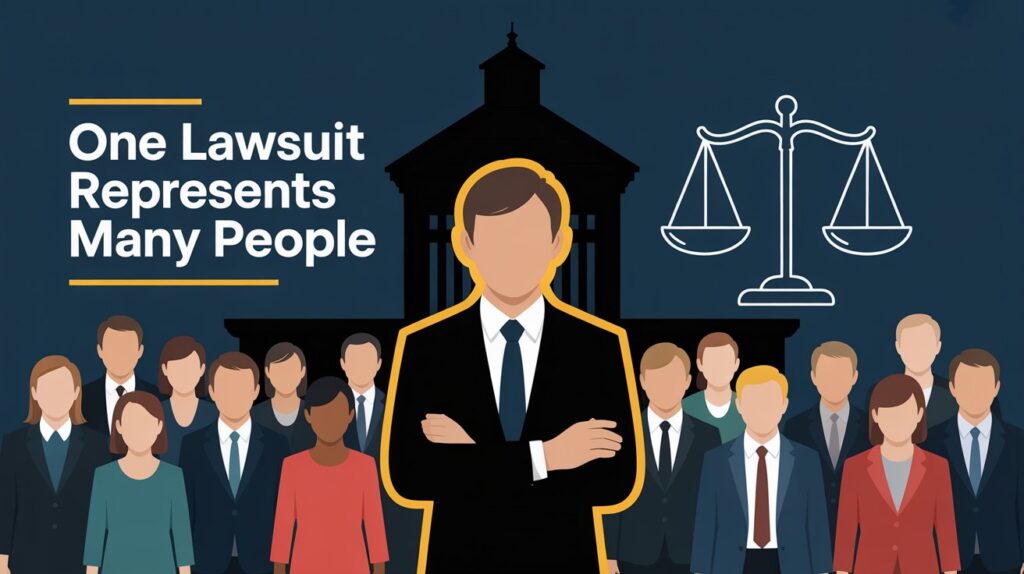
A class action lawsuit lets you join thousands of other people to fight back together. Instead of you going to court alone, a few people represent your entire group. You don’t have to hire a lawyer or pay court fees upfront. The attorneys work on what’s called a “contingency basis,” meaning they only get paid if the case wins or settles.
In essence, class actions level the playing field. They let ordinary people hold big companies accountable for small harms that individually wouldn’t be worth fighting over. They also give companies a real incentive to follow the law, because violating consumers’ rights on a large scale can now actually be costly.
A Real-Life Example That Shows Why This Matters
Let’s say your bank starts charging you a hidden $10 monthly fee that wasn’t clearly disclosed. You might not notice it at first—it’s buried in the fine print. But when you discover it, you’re angry. You’ve been overcharged along with millions of other customers.
If you filed your own lawsuit, you’d spend thousands on lawyers to recover maybe $500. That doesn’t make sense. But if your bank did this to 5 million customers, that’s $50 million in stolen fees. Now you have leverage. Now a class action makes sense.
The bank would rather settle the class action for $20 million than fight 5 million individual lawsuits or face a jury trial where a judge might award far more. You, as a class member, get to share in that settlement—usually without lifting a finger once you join.
Why Individual Lawsuits Often Don’t Work
Here’s the reality: most companies know that individual claims are too small to be worth fighting. If you lost $100, a lawyer would charge you more than that to represent you. Courts aren’t interested in hearing 100,000 separate $100 cases. The legal system would grind to a halt.
So companies sometimes rely on this math. They figure a small percentage of customers will even notice the problem, and of those, almost none will sue. It’s actually a rational business decision—unless there’s a class action waiting.
When class actions exist, the math changes. Companies can’t just count on people giving up. A single class action can expose them to billions of dollars in liability. That’s when they start taking compliance seriously.
What This Guide Will Help You Understand
By the time you finish reading this, you’ll understand:
-
What a class action actually is and how it works
-
Who can file one and who can join one
-
Every step of the process, from filing to getting paid
-
Real examples from major lawsuits that made headlines
-
The benefits and risks of participating
-
How class actions compare to individual lawsuits
-
The role lawyers play and why expertise matters
-
Answers to questions you probably have
Let’s dive in.
What Is a Class Action Lawsuit?
The Simple Version
A class action lawsuit is a lawsuit where one person (or sometimes a few people) sues on behalf of a large group of people who were harmed the same way.
Instead of each person suing separately, everyone’s claims get combined into one case. A lawyer represents all of you, and the court oversees everything to make sure the process is fair.
Think of it like this: instead of 100,000 individual lawsuits, you have one lawsuit with 100,000 people on the same side.
How One or a Few People Represent Many
The person who actually files the lawsuit is called the “class representative” or “named plaintiff.” This is often just an ordinary person—maybe someone who bought the defective product or an employee who wasn’t paid correctly.
That one person isn’t doing this alone. They work with a team of specialized lawyers who build the case, gather evidence, do the paperwork, and represent everyone’s interests. The lawyers are the ones driving the action. The class representative is mainly there to be the “face” of the group and to make decisions about settlements.
Here’s what might surprise you: you don’t need to be “chosen” to join a class action. In most cases, if you meet the criteria (like “you bought this product between these dates”), you’re automatically part of the class. You can opt out if you want, but you don’t have to do anything to participate.
The Role of the Court in Approving the Class
Before anything else happens, a judge has to approve the class action. This is called “certification.”
The judge looks at several things: Is the class large enough? Do all the class members have the same legal problem? Is the representative person a good fit to represent everyone? Would a class action be a fair and efficient way to solve this?
Only after the judge says “yes” to all these questions does the class action officially exist. This is a big deal because it determines whether the company faces liability to thousands of people or just the one named plaintiff.
Why Class Actions Are Powerful—And Risky
Class actions are powerful because they create real consequences for companies that break the law at scale. A company that harms 10 people? Not a huge deal for them. A company that harms 1 million people? Now you have a $500 million class action. That changes behavior.
But they’re also risky. Individual class members have little control over the case. Your lawyer makes strategic decisions. Settlements get negotiated. You might not agree with every choice, but you’re bound by the outcome anyway (unless you opt out beforehand).
Also, individual payouts are usually modest. If a $100 million settlement is divided among 1 million class members, that’s $100 each (before legal fees). You’re not getting rich. But you’re getting something—and the company is getting held accountable.
Who Can File or Join a Class Action Lawsuit?
Who Can Be a Class Representative?
Eligibility Requirements
Not everyone can be a class representative, but the bar isn’t super high. Here’s what you need:
-
You have to be part of the class. You can’t represent truck drivers if you’re a doctor. You have to have actually suffered the same harm as everyone else.
-
Your claim has to be typical of the group’s claims. If the lawsuit is about hidden fees in bank accounts, your bank account has to have been charged the same hidden fee. You can’t represent the class if your situation is different.
-
You have to be able to fairly represent everyone’s interests. This is the big one. The judge wants to make sure you’re not going to make decisions that help you but hurt other class members. If there’s a conflict of interest, you’re out.
-
You need a lawyer who has a solid plan. You can’t just show up without legal representation. Your attorney has to convince the court that they have the expertise and resources to handle this case.
-
No major legal problems on your side. If you’ve got judgments against you or criminal convictions that make you look unreliable, the judge might worry you’re not trustworthy.
Responsibilities and Risks
Being a class representative isn’t a passive role. You’re the public face of the lawsuit. Here’s what you might have to do:
-
Communicate with your lawyer. You’ll be in regular contact with your legal team. They need information from you, and you need to stay informed about the case’s progress.
-
Provide evidence. You might need to hand over receipts, emails, documents, or other proof that you were harmed. You could be asked to testify.
-
Participate in discovery. You might be deposed (questioned under oath) by the other side’s lawyers. This can be uncomfortable, but it’s necessary.
-
Make decisions about settlement. When a settlement offer comes, your lawyer will recommend it, but you have the final say on whether the class should accept it. This is a big responsibility because you’re making a decision for thousands of people.
-
Be willing to be identifiable. Your name appears on court documents. People might know you’re part of the lawsuit. That’s usually fine, but it’s worth knowing.
Why Credibility Matters
The judge will look closely at who you are. If you seem unreliable or like you have ulterior motives, the class certification gets denied. Your credibility is literally the foundation of the whole case.
For example, if you’re representing a class of employees who didn’t get paid overtime, you need to have worked there and genuinely not been paid. If you’re representing customers harmed by a defective product, you need to have bought and used that product. If you’re just looking for a payday or attention, judges can usually tell—and they’ll reject you.
Who Can Be a Class Member?
Automatic Inclusion vs. Opt-In Cases
Here’s something most people don’t realize: you might already be part of a class action and not know it.
In most cases, class membership is automatic and opt-out. This means:
-
The judge defines the class (like “all people who bought this product between January 1, 2020 and December 31, 2023”).
-
If you meet the definition, you’re automatically in.
-
You have to actively remove yourself if you don’t want to participate.
Some cases are different. They’re opt-in, which means you have to actively join. But these are less common because they’re harder to run. Courts prefer opt-out because it’s simpler and more people end up getting compensated.
Opting Out: When and Why It Happens
Opting out means you’re removing yourself from the class action so you can pursue your own claim separately.
Why would you do this?
Reasons to opt out:
-
Your harm is much bigger than everyone else’s, and you think you’d get more money suing alone.
-
You’re unhappy with the settlement being offered.
-
You want to pursue your own lawsuit in a different jurisdiction.
How to opt out:
The court will send you a notice telling you about the class action, the deadline to opt out, and instructions on how to do it. You usually have to submit a written request by a specific deadline. If you miss the deadline, you’re stuck in the class—you can’t opt out later.
Pro tip: If you think you might want to opt out, don’t ignore the notice. Write down the deadline and follow the instructions exactly. Send your opt-out letter via certified mail if possible, so you have proof you sent it on time.
Rights of Individual Class Members
Even though you’re in a class action, you have rights:
-
You have the right to fair notice. You get to know about the lawsuit, what it’s about, and how it might affect you.
-
You have the right to opt out. You can remove yourself if you want to pursue your own claim.
-
You have the right to be heard. If you object to the settlement, you can tell the judge why you think it’s unfair.
-
You have the right to payment. Once the case settles or goes to trial, you get your share of any award or settlement, minus the lawyers’ fees.
-
You have the right to know what happened. The case is public. You can follow the court documents and understand how things are progressing.
That said, you don’t have individual control over trial strategy, settlement negotiations, or day-to-day decisions. That’s what you’re paying the lawyer for.
How a Class Action Lawsuit Works (Step-by-Step Process)
Step 1: Identifying a Common Legal Issue
Before there’s even a lawsuit, lawyers have to identify a pattern of harm.
Maybe hundreds of people got sick from a contaminated product. Maybe thousands of employees weren’t paid overtime. Maybe millions of customers were charged hidden fees. The key is that these aren’t isolated incidents—they’re a widespread problem caused by the same defendant.
What “Commonality” Really Means
Commonality doesn’t mean every single class member was harmed in exactly the same way. It means there’s a common legal question that applies to everyone.
For example: “Did Bank X violate consumer protection laws by charging hidden overdraft fees?”
This one question affects thousands of customers, even if the specific amounts charged to each person are different. Even if some customers had overdraft fees charged once and others had them charged hundreds of times. The underlying legal violation is the same.
Lawyers look for this commonality because it’s what makes class actions economically viable. If each person’s case was completely different, requiring individual investigation and proof, a class action wouldn’t work.
Why Similarity of Harm Matters
The harm needs to be similar enough that one lawsuit can address it for everyone. If you’re suing over a defective product, that product has to be defective for the same reason for most class members. If one person’s harm came from a different cause, that’s okay—but if half the class had that different cause, the case might fail.
Think about it practically: if you’re a judge and you see a class of “all people who bought this product,” but half of them were harmed by the product’s design and half were harmed by poor instructions, you’d worry that a settlement or verdict for one group doesn’t fit the other group. The case might get broken into smaller subclasses or rejected entirely.
This is why lawyers spend time investigating before filing. They need to make sure the harm is genuinely common.
Step 2: Filing the Lawsuit
Once the lawyers have identified a common issue and found a good representative plaintiff, they file a formal complaint in court.
This document is called a “Statement of Claim” (in some places) or “Complaint” (in others). It’s basically the legal version of saying, “Here’s what the defendant did wrong, here’s who it harmed, and here’s what we want.”
The complaint includes:
-
A description of the defendant and what they did
-
Details of the harm (with a real person’s story—the class rep’s story)
-
The legal laws that were broken
-
The types of damages being sought
-
A description of the proposed class
Choosing the Right Court
Class actions get filed in either state court or federal court, depending on the issue and where the defendants are located.
Federal court is chosen when:
-
The lawsuit involves federal law (like securities fraud or certain consumer protection laws)
-
The defendant is a large company operating across multiple states
-
The amount of money at stake is high
State court is chosen when:
-
The case involves state consumer protection laws
-
Customers in just one state are harmed
-
The case is simpler and lower-value
This matters because federal and state courts have slightly different rules, different judges, and different cultures. An experienced class action attorney will choose the court that gives their case the best chance.
Why Jurisdiction Matters
“Jurisdiction” means the power of a court to hear a case. You can’t just file anywhere. The court needs a legitimate connection to the defendant or the harm.
For example, you can’t sue a New York bank in California court just because you feel like it. You need a reason (called “personal jurisdiction”). Usually, this isn’t hard to show in class actions because the defendant typically did business in multiple states.
Importance of Experienced Legal Teams
Class actions are not for solo lawyers in small practices. They’re complex, expensive, and require specialized expertise.
A good class action team includes:
-
Partners with decades of class action experience
-
Lawyers who specialize in the specific area (consumer protection, employment, securities, etc.)
-
Paralegals who manage massive document collections
-
Expert consultants (economists, scientists, engineers) who build the proof
-
Administrative staff to handle notices and settlement distribution
This costs a lot of money. Law firms sometimes spend millions on a case before they ever see a penny in return (because it’s contingency-based—they only get paid if they win). That’s why most class actions are handled by a relatively small group of specialized firms.
If your case is handled by a firm without class action experience, you’re at a disadvantage. The judge will notice, and opposing counsel will exploit it.
Step 3: Class Certification (The Make-or-Break Stage)
After the complaint is filed, the big moment arrives: the class certification hearing. This is where the judge decides whether the case can proceed as a class action.
Certification Requirements Explained
The judge looks at four core questions (these come from Federal Rule of Civil Procedure 23(a)):
1. Numerosity: Is the class big enough?
The class has to be “so numerous that joinder of all members is impracticable.” In plain English: there are so many people that having each one file their own lawsuit would be ridiculous.
Generally, more than 40 people can satisfy this. But for most class actions, you’re talking thousands or millions of class members.
2. Commonality: Do all class members have common legal questions?
The judge asks: “Would one verdict or settlement answer the legal question for everyone?”
For a defective product, the common question might be: “Does this product have the defect that the manufacturer should have discovered?”
If the answer is yes, it applies to the entire class. Individual damages might differ, but the core legal issue is the same.
3. Typicality: Are the representative’s claims typical of the class?
The judge examines the class representative’s situation. “Is this person similar enough to the rest of the class that their case represents everyone fairly?”
If the representative is completely different from most class members, there’s a problem. For example, if you’re the class rep and your overdraft fees were due to unusual circumstances while everyone else’s were due to the standard bank policy, you’re not typical enough.
4. Adequacy: Will the representative and their lawyer represent everyone fairly?
The judge wants to know:
-
Does the representative have a conflict of interest with other class members?
-
Is the lawyer competent and well-resourced?
-
Will both of them prioritize the class’s interest or their own?
If the lawyer is inexperienced or if there’s a hidden financial incentive for the representative to take a bad deal, certification gets denied.
Why Many Cases Fail Here
Honestly? A lot of class certifications are denied. Here’s why:
The claims are too individualized. If each class member was harmed differently and would need their own trial to prove damages, a class action isn’t “superior” to individual lawsuits. The case gets rejected.
The plaintiff lacks standing. The class representative has to have actually suffered harm. If they can’t prove they were injured by the defendant’s conduct, they’re out.
There’s no workable damages model. Even if liability is common, maybe damages aren’t. Let’s say you’re suing a company for false advertising. You can prove the ad was false (common issue), but proving how much each person overpaid (individual issue) might be impossible. Without a workable way to calculate class-wide damages, certification fails.
Procedure trips them up. Maybe the complaint was filed too late and the statute of limitations expired. Maybe the claim doesn’t adequately allege a legal violation. These procedural issues kill cases before they even get to certification.
How Expert Lawyers Increase Approval Chances
This is where experience matters. Good class action lawyers:
-
Build a rock-solid factual record. They don’t just rely on the allegations in the complaint. They submit expert reports, surveys, analysis, and evidence that prove commonality and typicality.
-
Choose the right class definition. If the class is too broad or too narrow, it fails. Experienced lawyers know how to define it in a way that’s legally tight and practical to administer.
-
Develop a damages methodology upfront. They don’t wait for trial to figure out how to calculate damages. They present a clear, defensible model to the judge.
-
Find the strongest possible class representative. They don’t just grab the first person who agrees. They vet class reps carefully to make sure they’re credible and typical.
-
Prepare thorough certification briefs and argument. They don’t wing it at the hearing. They submit detailed legal briefs and bring the right experts to testify.
Step 4: Discovery and Evidence Gathering
If the class gets certified, the case moves into the discovery phase. This is where both sides exchange information and evidence.
Document Discovery
“Discovery” means both sides have to show each other their evidence. This is where class actions get massive.
In a typical lawsuit, you might exchange thousands of documents. In a class action, you might exchange millions.
The defendant has to produce:
-
All internal emails and communications about the challenged conduct
-
Training materials, policy documents, and procedures
-
Financial records and sales data
-
Quality control reports and complaints from customers
-
Marketing materials and advertising
-
Executive communications and strategy documents
The plaintiff has to produce:
-
Everything the class representatives have (receipts, emails, communications with the defendant, etc.)
-
Expert reports and analysis
-
Any documents that support the plaintiff’s version of events
All these documents get loaded into a special software system where lawyers from both sides can search, review, and organize them.
Why does this matter to you as a class member? It doesn’t directly. But it matters because this is where evidence comes from. Strong document production often determines who wins. If the defendant’s own emails show they knew about the problem and did nothing, that’s very powerful evidence.
Depositions
A deposition is when a lawyer questions someone under oath, and a court reporter writes down everything they say.
In class actions, depositions usually focus on:
-
Key company executives and employees (especially those involved in the challenged conduct)
-
The class representative (to test their credibility and knowledge)
-
Expert witnesses (to challenge their methodologies and conclusions)
A deposition can take hours. You sit in a conference room with lawyers, a court reporter, and potentially video equipment. Someone swears you in, and a lawyer starts asking questions. The other side gets to ask questions too.
For class members, this usually isn’t a big deal. But class representatives sometimes get deposed, which can be stressful. That’s another reason being a class rep is a big responsibility.
Use of Expert Witnesses
Class actions rely heavily on expert witnesses. These are specialists who testify about technical issues that a normal person wouldn’t understand.
Examples include:
-
Economists: Calculate damages, analyze financial data, project what would have happened if the defendant hadn’t broken the law
-
Engineers: Determine whether a product was defective
-
Scientists: Analyze contaminated water or explain health risks
-
Medical experts: Link a product to an illness
-
Statisticians: Analyze survey results and class size
-
Accountants: Trace damages and reconstruct financial records
Each side presents expert evidence. Then each side attacks the other side’s experts. A lawyer will ask: “Did you consider this data? Isn’t your methodology flawed? Are you being paid a lot for favorable opinions?”
The judge (or jury, if there’s a trial) has to decide which experts are credible.
Step 5: Settlement Negotiations or Trial
At some point, usually after discovery is done and both sides understand the case, they decide: settle or go to trial?
Why Most Class Actions Settle
The truth is, most class actions settle before trial. Studies show around 90% settle.
Why?
Trials are risky for both sides. The defendant might lose and face massive liability. The plaintiff might win but get less than expected. Both sides face enormous costs and uncertainty.
Time is money. A trial can take months or even years. Settlement is faster. The defendant can move on, and class members can get paid.
Settlements are negotiable. Both sides can find a middle ground. The defendant pays X, the plaintiff gets Y, and everyone can claim partial victory.
Trial is expensive. Even with experienced lawyers, a trial can cost millions. A settlement avoids those costs.
The plaintiff’s lawyer and the defendant’s lawyer usually work with a mediator (a neutral third party) to negotiate. They might go back and forth a few times: “We’re demanding $200 million.” “We’ll offer $50 million.” Eventually, they find a number both sides can live with, like $120 million.
Trial Risks and Rewards
But sometimes settlement talks break down. Then it goes to trial.
A class action trial is unusual. It’s not like a typical trial where a jury hears evidence and decides if someone is guilty or liable. In a class action trial:
-
Phase one: The jury decides the liability question for the whole class. “Did the defendant break the law in a way that harmed the class?”
-
Phase two (sometimes): The jury (or judge, in some cases) determines damages. Individual damages might be too complex for a jury, so sometimes they do this separately.
If the plaintiff wins, the judgment could be worth billions. If the defendant wins, the plaintiff gets nothing.
That’s why trials are risky. You’re betting millions on a jury’s decision.
Court Approval of Settlements
Before a settlement can actually happen, the court has to approve it. The judge has to make sure the settlement is “fair, reasonable, and adequate.”
The judge will consider:
-
Is the settlement amount reasonable given the strength of the case?
-
Are the attorney fees (usually 25-30% of the settlement) reasonable?
-
Has the settlement administrator set up a good process for distributing funds?
-
Were class members properly notified?
-
Does the settlement fairly compensate class members?
Class members get an opportunity to object. If a lot of people say, “This settlement is terrible, I’m not agreeing,” the judge might reject it.
But if the judge approves it, it’s binding. Class members who didn’t opt out have to accept it.
Step 6: Claims, Payouts, and Distribution
Once the settlement or judgment is final (no more appeals), the real work begins: getting money to class members.
How Class Members Get Paid
This varies depending on the settlement, but here are the typical scenarios:
Automatic payment: You get a check mailed to your house, or money goes to your bank account. No claim form needed. The settlement administrator knows who you are because the company had your address.
Claim-based payment: You have to submit a claim form proving you were part of the class. You might need to provide a receipt or account number. Only people who file claims get paid.
Voucher or credit: Sometimes instead of money, you get a coupon or credit toward future purchases from the defendant. For example, if you were overcharged, you might get a $10 credit toward your next purchase.
Cy pres award: This is a fancy legal term for “leftover money goes to charity.” If not all class members claim their share, the unclaimed funds go to a non-profit that’s related to the class’s interests. For example, in an employment class action, unclaimed funds might go to a workers’ rights organization.
Timelines for Compensation
Patience is required. Here’s roughly what to expect:
-
Claim period: Usually 1-2 years after settlement approval. You have this long to submit your claim.
-
Verification: The settlement administrator spends 3-6 months reviewing claims and checking that people actually qualify.
-
First payments: Then checks start going out. Usually, this happens 6-12 months after the claim deadline closes.
So from the time you file a claim, you might wait 12-18 months to get paid. From the time the settlement is first announced, it can be 2-3 years before money is in your pocket.
This is one reason why class action settlements take so long. And it’s why you need to pay attention to deadlines. If you miss the claim deadline, you lose your money.
What Happens to Unclaimed Funds
If the settlement says class members can get paid, but only 60% of them actually file claims, what happens to the other 40%?
It depends on the settlement agreement:
-
Reversion to defendant: Sometimes unclaimed funds go back to the defendant. Obviously, this is the worst outcome for the class.
-
Cy pres award: The unclaimed funds go to a related charity. For a product liability case, it might go to a consumer protection nonprofit. For employment cases, it might go to a workers’ rights group.
-
Increase individual payments: The settlement administrator recalculates payments and gives everyone a larger share.
-
Reversion to court: In some cases, unclaimed funds go to the state.
The best settlements have provisions against reversion to the defendant. That’s something good class action lawyers negotiate for.
Types of Class Action Lawsuits
Class actions happen in many different areas. Let’s look at the main categories and real examples.
Consumer Fraud & False Advertising
This is probably the most common type of class action.
Hidden Fees and Misleading Claims
Companies sometimes hide fees or make advertising claims that aren’t true. For example:
-
A bank charges “overdraft fees” but the way the overdraft system works is so hidden and convoluted that customers don’t realize they’re being charged
-
A cosmetics company claims a product will “eliminate wrinkles,” but it just makes skin feel slightly smoother
-
An airline advertises “$100 flights,” but when you go to buy, it adds on taxes, fees, and surcharges that make the actual price $250
-
A telecom company advertises “unlimited” data, but when you go over a certain amount, speeds slow to unusable levels
In all these cases, the harm is that customers paid more (or got less) than they thought they were getting.
Real-World Examples
Equifax Data Breach Settlement ($425-700 million): Equifax, a credit reporting agency, got hacked in 2017. The company had failed to implement basic security measures, and hackers stole personal information on 147 million people. The company falsely claimed it had “reasonable physical, technical and procedural safeguards.” The settlement included:
-
Up to $425 million to compensate consumers
-
Free credit monitoring and identity theft insurance
-
Free identity restoration services
-
Major security improvements Equifax had to implement
What this teaches: Even if the fraud isn’t about money directly, class actions can be huge. Here, the fraud was about security (claiming they had it when they didn’t), and 147 million people qualified.
Data Breach & Privacy Violations
When a company gets hacked or fails to protect your personal information, that’s a class action magnet.
Tech Companies and User Data
Modern companies collect enormous amounts of personal data: browsing history, location, contacts, financial information, health data, etc. If companies misuse this data or fail to protect it, you have a class action.
Examples:
-
A social media company sells your data to advertisers without permission
-
A retailer gets hacked and hackers steal credit card numbers
-
A fitness app tracks your location and shares it with third parties
-
A health app fails to encrypt medical information
Growing Trend in Class Actions
Data breach class actions are exploding. Why? Because:
-
Breaches are increasingly common. Almost every major company has been hacked.
-
Personal data is valuable. When hackers get your data, they might use it for identity theft, fraud, or selling it on the dark web.
-
Companies often have weak security. Some huge companies fail to use basic protections like data encryption or regular security audits.
-
Damages are easy to calculate. If a breach happened and affected 10 million people, the class is obvious.
T-Mobile/Experian Settlement ($170 million): Hackers got into T-Mobile’s systems and stole personal information on 15 million people applying for service. The data included names, addresses, Social Security numbers, military ID numbers, and passport numbers.
The settlement included:
-
$22 million in cash payments (for fraud losses, costs incurred, and time spent remedying identity theft—paid at $20 per hour, capped at 2-7 hours depending on documentation)
-
Two years of free credit monitoring and identity theft insurance
-
Remedial measures to improve security
What this teaches: In data breach cases, companies often settle because:
-
The liability is clear (they got hacked)
-
The class is easy to define (everyone whose data was stolen)
-
The damages are obvious (identity theft, credit monitoring, time spent)
Employment & Wage Lawsuits
Employers sometimes break wage laws. Class actions are a favorite tool for fixing this.
Overtime Violations
Under federal law, employees have to be paid overtime (1.5x their normal rate) for any hours worked over 40 per week, unless they qualify for specific exemptions (like managers or professionals).
Violations happen when:
-
An employer misclassifies employees as “exempt” to avoid paying overtime
-
An employer makes employees work off the clock without pay
-
An employer manipulates timekeeping systems (rounding down hours worked, deleting time entries)
-
An employer requires salaried employees to work unlimited hours without additional compensation
Misclassification of Workers
Some employers call workers “independent contractors” when they’re really “employees.” Why? Because employees get:
-
Minimum wage protections
-
Overtime pay
-
Workers’ compensation insurance
-
Unemployment insurance
-
Paid leave (in some jurisdictions)
Contractors don’t get any of that. So a company saves a fortune by misclassifying workers.
Real-World Example: FedEx Ground ($240 million): FedEx classified its delivery drivers as independent contractors, not employees. But they worked like employees: they worked full-time, wore company uniforms, used company procedures, and met company quotas.
By misclassifying them, FedEx avoided paying overtime for long shifts. The settlement covered about 12,000 drivers in 20 states. Some drivers worked 70+ hour weeks without any overtime pay.
What this teaches: Misclassification cases can be huge because the harm is massive. Imagine working 70 hours a week for two years and not getting overtime pay. That could add up to tens of thousands of dollars in lost wages per person.
Real-World Example: Disney Disneyland ($233 million pending): Disney was sued by 50,000+ current and former park employees who claimed the company violated California wage law by failing to raise wages as required. The settlement includes back pay, interest, and penalties. It shows that even huge, beloved companies can lose wage cases when the violation is clear.
Securities & Investor Class Actions
If a company lies to investors about its financial health or business prospects, those investors have a class action.
Shareholder Losses
These cases happen when a company makes false statements (usually in financial reports or on earnings calls) that cause the stock price to drop.
For example:
-
A company claims its revenue is growing when it’s actually falling
-
A company hides major liabilities or financial problems
-
An executive fails to disclose conflicts of interest
-
A company misrepresents key business metrics
Investors who bought stock based on false information lose money when the truth comes out and the stock crashes. Then they sue.
Corporate Disclosures
Public companies are required to disclose material information. “Material” means information that would matter to a reasonable investor. If a company hides something material, shareholders can sue.
Examples:
-
Hiding a regulatory investigation
-
Failing to disclose that a major product is failing safety tests
-
Not telling investors that a key executive is being investigated for fraud
-
Concealing environmental liabilities
Real-World Example: General Electric ($362.5 million): GE misled investors about its cash flow. The company was struggling in its power business, so it used a financial trick called “intercompany factoring” to artificially boost reported cash flow.
When investors discovered this, the stock crashed. GE and its former CFO settled the case just weeks before trial, paying $362.5 million to shareholders who lost money.
What this teaches: Securities fraud settlements can be enormous because the potential liability is enormous. If a company deceives millions of shareholders and the stock drops billions in value, the settlement reflects that.
Product Liability & Pharmaceuticals
When a product is defective or a drug has dangerous side effects that weren’t properly disclosed, that’s a class action.
Defective Products
A product is defective if:
-
It was designed poorly (design defect): the product is dangerous by its very nature
-
It was manufactured poorly (manufacturing defect): this unit was built wrong even though the design is fine
-
The warnings were inadequate: the company didn’t warn you about dangers
Examples:
-
An airbag that explodes when deployed instead of just deploying (Takata)
-
A CPap machine where the foam degrades and can be inhaled (Philips)
-
A baby formula that causes intestinal disease (Abbott/Similac)
-
A vehicle that catches fire due to a battery defect (various EV makers)
Drug Side Effects
Pharmaceutical companies have to warn doctors and patients about side effects. If they fail to adequately warn, or if they downplay risks, patients hurt by those side effects can sue.
Examples:
-
An anticoagulant (blood thinner) causes severe bleeding, but the warning didn’t adequately describe the severity
-
An oral contraceptive causes blood clots, which wasn’t disclosed
-
A diabetes drug increases cancer risk, but the company downplayed the warning
-
A pain medication causes addiction, but the company minimized the risks
Real-World Example: Johnson & Johnson Baby Powder (50,000+ claims): For decades, J&J sold talcum powder baby powder. Many customers who used the powder later developed ovarian cancer. J&J knew that talc could be contaminated with asbestos (a carcinogen) but didn’t adequately warn customers.
The company faced over 50,000 claims from women who used the powder and developed cancer. Eventually, J&J stopped selling the talc-based product. The company is trying to reach a settlement, though litigation is ongoing.
What this teaches: Product liability cases can involve the most vulnerable people (babies, sick patients) and the most serious harms (cancer, death). That’s why settlements can be enormous.
Real-World Example: Philips CPAP Machines ($1.1 billion): Philips made CPAP machines used by millions of people with sleep apnea. The foam inside the machines degraded over time and could break apart. When users inhaled these particles, it could cause cancer and organ damage.
Philips knew about the problem but didn’t immediately recall the machines. When people got sick, Philips faced a massive class action. The $1.1 billion settlement had to compensate people who developed cancer and other injuries.
Environmental & Public Harm Cases
When pollution, contamination, or environmental damage harms large communities, that’s an environmental class action.
Pollution Cases
Industries sometimes pollute air, water, or soil. When an entire community is harmed, a class action makes sense.
Examples:
-
A factory dumps chemicals into drinking water, contaminating an entire town’s water supply
-
A power plant emits pollution that causes respiratory disease in neighbors
-
A mining operation causes landslides and flooding that destroy homes
-
A waste facility leaks contaminated liquids into groundwater
Community-Wide Damage
Environmental cases often have the most sympathetic class members: regular people whose homes, health, and communities are damaged by corporate negligence.
Real-World Example: PFAS “Forever Chemicals” ($875 million): PFAS stands for “per- and polyfluoroalkyl substances”—chemicals used in products like non-stick cookware, food packaging, and firefighting foam.
These chemicals don’t break down in the environment (“forever chemicals”). They accumulate in water supplies and in human blood. Studies have linked PFAS exposure to kidney cancer, liver disease, and other serious health issues.
Companies like DuPont, Chemours, and 3M used PFAS extensively. Drinking water in entire regions became contaminated. New Jersey residents, municipalities, and firefighters all filed lawsuits.
The settlement with DuPont, Chemours, and Corteva reached $875 million—one of the largest environmental settlements ever. But because it covers multiple states and decades of exposure, individual payouts are still modest.
What this teaches: Environmental cases affect entire communities, so they can have massive class sizes. But they also often involve complex causation (proving the contamination caused a specific person’s cancer) and long latency periods (it takes years for cancer to develop after exposure). This makes them complex and lengthy.
Real-World Examples of Major Class Action Lawsuits
Let’s look at three major settlements across different categories and see what they teach us.
Consumer Settlement Example: Equifax Data Breach
The Basics:
-
Class: 147 million people whose data was stolen
-
Defendant: Equifax, Inc.
-
Settlement: $425-700 million
-
Approval date: July 2019
-
Status: Approved, claims still being processed
What Happened:
In September 2017, Equifax announced that hackers had accessed its systems and stolen personal information on 147 million Americans. The company had failed to implement basic security measures, hadn’t patched known vulnerabilities, and stored sensitive information like Social Security numbers in plain text.
The company’s privacy policy claimed it had “reasonable physical, technical and procedural safeguards,” which turned out to be false.
The Settlement Breakdown:
-
Consumer Restitution Fund: $300-425 million for eligible consumers
-
Credit Monitoring: Free credit monitoring and identity theft insurance (originally for 4 years, extended in various ways)
-
Identity Restoration: Free access to identity restoration services for 7 years
-
Additional Funding: Up to $125 million more if the initial fund proved insufficient
-
Security Improvements: Equifax required to spend $1 billion on data security improvements
Individual Payouts:
-
Some people got paid out of the restitution fund based on proof of identity theft or other damages
-
Many people received the credit monitoring benefit as their compensation
-
The exact amount varied based on claims
Why This Matters:
This was the largest data breach settlement in history. It showed that companies can’t just blame hackers and move on—they have a responsibility to protect data. It also showed that 147 million class members is possible when the harm is widespread and clearly defined.
The cyber-security requirements imposed on Equifax as part of the settlement forced the company to actually invest in security, which might prevent future breaches.
Data Privacy Case Example: Yahoo Data Breach
The Basics:
-
Class: Users with Yahoo accounts during the breach periods
-
Defendant: Yahoo, Inc.
-
Settlement: $117.5 million (approved 2018)
-
Harm: 3 billion accounts affected by multiple breaches (2013 and 2014)
What Happened:
Yahoo experienced what was later revealed to be the largest data breach in history. Initially, the company reported 500 million accounts were breached in 2014. Then it revealed another 1 billion accounts were breached in 2013. Later, it admitted the 2013 breach actually affected all 3 billion Yahoo accounts that existed at the time.
Hackers stole names, email addresses, phone numbers, dates of birth, hashed passwords, security questions, and answers.
The Settlement:
-
Yahoo agreed to pay $117.5 million
-
Offered free identity protection and credit monitoring
-
Implemented improved security measures
-
Apologized publicly
Why This Matters:
This case is famous because it involved an absolutely staggering number of people. Three billion people couldn’t be individually paid, so the settlement focused on service-based remedies (credit monitoring) rather than cash.
It also occurred after Verizon had already agreed to acquire Yahoo. The acquisition value was reduced because of the liability from the breach, showing that data breaches damage companies financially.
Employment Class Action Example: FedEx Ground Misclassification
The Basics:
-
Class: About 12,000 FedEx Ground delivery drivers in 20 states
-
Defendant: FedEx Ground Package System, Inc.
-
Settlement: $240 million (2016)
-
Harm: Drivers misclassified as independent contractors and denied overtime pay
What Happened:
FedEx classified its ground delivery drivers as independent contractors. In reality, these workers:
-
Worked full-time (often 50-70+ hours per week)
-
Wore FedEx uniforms
-
Followed FedEx procedures and scripts
-
Met FedEx quotas and performance metrics
-
Had little ability to choose their own route or schedule
In most states, this makes them employees, not contractors. Employees are entitled to overtime pay (1.5x for hours over 40 per week). Contractors aren’t.
By misclassifying them, FedEx avoided paying overtime on what could be 30+ extra hours per week.
The Settlement:
-
$240 million total
-
Covered 12,000 drivers across 20 states
-
Drivers received back pay for overtime not paid
-
Attorneys’ fees paid (typically 25-30% of settlements)
Individual Payouts:
-
Varied based on how many hours each driver worked
-
Some drivers received $5,000-$20,000+ in back pay
-
Average was probably in the $15,000-$25,000 range (before attorneys’ fees)
Why This Matters:
This case showed that companies can’t just label people as “contractors” and avoid responsibility. If they control how the work is done and set the schedule, those are employees.
It also showed that wage violations can have enormous cumulative impact. Each driver might not have lost the most money compared to some other class actions, but collectively, the drivers as a group were stolen from significantly.
What These Cases Teach About Legal Strategy
Common elements in winning cases:
-
Clear and obvious harm: People were clearly wronged (data stolen, wages not paid).
-
Defendant has deep pockets: The defendant can actually afford to pay. Suing a small company with no assets doesn’t help.
-
Supportive legal precedent: There are existing court rulings on similar facts that favor the plaintiff.
-
Multiple jurisdictions: Many class actions span multiple states or the whole country, increasing leverage.
-
Sympathetic class members: Sympathetic plaintiffs (people harmed by giants like Equifax or FedEx) help win cases and sympathetic judges.
-
Good lawyers: Experienced class action firms with track records win more often.
Common reasons settlements are substantial:
-
Uncertainty: Defendants would rather settle than risk a jury trial where they might lose big.
-
Reputational damage: Companies don’t want headlines about massive verdicts.
-
Regulatory pressure: Government agencies might investigate, adding pressure to settle.
-
Cost-benefit analysis: Settling for $200 million might be cheaper than defending at trial.
Benefits of Class Action Lawsuits
Access to Justice for Small Claims
This is the core reason class actions exist. They let ordinary people with small claims actually fight back.
Without class actions, your options are:
-
Do nothing. You lose $100 to a hidden fee, and you accept it.
-
Hire a lawyer. That costs $10,000, so you lose money overall.
-
Go to small claims court. You can only recover up to a few thousand dollars, and you have to do the work yourself.
With a class action, you don’t have to do any of those things. Your lawyer is paid from the settlement. You just have to file a claim form.
For class members, this means access to justice that wouldn’t otherwise exist.
Efficient Court Process
Instead of 100,000 separate lawsuits clogging up the courts, you have one lawsuit that resolves everyone’s claims.
This is better for:
-
Judges and courts: They don’t have to hear the same evidence over and over.
-
Lawyers: They don’t have to litigate the same issues a million times.
-
Class members: The case gets resolved faster than if everyone sued individually.
An efficient process also means lower total legal costs, which means more money ends up in class members’ pockets.
Corporate Accountability
Class actions create consequences for corporate wrongdoing. If a company knows that violating consumer protection laws on a small-scale won’t get them in trouble, they might continue. But if they know 10 million people can sue them in one class action, they take compliance seriously.
This is sometimes called the “deterrent effect.” The threat of a massive class action deters wrongdoing.
Shared Legal Costs
Instead of each person paying a lawyer $10,000 or more, everyone shares one legal team’s cost. The settlement pays for the lawyers, so class members don’t have to.
This is done on a contingency basis, meaning:
-
If the case loses, the law firm gets nothing (besides expenses they might recover).
-
If the case wins, the law firm takes 25-30% of the settlement as attorney fees.
That’s expensive, but it’s much better than class members each paying separately.
Limitations and Risks of Class Action Lawsuits
Class actions aren’t perfect. Here’s what you need to know about the downsides.
Smaller Individual Payouts
If a $1 billion class action is divided among 10 million class members, that’s $100 per person. Some people will think, “That’s not worth my time.”
But here’s the reality: if everyone had to sue individually, they’d get zero (because suing would cost more than they’d recover). So $100 is better than nothing.
Still, payouts are often modest. If you were harmed significantly more than the average class member, you might be better off opting out and suing individually.
Long Timelines
We’ve talked about this, but it bears repeating. From lawsuit to settlement to final payment can take 3-5 years or longer.
If you need money quickly, a class action won’t help.
Loss of Personal Control
You don’t get to decide litigation strategy, settlement terms, or trial tactics. Your lawyer does (hopefully in your best interest, but they make the calls).
If you strongly disagree with a settlement, you can object to it or opt out. But you can’t micromanage the case like you would if you sued individually.
Why Expert Handling Matters
This is critical: class actions are complex. If your case is handled by lawyers without class action experience, things can go wrong.
An inexperienced lawyer might:
-
File in the wrong court (weak jurisdiction)
-
Define the class in a way the judge will reject
-
Fail to prove commonality
-
Develop a bad damages model
-
Bungle settlement negotiations
-
Fail to meet procedural deadlines
Any of these can doom the case or result in a much smaller recovery.
That’s why it’s important to know: class action attorneys are specialists. If you’re considering filing or joining one, check the law firm’s track record. Do they have experience with this type of case? What class actions have they won?
Class Action Lawsuits vs. Individual Lawsuits
Let’s compare these two approaches directly.
Cost Comparison
Class Action:
-
No upfront cost to you
-
Attorneys’ fees come from settlement (25-30%)
-
You recover: settlement amount minus attorney fees minus costs
Individual Lawsuit:
-
Typically, you pay the lawyer $10,000-$100,000+ upfront (or split contingency)
-
If the lawyer works on contingency, you pay 33-40% after winning
-
Litigation costs (expert witnesses, depositions, etc.) can add $50,000+
-
You recover: whatever you win minus attorney fees minus costs
Advantage: Class actions for claims under $10,000.
Control and Decision-Making
Class Action:
-
You have little control
-
Your lawyer makes strategy decisions
-
You must accept the settlement the representative plaintiff agrees to (unless you opt out beforehand)
-
The judge approves everything
Individual Lawsuit:
-
You control the case
-
You approve settlement terms
-
You can take the case to trial if you want
-
You make final decisions on strategy (with your lawyer’s advice)
Advantage: Individual lawsuits if you want control.
Compensation Differences
Class Action:
-
Small harm: might get $100-$500
-
Medium harm: might get $500-$5,000
-
Large harm spread across many class members: might get less than you deserve
Individual Lawsuit:
-
Small harm: not economical to sue
-
Medium harm: might recover 60-70% of your actual loss (after lawyer fees)
-
Large harm: might recover 60-70% of your actual loss
Advantage: Depends. Class actions are better for small claims. Individual suits are better for large claims where you can recover more than 60-70%.
When Individual Lawsuits Make More Sense
You should consider suing individually instead of joining a class action if:
-
Your harm is significantly larger than the average class member’s harm. If you lost $100,000 and the average class member lost $1,000, you’d be better off in an individual suit.
-
You want control over strategy and settlement. You have specific business or personal interests that might not align with the class’s interests.
-
You have complex issues unique to your situation. If most class members’ situations are simple and yours is complicated, you might not fit well in a class action.
-
The settlement is unfair to you specifically. You object to the settlement terms and you think you could do better alone.
If any of these apply, you might opt out and sue individually.
The Role of Lawyers in Class Action Lawsuits
Class action lawyers are specialists. They’re not the same as divorce lawyers or criminal defense lawyers. They have specific expertise.
Why Not All Lawyers Can Handle Class Actions
Complexity and Scale
A class action might involve:
-
Millions of class members across multiple states
-
Billions of dollars at stake
-
Thousands of exhibits and millions of documents
-
Expert witnesses in complex fields (science, economics, engineering)
-
Interactions with the SEC or FTC or state attorneys general
-
Appeal proceedings that can last years
This isn’t something a solo practitioner can handle. It requires:
-
Large law firms with dozens of attorneys
-
Specialized paralegals and administrative staff
-
Relationships with expert witnesses
-
Budget to fund expensive litigation
-
Experience with federal court procedure
Certification Challenges
Winning class certification is hard. The judge scrutinizes everything:
-
Is the class well-defined?
-
Do all class members have common legal issues?
-
Is the representative plaintiff typical and adequate?
-
Will the damages model work?
An inexperienced lawyer will likely lose the certification motion, which kills the case.
Financial Risk
Class action lawyers don’t get paid unless they win. They might spend $5 million litigating a case for 4 years, getting nothing if the case loses or gets dismissed.
Law firms have to be financially healthy enough to absorb that risk. Small firms usually can’t.
When Class Action Lawsuit Experts Become Essential
You want experienced class action attorneys if:
Large Groups
If your potential class is hundreds of thousands or millions of people, you need lawyers who’ve handled large classes. They know how to define the class clearly, how to notify members efficiently, and how to distribute settlement funds.
High-Value Defendants
If you’re suing a major corporation or a defendant with significant assets, you need lawyers who know how to fight well-funded defense teams.
Defendants hire huge law firms with massive resources. You need to match that.
Complex Evidence and Data
If the case requires expert testimony about science, engineering, economics, or other complex fields, you need lawyers with experience using experts effectively.
You need lawyers who know how to work with economists to calculate damages, engineers to prove defects, statisticians to design surveys, and other specialists.
Frequently Asked Questions
How long does a class action lawsuit take?
From filing to settlement or judgment: 2-5 years on average. From settlement approval to receiving your payment: another 1-2 years. So total time from when the lawsuit starts to when you get paid: 3-7 years is typical.
Complex cases with multiple appeals can take longer. Simple, early-settling cases might move faster.
Do I have to pay legal fees?
No. Attorney fees come from the settlement. If the settlement is $100 million and attorney fees are 25%, the lawyers take $25 million from the settlement fund. You don’t pay anything separately.
The only fees you might owe are if you object to the settlement and hire your own lawyer to represent you at the fairness hearing. That’s rare and usually not a great idea.
Can I join a class action later?
It depends. If the case is opt-out (automatic inclusion), you might be able to join even after it’s been filed, as long as you meet the class definition.
If the case is opt-in (you have to actively join), you can only join during the enrollment period.
If the settlement has already been approved and the claim deadline has passed, you’re out of luck. You can’t claim on a settlement if you miss the deadline.
Important: Always pay attention to notices about class actions. They contain critical deadlines.
How much money do people usually get?
It varies widely. Most class actions pay out between $20 and $500 per class member.
Some pay out more:
-
Large settlements with smaller classes can pay $1,000+
-
If you have to file a claim showing greater damage, you might get more
Some pay out less:
-
Massive settlements with huge classes might pay less than $10
-
Service-based settlements (like credit monitoring) might be valued at $100-$500 but aren’t actual cash
The amount depends on the size of the class, the size of the settlement, attorney fees, and the damage model.
Can businesses file class actions?
Yes, but it’s less common. Most class actions are filed by consumers, employees, or investors.
Businesses can file if they suffered common harm from another business’s conduct. For example, small retailers might sue a payment processor for unfair fees (though this is rare in practice).
Final Thoughts: Understanding Class Actions Before Taking Action
Class action lawsuits are powerful tools. They let ordinary people collectively hold corporations accountable for wrongs that would be impossible to address individually.
But they’re also long, complex, and require patience. You probably won’t get rich from a class action settlement. You probably will get some money or service as compensation for harm you suffered.
Why Knowledge Protects Your Rights
Understanding how class actions work protects you in several ways:
-
You won’t miss deadlines. You’ll know that when you get a notice, there are deadline and that missing them costs you money.
-
You’ll evaluate class actions critically. You’ll know what to look for in terms of class definition, eligible class members, and potential payouts.
-
You’ll know when to opt out. You’ll understand when it might make sense to pursue an individual claim instead of joining the class.
-
You won’t be manipulated. You’ll understand that just because someone claims there’s a class action doesn’t mean it’s legitimate. You’ll check the court filings.
Importance of Early Legal Guidance
If you think you might be part of a class action or if you’re considering filing one, talk to a lawyer early.
Early guidance helps because:
-
A lawyer can tell you if a potential class action is worth pursuing
-
They can advise you on opt-out timing if necessary
-
They can help you understand what compensation you’re actually entitled to
-
They can explain the process so you know what to expect
Don’t wait until the case is over to talk to a lawyer. Early consultation is free or low-cost for many firms, and it pays off.
When to Consult Class Action Lawsuit Experts
Consult an expert lawyer if:
-
You’ve been notified that you’re part of a class action and you’re not sure if you should participate
-
You think you might have a claim that’s much larger than the average class member’s claim (you might want to opt out)
-
You’ve received a settlement notice and you’re unsure if the settlement is fair
-
You’ve discovered a pattern of wrongdoing by a company and you think it might affect thousands of people
-
You’re an employee who thinks you’ve been misclassified or not paid correctly
-
You purchased a defective product that harmed you
-
You’ve been the victim of fraud, data breach, or other corporate wrongdoing
A good class action lawyer can evaluate your situation in a free consultation and advise you on your options.
What You Should Do Next
-
Stay informed. Read notices about class actions carefully. Don’t ignore them.
-
Know your deadlines. Write down opt-out and claim deadlines. Set phone reminders if necessary.
-
Keep records. Save receipts, account statements, and any evidence of the harm you suffered. This might be needed to claim a settlement.
-
Talk to a lawyer early if you think you’ve been wronged by a major company. Don’t wait years hoping a class action will materialize.
-
Understand that justice takes time. Class actions are slow. But they work. They hold companies accountable and compensate people who would otherwise have no remedy.
The class action system isn’t perfect. But it’s a vital part of how ordinary people can fight back against corporate wrongdoing. Understand it, use it wisely, and protect your rights.
This article is for informational purposes and does not constitute legal advice. If you believe you have a potential class action claim or have been notified about a class action, consult with a qualified attorney in your jurisdiction for guidance specific to your situation.