You’ve probably heard the term “IP litigation” thrown around in business circles. Maybe you’ve even thought, “I have a registered trademark, so I’m protected,” or “My business is too small to get sued.” These assumptions have cost business owners like you millions of dollars, years of lost productivity, and in some cases, their entire companies.
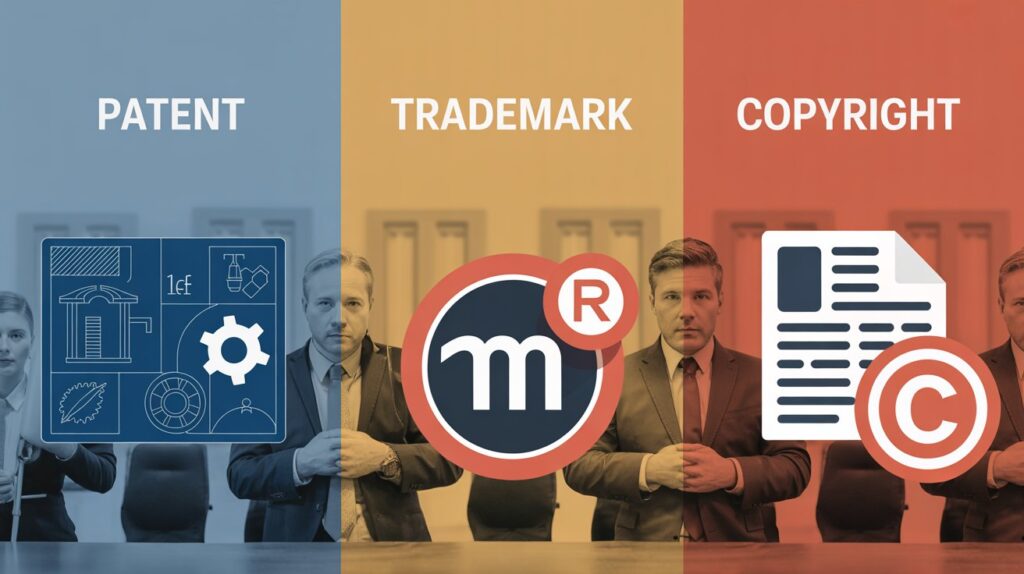
Here’s the truth: intellectual property litigation isn’t a single monolith. Patent, trademark, and copyright disputes are fundamentally different beasts, each with its own rules, costs, timelines, and risks. Treating them the same way is like using a hammer to fix every problem in your house—sometimes you need a screwdriver, sometimes you need a plumber, and sometimes you need to call an expert before you flood the basement.
This article breaks down exactly what you’re up against in each type of IP dispute, what it will cost you, how long it will take, and most importantly, how to protect your business before you become another cautionary tale.
What Is Intellectual Property Litigation?
Intellectual property litigation is what happens when someone takes your legally protected creation and uses it without permission—and you decide to do something about it in court. Think of it as the enforcement phase of your IP rights. You’ve done the work to create something valuable, you’ve (hopefully) registered it properly, and now someone’s trying to profit from your effort.
But here’s what many business owners miss: registration alone is not enough. Having a patent, trademark, or copyright certificate is like having a deed to your house. It proves you own it, but it doesn’t stop burglars. You still need locks, alarms, and sometimes the legal equivalent of a security company—specialized IP litigation firms—to protect what’s yours.
Litigation exists on a spectrum. On one end, you have negotiation and cease-and-desist letters (think of these as polite but firm “please stop” requests). In the middle, you have mediation and settlement discussions. On the far end, you have full-blown court battles where judges, juries, and years of your life get involved. Courts serve as the final arbiter when you and the other party can’t agree on who’s right, what the damages should be, or whether something even counts as infringement.
Quick Overview: Patent vs Trademark vs Copyright Litigation
Before we dive deep, here’s what you’re dealing with at a glance:
| Factor | Patent Litigation | Trademark Litigation | Copyright Litigation |
|---|---|---|---|
| What It Protects | Inventions, processes, systems, designs | Brand names, logos, slogans, brand identity | Creative works: writing, videos, music, software, images |
| Infringement Looks Like | Someone makes/sells your invention or uses your process | Someone uses a similar name/logo that confuses customers | Someone copies your content, code, or creative work |
| Typical Defendants | Tech companies, manufacturers, competitors | E-commerce brands, competitors, copycat brands | Content platforms, competitors, former employees |
| Cost Range | $3 million to $10+ million | $120,000 to $750,000+ | $50,000 to $500,000+ |
| Timeline | 2-4 years | 6-18 months | 1-2 years (can be faster with takedowns) |
| Business Risk Level | EXTREMELY HIGH – Can shut down product lines | MODERATE-HIGH – Can force rebranding, damage reputation | MODERATE – Widespread but statutory damages add up |
| Key Evidence | Technical experts, prior art, claim charts | Consumer surveys, market confusion, sales data | Copying proof, access, substantial similarity |
Sources: US patent litigation data showing 26,129 cases filed 2020-2025 with average costs exceeding $3M; trademark litigation costs ranging $120K-$750K; copyright statutory damages framework
Patent Litigation Explained
What Patent Litigation Protects
Patents protect functional inventions—the “how it works” of your business. This includes:
-
Utility patents: Your new manufacturing process, software algorithm, chemical compound, or mechanical device
-
Design patents: The unique ornamental appearance of your product (like Apple’s rounded iPhone corners)
When you hear about companies suing over “patent infringement,” they’re claiming someone is making, using, or selling their invention without permission.
Common Patent Litigation Scenarios
Patent Infringement Claims: A competitor launches a product that works suspiciously like yours. You believe they’re using your patented technology.
Invalidity Challenges: Someone claims your patent never should have been granted because the invention wasn’t new or was obvious. They’re trying to kill your patent entirely.
Defensive Patent Lawsuits: You get sued first, so you find patents in your portfolio to countersue, hoping to force a settlement.
Competitor Technology Disputes: Two companies independently developed similar technology. Both have patents. Now they’re fighting over who has the right to what.
Who Usually Faces Patent Litigation
If you’re in tech, manufacturing, pharmaceuticals, biotech, hardware, or SaaS, you’re in the danger zone. The data shows that utility patents account for 87.3% of all patent litigation, with tech and pharma leading the pack. Even small manufacturers can get caught in the crossfire if they’re producing components that larger companies claim infringe on their patents.
Complexity, Cost & Timeline
Patent litigation is the nuclear option of IP disputes—it’s the most expensive and complex. Here’s why:
Why It Costs Millions: You need technical experts who can explain complex science to judges and juries. These experts charge $500-$1,000 per hour. You need extensive discovery, claim charting, prior art searches, and often multiple rounds of appeals. The median patent case costs $3-5 million through trial, with complex tech cases hitting $10+ million.
The Timeline Reality: Expect 2-4 years from filing to resolution. The courts are backlogged, and the technical complexity requires extensive preparation. Even “fast” patent cases take 18-24 months.
The Risk: Patent litigation can result in injunctions that shut down your product lines entirely. In 2024, courts issued permanent injunctions in patent cases 68% of the time when requested. This means you could be forced to stop selling your flagship product overnight.
Trademark Litigation Explained
What Trademark Litigation Protects
Trademarks protect your brand identity—your business name, logo, slogans, and the overall look of your brand (called “trade dress”). The core issue is always consumer confusion. Will customers mistake their product for yours? If yes, you likely have a case.
Common Trademark Disputes
Trademark Infringement: A competitor uses a name or logo that’s similar enough to confuse your customers. Classic example: the South Korean fried chicken restaurant “Louis Vuiton Dak” that copied Louis Vuitton’s branding—and lost badly.
Passing Off: Someone tries to pass their goods off as yours, even without a direct logo copy. They might use similar packaging, colors, or marketing.
Brand Dilution: A famous brand (like Gucci or Adidas) sues even when there’s no direct competition, arguing that the copycat cheapens their brand’s reputation.
Domain Name Disputes: Someone registers yourbrandname.com or a close variation to siphon your traffic.
Social Media & Marketplace Misuse: Counterfeiters sell knockoffs on Amazon, eBay, or Instagram using your brand name.
Who Commonly Needs Trademark Litigation
E-commerce brands, direct-to-consumer startups, franchises, and personal brands are trademark litigation’s regular customers. If you’ve built brand recognition online, you’re vulnerable to copycats. Even influencers with strong personal brands find themselves fighting impersonators.
Cost, Speed & Business Impact
Why It’s Faster Than Patents: Trademark cases don’t require technical experts. The focus is on consumer perception, which can be proven through surveys, sales data, and marketing evidence. This makes cases move 2-3x faster than patent disputes.
The Cost: Simple cases resolve for $10,000-$50,000 if settled early. Full-blown trials run $150,000-$300,000, with complex multi-jurisdictional cases hitting $750,000+. Attorney fees typically range $200-$800 per hour.
The Urgency Factor: Courts understand that brand damage happens fast. They grant preliminary injunctions and temporary restraining orders more readily in trademark cases. This can stop the infringer within weeks, not years.
Settlement vs. Court: 85-90% of trademark cases settle before trial. The risk of losing brand rights pushes both sides to compromise.
Copyright Litigation Explained
What Copyright Litigation Protects
Copyright protects creative expression—your written content, videos, music, photographs, software code, and designs. Unlike patents and trademarks, copyright protection is automatic the moment you create something original. Registration gives you stronger enforcement rights (like statutory damages), but you own the copyright from day one.
Common Copyright Infringement Cases
Digital Content Theft: Someone copies your blog posts, videos, or social media content. This is rampant and often done by competitors or content farms.
Software Code Copying: A former employee or competitor copies your proprietary code. This is common in SaaS and app development.
Media & Entertainment Disputes: Using music, video clips, or images without proper licensing. The YouTubers suing Snap for AI training data scraping is a 2026 example of this evolving battle.
Online Piracy: Unauthorized distribution of books, courses, or digital products.
Who Is Most Affected
Content creators, media companies, SaaS businesses, marketing agencies, and publishers live in the copyright litigation world. If your business creates original content or software, you’re holding valuable copyright assets.
Cost, Remedies & Speed
DMCA Takedowns vs. Lawsuits: The Digital Millennium Copyright Act gives you a fast, free tool to remove infringing content from platforms like YouTube, Facebook, or web hosts. This can resolve issues in days. But for serious commercial infringement, you need a lawsuit.
Statutory Damages: This is copyright’s secret weapon. If you registered your work before infringement (or within 3 months of publication), you can claim $750 to $30,000 per work infringed, without proving actual damages. For willful infringement, this jumps to $150,000 per work. Copy 10 blog posts? That’s potentially $1.5 million in damages.
Why It Can Be Faster: Copyright cases often hinge on direct comparison: “Did they copy my work?” This is simpler than patent claim analysis or trademark confusion surveys. Cases can resolve in 12-18 months if they don’t settle.
The Widespread Risk: Unlike patents (niche industries) or trademarks (brand-focused), copyright touches every business with a website, social media presence, or marketing materials. The low cost of copying means infringement is common.
Key Differences That Every Business Must Understand
Nature of Protection
Patents = Function: Protects how something works. If your invention’s functionality is copied, that’s patent infringement.
Trademarks = Identity: Protects brand recognition. If customers are confused about who they’re buying from, that’s trademark infringement.
Copyright = Expression: Protects the specific way you expressed an idea. If someone copies your actual words, images, or code, that’s copyright infringement.
Proof Requirements
Patent Litigation: Requires technical proof. You must show the defendant’s product meets every element of your patent claims. This needs expert witnesses, technical documentation, and often laboratory testing.
Trademark Litigation: Requires consumer confusion proof. You show similarity of marks, relatedness of goods, and actual marketplace confusion through surveys and sales evidence.
Copyright Litigation: Requires copying proof. You show the infringer had access to your work and that the copied portions are substantially similar. This is often proven side-by-side.
Litigation Complexity
Patent = Expert-Heavy: Multiple technical experts, claim construction hearings (Markman hearings), and complex prior art analysis. The average patent case requires 3-5 expert witnesses.
Trademark = Evidence-Based: Focuses on marketplace evidence, consumer surveys, and financial records. Less technical, more marketing-focused.
Copyright = Content Comparison: Often resolved through direct comparison and documentation. Can be straightforward unless fair use is claimed.
Cost & Risk Levels
Patents = High-Stakes: Can cost $3-10 million and result in product shutdowns. The risk is existential for product-based companies.
Trademarks = Moderate Disputes: Costs $120K-$750K but can force complete rebranding. The risk is reputational and operational.
Copyright = Scalable Enforcement: Costs $50K-$500K but statutory damages make it financially viable to pursue even smaller infringers. The risk is widespread but individually manageable.
Which Type of Litigation Is Most Dangerous for Businesses?
The answer depends on your business model, but here’s the harsh reality:
Financial Exposure Comparison
Patent litigation poses the highest absolute financial risk. A single adverse verdict can exceed $1 billion (Apple-Samsung topped $1B). Even “small” patent cases often involve $10-50 million at stake.
Trademark litigation can be deceptively expensive. While costs are lower than patents, losing can force you to rebrand completely. The damage isn’t just the $300K legal bill—it’s the millions in lost brand equity and customer recognition.
Copyright litigation is dangerous through volume. Statutory damages of $750-$150,000 per work mean that copying 20 photos from your website could theoretically cost an infringer $3 million. For content businesses, this creates massive leverage but also risk if you’re on the receiving end.
Injunction Risks
Patents: Courts grant permanent injunctions in 68% of successful patent cases. This can literally shut down your business overnight.
Trademarks: Preliminary injunctions are granted readily. You could be forced to stop using your brand name within weeks of filing.
Copyright: Injunctions are common but often limited to stopping specific copying rather than shutting down entire businesses.
Reputational Damage
Trademarks: Losing a trademark case publicly admits your brand is a copycat. This damages customer trust permanently.
Patents: Being labeled an infringer can scare investors and partners. Tech companies seen as “copying” lose innovation credibility.
Copyright: In the digital age, copyright disputes can go viral, painting you as a content thief or, conversely, as a bully if you over-enforce.
Long-Term Business Impact
A 2024 study of patent litigation found that companies losing patent cases saw an average 23% drop in market valuation and a 15% reduction in R&D spending over the following three years. Trademark losses forced 40% of companies to rebrand within two years. Copyright disputes, while less existential, created operational paralysis as companies implemented content review processes costing an average of $200,000 annually.
Can a Business Face Multiple IP Lawsuits at Once?
Yes, and it’s more common than you think. This is called overlapping IP rights, and it’s where things get legally complex fast.
Overlapping IP Rights Explained
Your single product can trigger all three types of litigation simultaneously:
Example: You launch a new smart water bottle with a patented filtration system (patent), a unique brand name and logo (trademark), and custom-designed marketing videos and website copy (copyright).
A competitor copies your product. They’re now potentially infringing your:
-
Patent: By using your filtration technology
-
Trademark: By using a similar brand name that confuses customers
-
Copyright: By copying your product photos and video content
The Oracle vs. Google case illustrated this perfectly. Oracle sued Google for copying Java APIs, asserting both copyright (the code structure) and patent (the underlying technology) violations. Courts allowed both claims to proceed simultaneously.
Realistic Examples
E-commerce Product: You sell a patented kitchen gadget under a trademarked brand name, with copyrighted product photos and descriptions. A copycat seller on Amazon duplicates everything. You could sue for patent, trademark, AND copyright infringement in one lawsuit.
SaaS Platform: Your software has patented algorithms, a trademarked name, and copyrighted code/documentation. A former employee starts a competing company. You’re looking at patent infringement (algorithms), trademark infringement (similar company name), and copyright infringement (copied code).
Media Company: You produce a video series with a trademarked title, copyrighted episodes, and potentially patented streaming technology. A pirate site rips you off completely—all three IP types are in play.
Why Litigation Strategy Must Be Coordinated
Filing three separate lawsuits is a rookie mistake. It triples your costs, creates conflicting court rulings, and wastes leverage. Smart businesses file one comprehensive lawsuit asserting all applicable IP rights.
The Risk of Handling Disputes Separately: Different IP types have different proof standards, timelines, and remedies. A trademark victory might give you an injunction in 6 months, while your patent case drags on for 3 years. By the time you win the patent case, the infringer has already rebranded and continued selling your technology under a new name.
Coordinated Strategy Benefits:
-
Single discovery process reduces costs by 40-60%
-
Consistent narrative across all IP claims
-
Leverage settlement discussions with multiple threat points
-
One injunction can cover all IP violations simultaneously
How Businesses Choose the Right Litigation Strategy
Choosing between settlement and court battle isn’t about courage—it’s about cold, hard business calculation. The right choice can save your company millions and preserve relationships. The wrong choice can drain your resources and distract you from growth for years.
When to Settle vs Fight
Settle When:
-
Costs exceed potential recovery: If fighting will cost $500,000 and your maximum damages are $200,000, settlement makes business sense. The math is simple—don’t spend a dollar to save a dime.
-
Evidence is weak: Your case is only as strong as your proof. If technical documentation is missing, consumer surveys are inconclusive, or copying is hard to prove, settlement avoids risking a total loss.
-
Time is critical: Patent cases take 2-4 years. If you need resolution in 6 months to close a funding round or partnership, settlement delivers certainty.
-
Distraction is deadly: Litigation consumes 15-30 hours per week of executive time. If you’re in a growth phase or fundraising, the distraction can cost more than the lawsuit itself.
Fight When:
-
Principle sets precedent: If you’re a frequent target, fighting and winning deters future infringers. Qualcomm’s aggressive patent defense strategy, while expensive, created a licensing empire worth billions.
-
Evidence is overwhelming: When you have clear proof—undisputed patent claims, 80% customer confusion in surveys, or direct code copying—fighting maximizes leverage. The “suing while negotiating” approach lets you maintain pressure while staying open to settlement.
-
Existential threat: If losing means shutting down your core product line, you have no choice but to fight. The cost of losing exceeds any litigation expense.
-
They sued you first: Defensive litigation requires aggressive countersuits. Countersuing with your own patents or trademark claims often forces the plaintiff to settle on favorable terms.
The Settlement Sweet Spot: 85-90% of IP cases settle before trial. The key is timing. Settling after discovery but before trial (the “post-discovery settlement”) gives you maximum leverage with minimum risk. Both sides have seen the evidence, costs are mounting, and pressure peaks.
Cost-Benefit Analysis
Before you decide, run the numbers:
Patent Litigation ROI:
-
Cost: $3-10 million
-
Potential recovery: $10 million to $1+ billion (in exceptional cases)
-
Break-even: You need 30-50% chance of winning a $10M+ case to justify fighting
-
Reality check: Most patent plaintiffs recover less than $2 million
Trademark Litigation ROI:
-
Cost: $120,000-$750,000
-
Potential recovery: Damages plus lost profits, but the real value is brand protection
-
Break-even: If your brand is worth more than $500,000, litigation is usually justified
-
Hidden costs: Rebranding can cost $100,000-$500,000 even if you win
Copyright Litigation ROI:
-
Cost: $50,000-$500,000
-
Potential recovery: $750-$150,000 per work in statutory damages
-
Break-even: Copying 10+ works makes litigation economically viable
-
Advantage: DMCA takedowns cost nothing and resolve 60% of issues before lawyers get involved
Strategic Settlements
Smart settlements include:
-
License agreements: They pay you royalties instead of damages. This turns an infringer into a revenue source.
-
Covenants not to sue: You agree not to sue them if they stop infringing within 90 days. This ends the threat without court.
-
Cross-licenses: You both have patents on related technology. You agree to share instead of fighting.
-
Phase-out periods: They can sell existing inventory for 6 months, then must stop. This avoids destroying their business while protecting your future market.
Aggressive Enforcement Scenarios
Sometimes you must fight. Consider aggressive enforcement when:
-
Serial infringers target you: They’ve copied three competitors. You’re fourth. Fighting sets an example.
-
Market entry timing: A competitor launches a copycat product the same week you go public. Immediate injunction stops them from stealing your launch momentum.
-
Investor confidence: Your investors demand you protect their investment. Fighting demonstrates you’re a serious actor.
Importance of Specialized IP Litigation Firms
Hiring your cousin’s corporate law firm for IP litigation is like hiring a family doctor for brain surgery. They might be brilliant, but they lack the specialized tools, experience, and relationships that determine outcomes.
Why General Law Firms Fall Short
Lack of Technical Expertise: Patent litigation requires understanding complex technology. Your general litigator who handles contract disputes can’t effectively cross-examine a PhD in semiconductor physics. They’ll miss critical technical details that make or break your case.
No Prosecution Experience: IP litigation firms that also handle patent/trademark prosecution understand how these rights are granted. They know where the weaknesses are and how examiners think. This insider knowledge is invaluable when challenging validity.
Wrong Contacts: Specialized firms have relationships with the best technical experts, damages experts, and survey specialists. They know which economists can prove lost profits and which can’t. Generalists use whoever’s available, not whoever’s best.
Higher Costs, Worse Outcomes: General litigators bill more hours learning IP law on your dime. They make rookie mistakes that extend litigation by 6-12 months. In the end, you pay more for inferior results.
Industry-Specific Legal Expertise
Tech & Software: Firms like Fish & Richardson or Wilson Sonsini understand software architecture, APIs, and algorithm patents. They speak your engineer’s language.
Pharma & Biotech: Specialists know FDA approval processes, clinical trial data, and Hatch-Waxman litigation. This specialized knowledge is non-negotiable.
Consumer Brands: Fashion and retail specialists understand trade dress, design patents, and fast-fashion copying patterns. They move quickly because they know speed matters.
Content & Media: Firms with entertainment practices understand DMCA safe harbors, content licensing, and creator rights. They’ve represented YouTubers, studios, and platforms.
Litigation Experience vs Registration-Only Services
Many IP firms only handle registration—filing patents and trademarks. This is like hiring a real estate agent to build your house. They’re related skills, but fundamentally different.
Registration-Only Firms:
-
Cost: $5,000-$15,000 per patent/trademark
-
Deliverable: A certificate
-
Problem: They’ve never seen a courtroom. When litigation hits, they refer you out or learn on the job.
Full-Service IP Litigation Firms:
-
Cost: Higher hourly rates ($400-$1,200 vs $200-$500)
-
Deliverable: Enforceable rights and litigation readiness
-
Advantage: They draft patents with litigation in mind. They know which claim language survives challenges. Every decision anticipates future enforcement.
The Hybrid Approach: Use a prosecution firm for initial filings, but have a litigation firm review your most critical patents/trademarks before launch. This litigation readiness review costs $10,000-$25,000 but can save millions later.
When Should You Contact an IP Litigation Firm?
The best time to call is before you need to. But here are the specific triggers:
Early Warning Signs Across Patent, Trademark, and Copyright
Patent Red Flags:
-
A competitor’s product looks or works suspiciously like yours (within 6-12 months of your launch)
-
You receive a “friendly” letter asking about your technology licensing
-
Former employees join a competitor and your product development accelerates
-
You find your product photos on a competitor’s website with specs that match yours
Trademark Red Flags:
-
Customer service emails asking about “your” product sold on a different website
-
Google Alerts showing similar business names in your industry
-
Amazon listings using your brand name (even with slight spelling changes)
-
Domain names similar to yours being registered
Copyright Red Flags:
-
Your blog content appears verbatim on another site
-
Your product photos show up in competitor ads
-
A former contractor launches a similar service using your training materials
-
Your software code appears in a GitHub repository
Cease-and-Desist Letters Explained
A cease-and-desist (C&D) letter is your first move. It’s a formal “stop what you’re doing” notice. Here’s what you need to know:
Sending a C&D:
-
Cost: $2,000-$5,000 from a lawyer, or free if you DIY (not recommended)
-
Content: States your rights, their infringement, and demands they stop within 10-14 days
-
Goal: 60-70% of infringers stop when they get a lawyer’s letter. It’s cheaper than litigation.
-
Risk: They might file a “declaratory judgment” lawsuit first, seeking to invalidate your rights.
Receiving a C&D:
-
Don’t ignore it. Silence can be used against you later.
-
Don’t admit anything. Call an IP lawyer immediately.
-
Preserve all evidence. Don’t delete emails, code, or products.
-
You have 2-3 weeks to respond before they escalate to litigation.
Defensive Litigation Situations
You’re not always the plaintiff. Sometimes you’re the target:
When You Get Sued First:
-
Your competitor files a lawsuit claiming you infringe their patent/trademark/copyright
-
They want to pick the court (forum shopping) and control the narrative
-
Your response must be immediate and aggressive
The Defensive Strategy:
-
File a countersuit with your own IP claims. This creates leverage.
-
File for IPR (Inter Partes Review) if it’s a patent case. This challenges their patent at the USPTO, which is faster and cheaper than court.
-
Move to dismiss if their claims are legally flawed. This buys time and forces them to refile.
Defensive Costs: Defending a patent lawsuit costs the same as filing one ($3-10M). Defending trademark cases runs $100K-$500K. Copyright defense can be $50K-$300K.
Preparing Before Legal Consultation
Before you call a lawyer, get organized:
Document Everything:
-
Dates of creation (patent filings, trademark first use, copyright publication)
-
Evidence of infringement (screenshots, purchase records, witness statements)
-
Financial impact (lost sales, diverted customers, damaged reputation)
-
Your IP registrations (certificates, applications, maintenance fees)
Know Your Goals:
-
Do you want them to stop immediately? (Injunction)
-
Do you want money? (Damages)
-
Do you want a licensing deal? (Ongoing revenue)
-
Do you want to send a message? (Deterrence)
Budget Reality: Tell the lawyer your budget upfront. They can tailor strategy. A phased approach might start with a C&D for $5K, escalate to mediation for $25K, and only go to litigation if necessary.
Common Myths About IP Litigation
Myth 1: “Registration Guarantees Safety”
Reality: Registration gives you the right to enforce, not automatic protection. The government doesn’t police your IP. You’re responsible for monitoring, identifying infringement, and taking action. Wait too long, and you can lose rights through “laches” (legal delay) or make your mark/generic. One jewelry company lost its trademark by waiting 5 years to enforce—it became generic.
Myth 2: “Only Big Companies Get Sued”
Reality: Small businesses are sued every day because they’re easier targets. Patent trolls specifically target companies with $1M-$10M in revenue—big enough to pay, but too small to fight. A 2024 study found 38% of patent defendants had under 50 employees. In trademark, small e-commerce brands are the most common defendants.
Myth 3: “Litigation Always Goes to Trial”
Reality: 85-90% of IP cases settle before trial. Litigation is often a negotiation tool. Filing a lawsuit shows you’re serious and forces the other side to the table. Many cases settle within 6 months of filing, after both sides assess the evidence and costs.
Myth 4: “Online Infringement Isn’t Serious”
Reality: Online infringement is the fastest-growing IP threat. Copying website content, product photos, or software code is serious copyright infringement. Statutory damages apply online just as offline. One small business was hit with a $200,000 judgment for copying 12 product descriptions. Domain squatting and social media impersonation can kill brand trust before you even know it’s happening.
Myth 5: “I Can Handle It Myself to Save Money”
Reality: DIY IP enforcement often backfires. Sending a poorly written C&D can trigger a lawsuit against you. Filing a trademark opposition incorrectly can get your case dismissed with prejudice (you can’t refile). Patent claim drafting requires technical and legal expertise. The money you “save” often becomes 3-5x in costs when you have to hire a lawyer to fix your mistakes.
How This Knowledge Protects Your Business Long-Term
Smarter IP Portfolio Planning
When you understand litigation differences, you budget appropriately:
Patent Strategy: Focus on core inventions only. Each patent costs $3-10M to enforce, so be selective. File provisional patents early to secure priority dates, then decide which deserve full prosecution.
Trademark Strategy: Register early and widely. Trademark litigation is cheaper and faster, so protecting your brand name, logo, and slogans across multiple classes is cost-effective. Budget $50K-$100K annually for monitoring and enforcement.
Copyright Strategy: Register important works within 3 months of publication to access statutory damages. Set up Google Alerts and use reverse image search to monitor content theft. Budget $10K-$25K for a DMCA enforcement program.
Faster Response to Infringement
Understanding timelines changes your response speed:
Patent Infringement: You have 6 years to sue, but waiting hurts you. Longer delays strengthen their laches defense and let them build a business around your invention. Act within 6-12 months of discovery.
Trademark Infringement: Act immediately. Courts view delay as tacit approval. Send C&D letters within weeks, not months. The faster you act, the stronger your case.
Copyright Infringement: DMCA takedowns work within days. For ongoing commercial infringement, sue within 3 years. The “suing while negotiating” approach lets you maintain pressure while exploring settlement.
Reduced Litigation Costs
Early Case Assessment: Specialized IP firms offer $5K-$15K early case assessments. They evaluate your evidence, estimate costs, and predict outcomes. This prevents you from spending $100K on a losing case.
Phased Budgeting: Break litigation into phases:
-
Phase 1 (Investigation & C&D): $5K-$15K
-
Phase 2 (Filing & Discovery): $50K-$150K
-
Phase 3 (Expert Witnesses & Trial): $200K-$1M+
Stop after any phase if the ROI turns negative.
Insurance: IP litigation insurance exists. Patent litigation insurance costs $50K-$200K annually but covers $1-5M in defense costs. For tech companies with $5M+ revenue, it’s often worth it.
Stronger Competitive Positioning
Companies known for enforcing IP gain competitive advantages:
-
Deterrence: Competitors think twice before copying you
-
Partnership value: Strong IP portfolios increase valuation in acquisitions
-
Licensing revenue: Enforceable rights can generate 10-30% of revenue through licensing
-
Investor confidence: VCs and PE firms require robust IP protection
Knowing the Difference Is a Competitive Advantage
You now understand what most business owners don’t: patent, trademark, and copyright litigation are entirely different games with different rules, costs, and risks. This knowledge alone puts you ahead of 80% of your competitors who treat “IP litigation” as a monolith.
Why IP Litigation Knowledge Is No Longer Optional
In 2025, IP disputes aren’t rare emergencies—they’re business as usual. The data shows patent litigation filings increased 23% from 2020-2025. Trademark disputes rose 31% with e-commerce growth. Copyright claims exploded with AI content creation. If you’re building anything valuable, litigation isn’t a question of “if” but “when.”
The Cost of Delay and Confusion
Every month you wait to enforce, infringement costs compound. Copycat brands steal market share. Patent infringers undercut your pricing. Content thieves dilute your SEO and authority. Patent trolls count on your confusion and delay to build their cases.
Consider this: The average patent defendant who waits 18+ months to respond spends 2.4x more on legal fees than those who act within 6 months. Trademark owners who delay enforcement lose their cases 67% of the time due to laches and implied consent. Copyright holders who skip registration to “save money” forfeit $30,000-$150,000 per work in statutory damages they could have claimed.
The cost isn’t just financial. It’s the mental toll of a lawsuit hanging over your business. It’s the distraction from product development. It’s the deals you can’t close because investors see you as a litigation risk. It’s the employees who leave when they sense instability.
Encouragement to Act Early and Strategically
You don’t need to become an IP lawyer. You just need to know enough to make smart decisions:
This Week: Audit your IP. What patents, trademarks, and copyrights do you have? Are they registered? Are you monitoring for infringement?
This Month: Set up Google Alerts for your brand name and key product names. Use reverse image search for your product photos. Review competitor products for similarity.
This Quarter: Consult with an IP litigation firm for a portfolio review. The $5,000-$10,000 cost is insurance against million-dollar mistakes. They’ll identify vulnerabilities and give you an enforcement playbook.
When Infringement Hits: Don’t panic. Don’t ignore it. Don’t DIY it. Call your IP lawyer within 48 hours. Every day of delay strengthens their position.
Remember: The businesses that survive IP litigation aren’t the ones with the deepest pockets—they’re the ones with the best preparation. A $10,000 early case assessment can prevent a $3 million legal disaster. Swift action with a DMCA takedown can resolve copyright issues in days, not years. A well-timed settlement can turn a litigation threat into a licensing revenue stream.
Now you know the differences between patent, trademark, and copyright litigation. You understand the costs, timelines, and risks. You can spot the warning signs and you know when to call for help.
The next critical question is: How do you choose the right IP litigation firm? Not all specialists are equal. The difference between a good firm and a great firm can be the difference between winning and losing, between a $500,000 settlement and a $5 million victory, between shutting down a competitor and watching them thrive.